


Choosing between a TUI package holiday and planning every element of your trip yourself is no longer a simple price question. With flight disruptions, changing entry rules and volatile hotel rates, the decision now affects how much protection, flexibility and control you have over the whole experience. This guide compares TUI and DIY in real-world scenarios so you can decide which option genuinely fits your next trip.
Get the latest updates straight to your inbox!
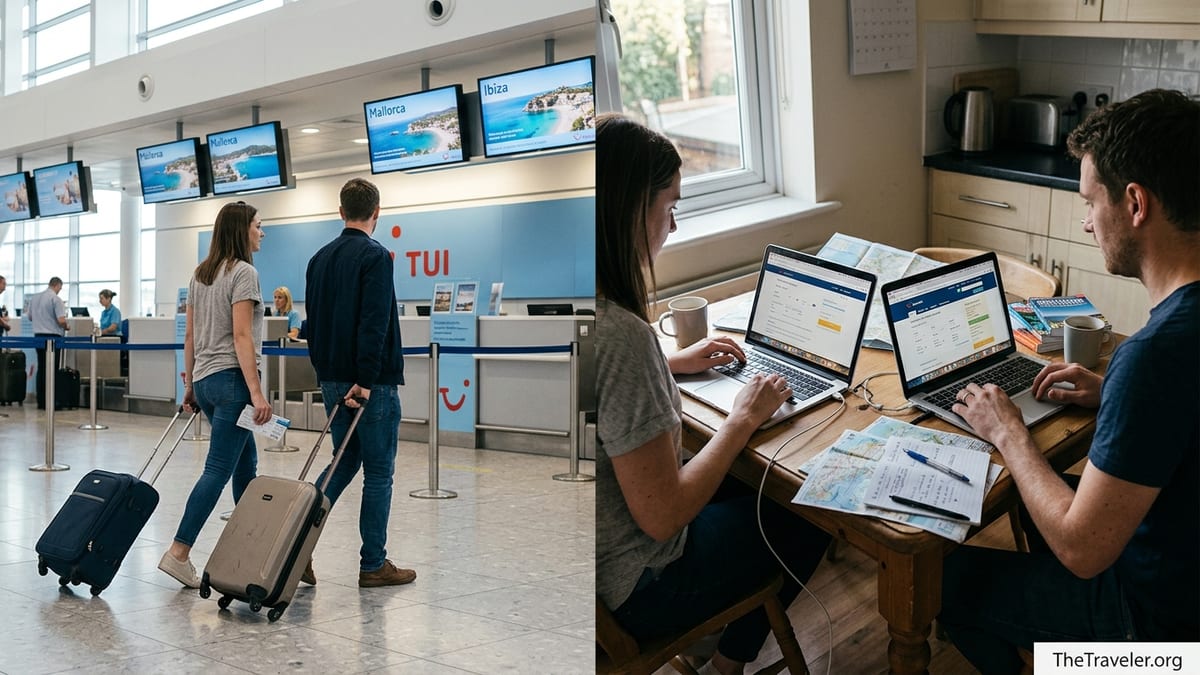
What TUI Actually Offers Today
TUI remains one of Europe’s biggest tour operators, selling flight-inclusive package holidays from UK airports to destinations such as Tenerife, Majorca, Cancun and Sharm el Sheikh. A typical seven‑night all‑inclusive TUI deal in summer might bundle Gatwick flights, shared transfers and a mid‑range hotel in the Canary Islands from around the low hundreds of pounds per person when booked in a sale, with many promotions coming in under 500 pounds per person outside peak school holidays according to current deal pages. Prices climb sharply for late July and August, especially for families and four‑star properties with waterparks or kids’ clubs.
Crucially, most TUI holidays sold to UK customers are ATOL protected flight‑inclusive packages. That means if TUI as a travel company were ever to cease trading before or during your holiday, the ATOL scheme run by the UK Civil Aviation Authority would step in so you either get a refund or are brought home without extra cost. This ATOL protection sits alongside your travel insurance but is a legal requirement for UK companies selling package holidays that include flights.
TUI also leans heavily on simplicity. Through one booking reference and one price, you can add extras such as checked luggage, seat selection, private transfers or excursions. TUI’s in‑resort reps and 24/7 emergency assistance lines act as a single point of contact if there are issues with the hotel, local transport or schedule changes, which can be reassuring if you are not a confident traveller or are managing young children or elderly relatives.
However, the convenience and bundled protection are built into the price. For destinations where low‑cost carriers and independent hotels are plentiful, motivated DIY travellers can often undercut the TUI package cost, especially if they travel outside school holidays, have flexible dates or are willing to stay in smaller, non‑branded accommodation.
How DIY Travel Compares in the Real World
Booking everything yourself means piecing together flights, accommodation, transfers and activities from separate providers. A typical DIY week in Malaga in May might involve booking low‑cost flights with a budget airline, a local apartment on a large accommodation platform and a pre‑booked airport bus ticket. With careful timing and flexibility, many travellers find they can save money compared with a package holiday and unlock neighbourhoods and boutique properties that large operators simply do not feature.
For example, look at a common choice like a week in Tenerife. A TUI package from a major UK airport for a family of four in the summer holidays might easily reach several thousand pounds once hold luggage and in‑resort spending are factored in, particularly at four‑star all‑inclusive resorts with waterparks. A DIY planner could instead book separate flights with a low‑cost carrier, choose a self‑catering apartment a few streets back from the beach and rely on local buses or ride‑hailing. That kind of set‑up can come in meaningfully cheaper, especially if they avoid Saturday departures or choose shoulder‑season dates.
The trade‑off is that each DIY element is its own contract. If your airline cancels a flight on the day of travel and you miss the first night at your apartment, the airline is responsible only for the flight. You may need to negotiate a refund or date change with your accommodation separately, and local providers might be far less flexible than an established package operator dealing with hundreds of customers on the same departure. In practice, DIY travel tends to reward travellers who are comfortable reading fare rules, contacting multiple companies when something goes wrong and keeping meticulous records.
DIY also shifts the burden of research onto you. Want to know if a small guesthouse in Dubrovnik’s Old Town is on a noisy bar street, or if the “sea view” in Athens is really just a glimpse over a car park? You will be relying on recent guest reviews and local forums. That level of detail lets independent travellers create highly personalised itineraries, but it demands time, experience and a willingness to accept more risk in exchange for greater flexibility.
Safety, Protection and What Happens When Things Go Wrong
One of the biggest practical differences between TUI and a DIY itinerary is the protection you receive if something goes badly wrong. Under UK rules, a proper flight‑inclusive package holiday bought from a licensed operator should be covered by ATOL. If the travel company collapses, ATOL funding steps in to refund you if you have not yet travelled or to get you home if you are already abroad. This is separate from travel insurance, which covers things like medical costs, lost luggage and some types of cancellation, but not a tour operator’s insolvency unless specifically stated.
For a TUI customer, this means that if there is a sudden failure of an airline used in your package or if wider events make it impossible for TUI to deliver the holiday you bought, TUI as the organiser is responsible for arranging alternatives or refunds under package travel regulations. In real‑world crises, such as sudden airspace closures or government advice against travel to a region, package operators have historically laid on rescue flights or switched customers to different destinations or dates where possible.
With DIY travel, each component follows its own rules. If your low‑cost airline fails, you may need to seek a refund through your card provider or a legal claim. Your independently booked hotel in Greece or Thailand may not be under any obligation to refund a non‑refundable rate just because your flight never operated. Travel insurance sometimes helps, but policies often exclude airline insolvency unless you have paid for an enhanced level of cover. The upshot is that DIY travellers shoulder more financial risk if their plans unravel, particularly on complex, long‑haul or multi‑stop itineraries.
This difference is particularly relevant to family trips and once‑in‑a‑lifetime journeys. If you are booking a special anniversary tour of multiple Italian cities or a first big long‑haul holiday to the Caribbean, the peace of mind of having one organiser legally responsible if suppliers fail can outweigh the potential savings of a DIY approach. Conversely, for a short city break to a major European hub where there are many daily flights and plentiful hotels, the practical risk of being stranded is lower, so the DIY gamble may feel more acceptable.
Cost, Value and the Hidden Line Items
Price is often the headline comparison, but how you calculate it matters. TUI’s website usually displays a per‑person price that includes flights, accommodation and basic transfers. Extra costs such as hold luggage, seat selection, room upgrades and in‑flight meals are either bundled in or shown as add‑ons. Some deals on the site cluster around psychological thresholds like under 300 or under 500 pounds per person outside peak times, but those figures can rise rapidly during school holidays or when you move into premium hotel categories.
DIY pricing is more fragmented. You might see an exceptionally cheap headline airfare to Lisbon for 29 pounds each way, then realise that with hold luggage, seat reservations, airport transfers and a centrally located hotel, your real spend is much higher. In some cases, a TUI package can undercut a DIY build once you include luggage and transfers, particularly for destinations dominated by charter capacity such as certain Canary Islands, Red Sea resorts or family‑oriented Mediterranean beach towns.
For example, a couple comparing a week in Rhodes in late September might find a TUI all‑inclusive package at a three‑star resort from a regional UK airport for a few hundred pounds per person including checked bags and coach transfers. Pricing up the same week independently with a low‑cost airline plus a similar standard hotel and paid transfers can come surprisingly close once all extras are added. On the other hand, if that couple is happy with a self‑catering studio and hand luggage only, they might trim a significant amount off the total by assembling the trip themselves.
The question to ask is not simply “which is cheaper?” but “what am I getting for the difference?” If the TUI package is 150 pounds more per person but comes with ATOL protection, one contact point, and a rep in resort, you need to decide whether that premium is acceptable for your risk tolerance. Likewise, if DIY works out only marginally cheaper yet leaves you juggling five different bookings, the apparent saving may not be worthwhile unless the independent trip gives you a better location or a more interesting style of accommodation.
Control, Flexibility and the Type of Trip You Want
Control is where DIY shines. Independent travellers can decide to fly into one city and out of another, mix budget guesthouses with splurge hotels, or add spontaneous side trips as they go. If you dream of spending three nights in a cave hotel in Cappadocia, then training to the Aegean coast, followed by a short domestic flight to Istanbul, DIY planning gives you almost limitless configuration options. TUI, by contrast, is built around fixed durations and return flights to and from the same airport, often in seven, ten or fourteen‑night blocks.
Within TUI’s framework, you can still customise to a degree. You might choose a multi‑centre holiday that combines, say, Orlando theme parks with a Caribbean beach stay, or opt for a river cruise or escorted tour where TUI handles the overland logistics. However, you are mostly selecting from pre‑designed options in a brochure or on the website, not inventing your own sequence of stops. For travellers who prefer structure and dislike making constant decisions, this is an advantage rather than a limitation.
Flexibility also matters when life changes. If you suddenly need to shift your travel dates due to work or family issues, TUI’s change fees and fare differences are set out in their booking conditions and can be significant. But the process is at least centralised: you call TUI or visit a TUI store and discuss the entire booking. With DIY, you might need to negotiate separate changes with your airline, hotel, car hire company and tour providers, each with its own cancellation deadlines and penalties.
There is also the question of how much independence you want in destination. In a TUI package resort in, for example, Fuerteventura or Antalya, you may find mostly international guests, on‑site entertainment and English widely spoken throughout the property. Many guests barely leave the hotel except for one or two organised excursions. A DIY trip to the same region might place you in a local guesthouse where you shop at neighbourhood markets, navigate local buses and eat at family‑run restaurants where menus are not translated. Neither is objectively better, but they deliver very different experiences.
When TUI Makes More Sense and When DIY Wins
In practical terms, TUI tends to make the most sense for straightforward sun‑and‑sea holidays, especially during busy periods. If you are a family of four looking for a week in a well‑reviewed all‑inclusive resort in Spain in August, a TUI package may bundle flights, transfers, kids’ clubs and activities in a way that is difficult to replicate at a lower total cost DIY, particularly once you factor in your time and stress levels. The same goes for specialist products like Lapland Santa trips or large‑ship cruises where capacity is controlled and package deals often access charter flight allocations.
TUI also suits travellers who prioritise peace of mind. First‑time travellers, older travellers less comfortable with online comparison tools and anyone with limited time to plan may find it worth paying a bit more for one trusted brand to handle the logistics. The existence of in‑resort reps, established complaint processes and clear financial protection frameworks can be a decisive factor for these groups.
DIY travellers, by contrast, tend to do best in city‑break style trips and routes where multiple airlines compete. A long weekend in Prague or Barcelona, a rail‑based journey through Italy or a backpacking trip in Southeast Asia will almost always be more varied and often cheaper when planned independently. Likewise, travellers with very specific interests, such as wine touring in lesser‑known Portuguese regions or hiking in the Balkans, are unlikely to find exactly what they want in a mainstream package brochure.
There is no rule that you must always choose one or the other. Many experienced travellers book TUI for certain use cases, like a winter‑sun all‑inclusive in the Canary Islands when they simply want a guaranteed break, and go fully DIY for exploratory trips where they care more about culture and variety than about poolside entertainment.
The Takeaway
The choice between TUI and planning everything yourself is really a choice about how you want to balance risk, control and effort. TUI offers one‑stop booking, strong financial protection on flight‑inclusive packages and structured holidays that reduce decision fatigue, often at a premium price in exchange for convenience and peace of mind. DIY travel offers unmatched flexibility, access to more authentic and unusual stays and the chance to trim costs, but it demands more research and leaves you carrying more of the risk if something goes wrong.
Start by being honest about the type of trip you are planning and how much uncertainty you are willing to tolerate. For a peak‑season family beach break, a TUI package may be the calmer, more predictable option. For a shoulder‑season city break or a multi‑stop itinerary where you relish the planning process, DIY is likely to reward you with more interesting experiences and often a lower overall bill.
Whichever path you choose, do a like‑for‑like comparison. Factor in luggage, transfers, local transport and flexibility, not just the headline price. Check what financial protection you really have, read recent reviews for specific hotels or apartments and map out what would happen if your main flight was cancelled. With that groundwork done, choosing between TUI and a self‑planned trip becomes less of a gamble and more of a conscious, informed strategy for how you want to travel.
FAQ
Q1: Is a TUI package holiday always cheaper than booking everything myself?
Not necessarily. For popular beach destinations in peak season, TUI can be competitive or even cheaper once you include luggage and transfers, but outside those cases a well planned DIY trip can often match or beat the price, especially if you are flexible on dates, airports and accommodation type.
Q2: What protection do I get with a TUI package that I do not get with DIY?
With a proper flight‑inclusive TUI package, you normally receive ATOL financial protection and the legal rights that come with package travel regulations, meaning the organiser is responsible for the main elements of your holiday. With DIY, each booking stands alone and you rely more heavily on travel insurance, card protections and individual suppliers’ goodwill.
Q3: When is DIY travel clearly the better choice?
DIY travel usually wins for city breaks, rail‑based trips, off‑the‑beaten‑path destinations and itineraries that combine several regions or countries in one journey. If you enjoy planning and want to mix different types of stays, restaurants and local experiences, DIY gives you much more control than a standard package.
Q4: I am a nervous traveller. Should I still consider planning my own trip?
If you are anxious about logistics or dealing with problems in another language, a TUI package is often the calmer option because you have one brand responsible for your flights, accommodation and transfers. If you do try DIY, start with a simple trip to a major city with plentiful flights and hotels so that options are easy to find if plans change.
Q5: Do I still need travel insurance if my TUI holiday is ATOL protected?
Yes. ATOL protection is mainly about financial protection if the travel company collapses or cannot deliver the flight‑inclusive package. Travel insurance covers medical treatment, personal belongings and many types of cancellation or delay, so you should have both in place.
Q6: Can I mix TUI and DIY elements in the same trip?
Yes. Some travellers book a TUI package for one week in a resort, then arrange extra nights independently before or after, perhaps in a city hotel or a different region. You just need to be clear which nights and services fall under the package and which are your own separate arrangements.
Q7: How far in advance should I book a TUI holiday compared with DIY?
TUI packages for peak school holidays and special trips like Lapland often reward early booking because charter flight capacity can sell out. DIY trips sometimes benefit from waiting for airline sales or last‑minute hotel deals, though this comes with less certainty about specific flights and properties being available.
Q8: What happens if my flight on a TUI package is cancelled?
If your outbound or return flight that is part of a TUI package is cancelled, TUI as the organiser should arrange an alternative or offer options such as a refund or rebooking, depending on the circumstances and your rights. With DIY, you would deal directly with the airline and then separately try to adjust your hotel and other bookings.
Q9: Are TUI’s own hotels better than independent ones I might find myself?
TUI‑branded hotels and partner properties are usually chosen for consistent standards, family‑friendly facilities and features like kids’ clubs, entertainment and all‑inclusive dining. Independent hotels and apartments can be more characterful or better located for local life, but their quality can vary more, so careful review reading is essential.
Q10: If I love planning, is there any reason to choose TUI at all?
Yes. Even if you enjoy planning, you might still value TUI for specific scenarios such as a simple winter‑sun break where your priority is rest rather than exploration, or a complex family trip where you prefer one point of contact. You can always reserve your DIY energy for trips where flexibility and originality matter most.