


More news on this day
Turkish rolling stock manufacturer Bozankaya has been excluded from a hybrid train tender in Poland, after new European Union procurement rules on reciprocity restricted access for suppliers from countries without parallel market-opening agreements.
Get the latest news straight to your inbox!
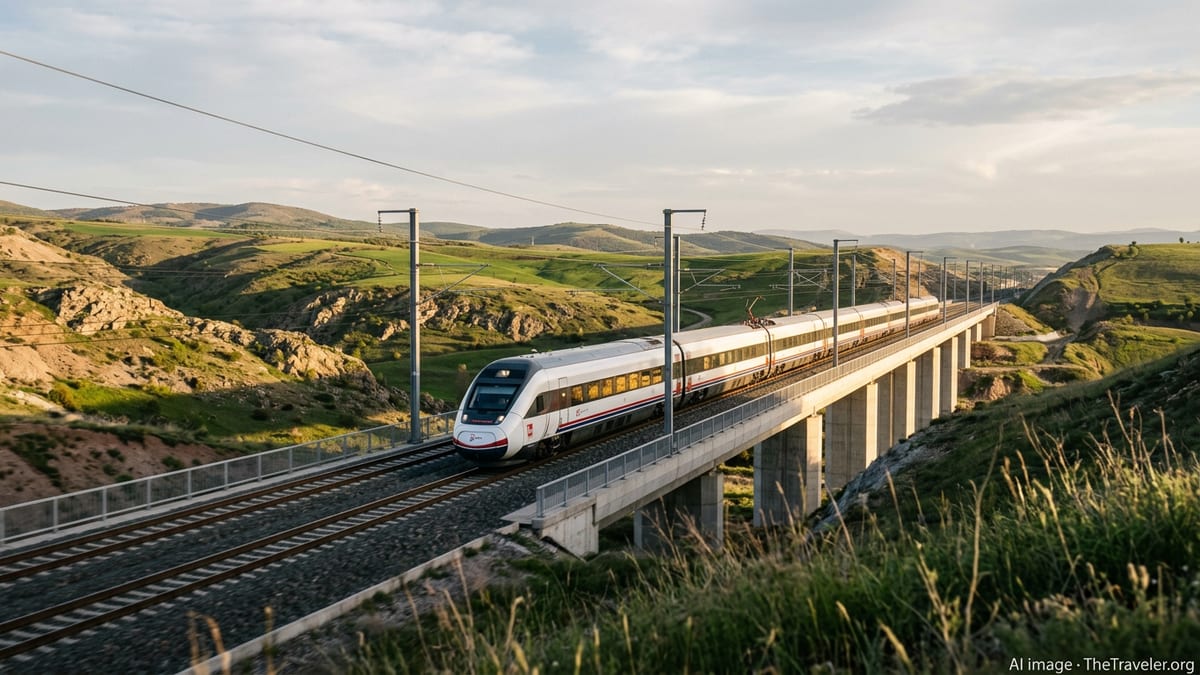
Hybrid train tender in Poland narrows field of bidders
According to recent specialist rail industry coverage, the exclusion occurred in a competitive tender for hybrid multiple units intended to modernise regional services in Poland. The project, backed by European funding, seeks low-emission trains that can operate on both electrified and non-electrified lines, reflecting broader EU priorities for decarbonisation and network flexibility.
Publicly available information indicates that the contracting authority applied updated eligibility criteria when assessing bids. These criteria reflect evolving EU guidance on participation by companies from third countries, particularly where the European Union does not enjoy equivalent access to those countries’ own public procurement markets. As a result, Bozankaya’s offer did not proceed to the final evaluation stage.
The tender is part of a wider wave of rolling stock orders across Central and Eastern Europe, where regional governments are seeking to replace aging diesel fleets and improve service quality. Poland, one of the largest passenger rail markets in the EU, has become a key destination for manufacturers seeking to expand their European footprint.
While several EU-based rolling stock builders continue to compete actively in the Polish market, the tightening of rules for non-EU suppliers is reshaping the competitive landscape. For companies like Bozankaya, which have previously won contracts in various European cities, the new framework presents both legal and strategic challenges.
New EU reciprocity rules reshape rail procurement
The backdrop to Bozankaya’s exclusion is a broader shift in EU public procurement law aimed at ensuring reciprocity in market access. Recent legal analyses of EU directives and their implementation in member states describe a clearer distinction between suppliers from the EU or treaty partners and those from countries without comparable access arrangements.
In sectors such as rail, utilities and large transport infrastructure, the EU framework allows contracting entities to limit participation or adjust evaluation rules when a significant share of a bid’s value originates in non-EU states that do not offer similar opportunities to European companies. Commentators note that this approach mirrors decisions of the Court of Justice of the European Union on the treatment of third-country operators, reinforcing the idea that equal treatment is not automatically guaranteed to firms from outside the EU’s network of trade agreements.
Polish public procurement legislation, which transposes these EU directives, gives sectoral contracting entities specific tools to protect what legal experts describe as “EU preference” in sensitive markets. These tools can include setting thresholds for the share of EU-origin components in supplies or invoking discretionary exclusion grounds that take account of the origin of products and the legal environment in the bidder’s home state.
The emerging reciprocity framework has been justified at EU level as a means of preventing structural imbalances, where European firms face barriers abroad while non-EU competitors gain full access to subsidised projects within the Union. For rail rolling stock, this resonates strongly, given the capital-intensive nature of manufacturing, the strategic importance of technology, and the high level of public funding in most large orders.
Implications for Bozankaya’s European growth strategy
Specialist rail media report that Bozankaya had viewed hybrid and battery train tenders in Central Europe as a key plank of its expansion strategy in the European Union. The company, known for supplying tram and metro vehicles in Turkey and abroad, has increasingly targeted EU-funded projects in search of scale and long-term maintenance contracts.
The setback in Poland is likely to prompt a reassessment of where and how the firm competes in Europe. Observers note that the company can still seek opportunities in markets where bilateral or multilateral agreements provide clearer access conditions for Turkish manufacturers, or in countries whose national rules remain more open to third-country suppliers.
At the same time, the decision illustrates the growing importance for non-EU manufacturers of understanding both EU-level regulations and their detailed implementation in each member state. Legal commentators highlight that even within a common directive framework, the degree to which contracting authorities rely on discretionary exclusion tools can differ, affecting how accessible a given tender is to non-EU bidders.
For Bozankaya, options could include exploring industrial partnerships or joint ventures that increase EU content in its rolling stock, thereby aligning more closely with preference rules. Such arrangements, however, require significant investment and careful structuring, and they may not fully offset the limitations imposed by reciprocity-based procurement policies.
Poland’s rail ambitions meet evolving EU industrial policy
Poland has set ambitious goals for upgrading its rail system, with multiple investment streams dedicated to infrastructure, signalling and rolling stock. Publicly available policy documents describe an emphasis on intermodal hubs, low-emission mobility and improved regional connectivity, backed by mechanisms such as the Connecting Europe Facility and national operational programmes.
Within this context, the hybrid train tender from which Bozankaya was excluded is one of several initiatives to modernise regional fleets. The focus on dual-mode and alternative traction technologies reflects EU climate policies that encourage the replacement of diesel rolling stock and better use of partially electrified networks.
Analysts suggest that the tightening of procurement rules for non-EU suppliers dovetails with a broader industrial policy debate in Europe about strategic autonomy and the resilience of critical supply chains. In rail manufacturing, this discussion centres on maintaining a strong European industrial base while still benefiting from global competition and innovation.
For Polish regions and operators, the immediate priority remains securing reliable, modern trains within the timelines set by funding programmes. For manufacturers, however, the policy shift is redefining how they position themselves, which partnerships they pursue, and how they structure their bids to comply with both EU climate objectives and procurement law.
What the case signals for non-EU rail suppliers
The Bozankaya case is being closely watched by other non-EU rail suppliers that have sought a greater presence in European passenger markets. Legal and industry commentary points out that as member states transpose and operationalise reciprocity-focused rules, more tenders may include explicit conditions related to product origin, market access and trade agreements.
Companies based in countries without comprehensive procurement or trade arrangements with the EU may find it increasingly difficult to compete on equal terms in sensitive sectors. This does not amount to a blanket exclusion, but it does mean that tender documents and national implementing rules will need to be examined far more closely before bidding decisions are made.
The situation also underscores the interaction between EU-level legislation, national procurement practice and wider geopolitical considerations. As the EU refines instruments targeting foreign subsidies and investment screening, procurement law is emerging as another lever through which industrial and strategic concerns can shape market access.
For the travel and transport sector, the outcome in Poland illustrates how passengers’ future journeys are influenced not only by technology and funding, but also by the legal architecture governing who may build the trains that run on Europe’s rails.