


More news on this day
Turkish Technic has expanded its footprint in Istanbul with the opening of a seventh hangar in the city, a move that strengthens the company’s aircraft maintenance capacity and reinforces Istanbul’s role as a regional aviation hub.
Get the latest news straight to your inbox!
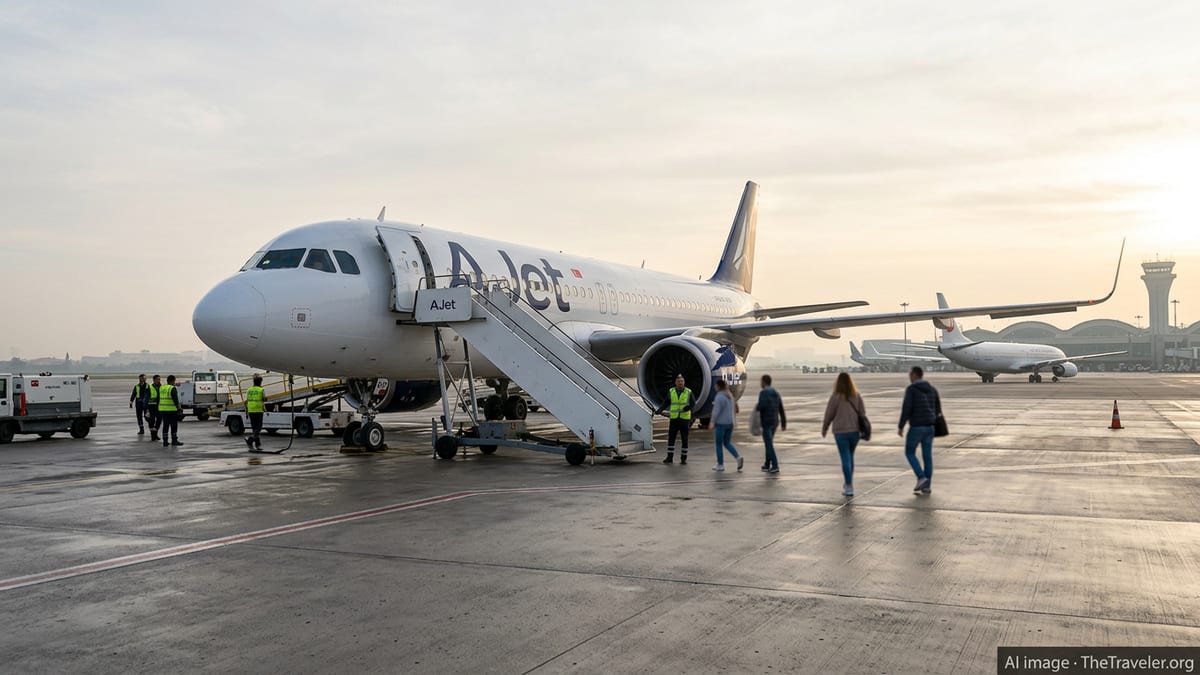
New hangar adds significant capacity at Atatürk facilities
Recent coverage indicates that Turkish Technic has reactivated and upgraded an existing facility at Istanbul Atatürk Airport as its seventh hangar in the city, following a major modernization program. Reports describe the building as originally constructed in the 1990s and for some time underused, before being refurbished to current aviation maintenance standards and equipped with new-generation tooling and systems.
According to publicly available information, the renewed hangar now provides around 29,400 square meters of enclosed space configured for base and heavy maintenance. Layout details shared in local reports indicate the building can accommodate maintenance on two narrowbody and one widebody aircraft simultaneously, adding high-value slots in a market where large-fuselage capacity is particularly in demand.
Media summaries of the project state that the company’s total capacity in Istanbul has risen to the ability to handle maintenance on 57 aircraft at once when all hangars across the city’s airports are taken into account. That figure covers facilities at Atatürk, Istanbul Airport on the European side and Sabiha Gökçen on the Asian side, as well as associated support infrastructure.
The reopening of a previously dormant facility in an established aviation cluster around Atatürk Airport is being framed in local trade coverage as both a capacity and efficiency move. By bringing an existing structure up to modern standards instead of building from scratch, Turkish Technic appears to have been able to accelerate the addition of new bays in response to strong demand from both its parent airline and third-party customers.
Istanbul network grows alongside new-build hangars at Istanbul Airport
The seventh hangar joins a broader network of aviation maintenance infrastructure that Turkish Technic has been building in Istanbul over the past decade. The company operates multiple hangars at Istanbul Airport, where official facility descriptions highlight a complex that is still being rolled out in phases, with several structures already in service and additional bays under construction as part of a long-term master plan.
Public technical data for the Istanbul Airport maintenance center describe three hangars already completed, with four more under construction, together forming part of a complex that is forecast to eventually offer around 800,000 square meters of indoor space. When fully developed, the site is expected to be capable of handling base maintenance for up to 15 widebody and 18 narrowbody aircraft at the same time, in addition to workshops, training centers and administrative buildings.
Industry reporting notes that Turkish Technic has been positioning Istanbul Airport as a flagship base maintenance hub with some of the largest hangars in Turkey. Earlier phases of the project introduced new C and D check hangars sized for multiple widebody aircraft, and the company has publicly discussed plans to expand its third-party maintenance, repair and overhaul business using the added space and proximity to the main operations of Turkish Airlines.
Within this context, the renewed hangar at Atatürk Airport operates as another lever in an integrated multi-airport system. While Istanbul Airport is taking over most passenger operations, Atatürk retains an important role as a maintenance and logistics center, with the seventh hangar helping spread heavy-check work across the city’s aviation estate.
Strategic response to rising global MRO demand
Analysts following the maintenance, repair and overhaul sector note that the additional capacity in Istanbul aligns with a global upswing in demand for heavy checks as airline fleets return fully to service after the pandemic period and as deferred work is brought forward. Industry publications have reported that Turkish Technic has a maintenance capacity for roughly 60 aircraft across Turkey, and is actively targeting growth in third-party contracts from Europe, the Middle East, Africa and Central Asia.
By investing in both modern greenfield infrastructure at Istanbul Airport and in the refurbishment of existing assets at Atatürk, Turkish Technic appears to be hedging against the cyclical nature of MRO demand while positioning itself as a cost-competitive alternative to Western European providers. Istanbul’s geographical location on key north-south and east-west flight corridors remains a central part of that strategy, making it a convenient stop for airlines seeking base checks during schedule rotations.
Market observers also point out that the enhanced hangar network supports the broader growth ambitions of Turkish Airlines, which has been steadily expanding its fleet and route map. Additional heavy-maintenance slots in the city allow more work to be kept in-house, potentially improving turn times and cost control, while freeing up room to pursue new third-party business.
At the same time, the project reflects a trend across the aviation sector toward larger, more integrated MRO campuses. With multiple airports in the same metropolitan area and a series of hangar investments spanning narrowbody, widebody and specialized work, Istanbul is emerging as one of the more densely developed maintenance centers in its region.
Focus on sustainability and next-generation training
Turkish Technic has also positioned its recent infrastructure projects as part of a wider effort to embed sustainability features into aviation maintenance. Information published about its Istanbul Airport facilities highlights the use of rainwater collection systems and on-site solar energy in certain hangars, alongside building envelopes designed to maximize daylight use through semi-transparent panels. These measures are intended to reduce energy consumption and improve working conditions on the hangar floor.
The new and refurbished hangars are being integrated into this sustainability narrative, with references in corporate materials to green-building certifications at Istanbul Airport and resource-efficiency upgrades across the company’s network. Such elements are increasingly important to airline customers that are factoring environmental performance into procurement and partnership decisions.
Parallel to the technical upgrades, the expanded hangar capacity is also tied to workforce development. Public coverage of the Atatürk Airport project highlights plans for extensive training space within the renewed facility, supporting ambitions to make the location a key base for technician education. That focus aligns with earlier company statements stressing the importance of training to sustain growth across a wide portfolio of aircraft types and systems.
As fleets become more technologically complex and as airlines in the region add next-generation aircraft, a pipeline of qualified technicians is viewed in industry commentary as just as critical as physical hangar space. The expansion at Atatürk, combined with ongoing development at Istanbul Airport, suggests that Turkish Technic is aiming to meet both requirements in parallel.
Implications for passengers, airlines and Istanbul’s hub role
While the opening of a seventh hangar in Istanbul is primarily an infrastructure story, the downstream effects extend to airline reliability and, ultimately, the passenger experience. Additional heavy-maintenance capacity can help reduce turnaround times for scheduled checks and unscheduled repair events, supporting on-time performance for carriers that rely on Turkish Technic’s network.
For airlines operating through Istanbul, a denser MRO footprint can also mean more flexibility in planning checks around route schedules. With facilities distributed between Atatürk, Istanbul Airport and other locations in Turkey, aircraft can be routed to maintenance with less ferry flying, potentially lowering operating costs and emissions.
At the city level, the investment underscores Istanbul’s evolution as both a passenger superhub and a technical-services center. The combination of new mega-hangars at Istanbul Airport and renewed capacity at Atatürk helps entrench the city as a focal point for aviation services between Europe and Asia, reinforcing its competitive standing against other regional hubs pursuing similar strategies.
As additional phases of the Istanbul Airport maintenance complex come online and the Atatürk facility ramps up utilization, observers will be watching how Turkish Technic balances in-house work for its parent airline with growing demand from international customers, and how that balance shapes future infrastructure decisions.
Turkish Technic opens biggest base maintenance hangars – Anadolu Agency
Seventh hangar at Atatürk facilities – Demirören News Agency
Istanbul Airport facilities overview – Turkish Technic
Istanbul Airport maintenance complex (Turkish) – Turkish Technic