

More news on this day
Emergency crews have responded to a collision involving two passenger trains near Bedford, north of London, prompting reports of injuries and major disruption on one of the main rail corridors serving the British capital.
Get the latest news straight to your inbox!
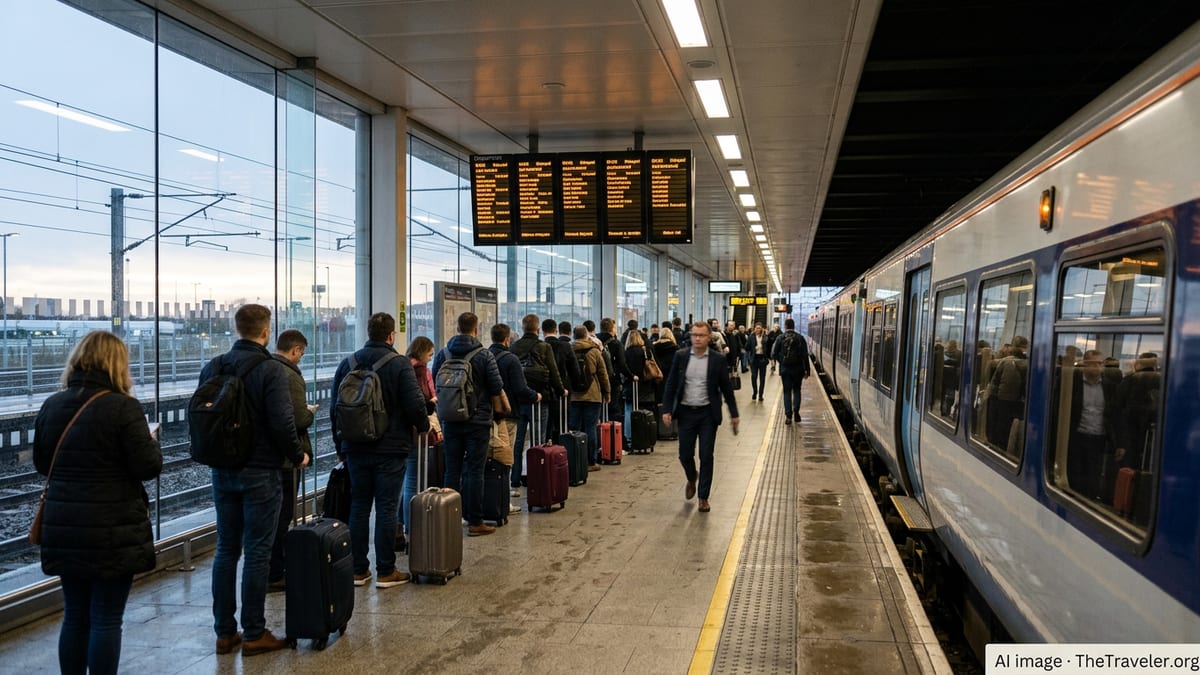
Collision north of London halts busy rail corridor
Reports indicate that the incident occurred on the evening of 19 June on the main line linking London St Pancras with towns and cities in the East Midlands. Coverage from national and local outlets describes two trains coming into contact south of Bedford, a key junction for services heading toward Leicester, Nottingham and Sheffield.
Images and video shared on social media and referenced in published coverage show two damaged trains remaining upright on the tracks, with debris visible between the carriages. The trains involved are understood to be high speed intercity services operating between London and the Midlands, on a section of line that normally carries a high volume of commuter and long distance traffic.
Publicly available information from rail operators indicates that traffic on the affected route has been suspended or severely restricted while emergency crews work at the scene. Services between London St Pancras, Bedford and destinations further north are subject to extensive delays, with passengers advised to check for alternative routes or postpone non essential travel.
Early reports suggest that, despite significant damage to at least one of the trains, the situation could have been more serious given the speeds normally seen on this corridor. The fact that both trains remained largely upright and on the rails is being highlighted in coverage as a factor that may have reduced the scale of the casualties.
Emergency response and reports of injuries
According to published coverage, fire, ambulance and police crews were deployed quickly to the scene, supported by specialist rail response teams. Social media posts referenced by news outlets show multiple emergency service vehicles positioned alongside the line and treating passengers close to the tracks.
Passengers describing the aftermath online and in broadcast interviews speak of a sudden jolt consistent with a heavy impact, followed by smoke, dust and the sound of breaking glass. Some accounts mention travellers supporting each other as they made their way along the carriages and out onto the track under the guidance of staff and emergency personnel.
Reports from domestic media indicate that a number of people have been treated for injuries, including head wounds and suspected fractures. Local hospital services in Bedfordshire have reportedly been placed on alert to receive casualties. As of the latest updates, there is no publicly confirmed information on any fatalities, and assessments of injury numbers continue to evolve.
Travelers caught in the disruption describe long waits on stranded trains and at stations, with staff relaying information from control centres as the situation develops. For many passengers, the incident has raised renewed awareness of on board safety procedures such as the location of emergency exits and the importance of following crew instructions during an evacuation.
Impact on passengers and wider travel networks
The collision has had an immediate effect on rail connectivity between London and much of central and northern England. This section of the Midland Main Line is used both by intercity operators and by commuter services serving towns including Luton, Bedford and Wellingborough, making it a critical artery for daily travel to and from the capital.
Service updates from train operators describe widespread cancellations and diversions, with some trains terminating short of their usual destinations and others rerouted where possible onto alternative lines. Passengers are being advised in public statements to expect extended journey times, replacement road transport on certain stretches, and crowding on any remaining services.
The disruption is also affecting connecting journeys, including onward travel by other rail services, buses and flights. Luton Airport, which relies heavily on rail links from central London, is expected to see knock on effects as travellers struggle to reach or leave the airport. Travellers already en route are turning to alternative stations and routes, adding pressure to other parts of the network.
For visitors to London and the wider region, the incident is a reminder that unplanned events on a single main line can ripple quickly through a tightly scheduled transport system. Travel organisations are encouraging passengers to build extra time into itineraries over the coming days and to stay alert to short notice service changes.
Early focus on rail safety systems and investigation
While the immediate priority remains the care of passengers and the safe recovery of the trains, attention is already turning to the performance of signalling and safety systems on the route. Commentators in rail industry forums and early media analysis note that two in service passenger trains coming into collision on a modern, signalled main line is a rare event in the United Kingdom.
According to publicly available information, the Rail Accident Investigation Branch has deployed inspectors to the site to begin gathering evidence. This typically includes downloading data from on board recorders, examining trackside signalling equipment and interviewing operational staff and witnesses.
Specialists are expected to consider a range of possible factors, including train speed at the time of impact, adherence to signal aspects, potential technical failures and any external influences such as infrastructure issues. Investigators are also likely to review the crashworthiness performance of the rolling stock, including how the carriages absorbed the impact and protected passenger compartments.
Past inquiries into serious rail incidents in the United Kingdom have often led to changes in procedures, staff training or equipment. Observers note that any lessons from the Bedford area collision will be closely studied, both within the domestic rail industry and by international network operators monitoring developments.
Advice for travellers and evolving situation
Travel organisations and rail operators are urging passengers planning to use routes into or out of London St Pancras to monitor real time information channels throughout the evening and into the weekend. Tickets for trains affected by the collision are expected to be accepted on alternative services where capacity allows, though details may differ between operators and routes.
For those currently travelling, guidance shared through operator updates recommends remaining with booked services unless explicitly advised otherwise, as informal route changes can increase congestion at already busy interchange stations. Passengers are also being advised to retain tickets and booking confirmations in case of future refund or compensation claims.
The full extent of the damage to infrastructure and rolling stock, and the time required to reopen all lines at normal speeds, remains unclear. Engineering assessments will determine whether temporary speed restrictions or partial closures are required, which could prolong disruption for both daily commuters and leisure travellers.
As information continues to emerge, the collision near Bedford is likely to prompt broader discussions about resilience and capacity on routes linking London with regional cities. For now, travellers are being encouraged to prioritise safety, follow official travel advice and allow generous time for journeys through the affected corridor.