


More news on this day
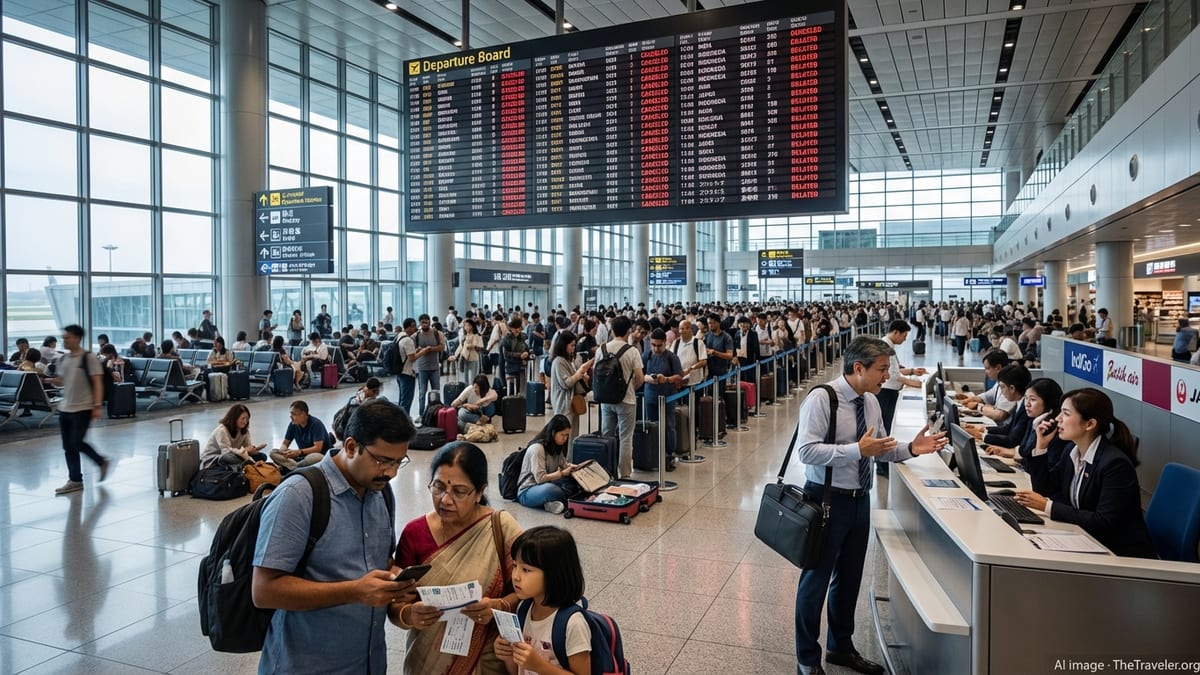
Typhoon Saudel has unleashed severe disruption across Asia’s aviation network this week, with flight-tracking data indicating more than 700 cancellations and several thousand delays spanning Japan, Taiwan, Hong Kong and China’s eastern seaboard as the storm pushes through the East China Sea.
Get the latest news straight to your inbox!
Storm Tracks Across the East China Sea and Okinawa
Publicly available tropical cyclone advisories describe Typhoon Saudel as a powerful system that strengthened over the Northwest Pacific before sweeping toward the Northern Marianas and into the East China Sea. Bulletins from the National Weather Service tracked Saudel moving west-northwest with maximum sustained winds initially exceeding 115 miles per hour, placing large swathes of maritime and coastal East Asia on alert.
As the circulation approached Okinawa, forecast discussions noted a gradual weakening trend but warned that the system would still deliver damaging winds, intense rainfall and hazardous seas as it neared Japan’s southwestern islands. Guidance indicated that Saudel’s wind field extended well beyond its core, creating a wide zone of aviation risk around the projected path.
The storm’s evolution prompted forecasters to highlight Okinawa and surrounding islands as likely to bear some of the most immediate impacts, with the timing overlapping heavily trafficked late-August travel days. That combination of strong winds and peak-season demand set the stage for a rapid escalation in airline schedule changes.
Okinawa Becomes Epicenter of Flight Cancellations
Reports from Japan indicate that Okinawa’s main gateway, Naha Airport, quickly became the epicenter of aviation disruption as Saudel drew closer. Major Japanese carriers announced extensive cancellations on routes to and from Naha, along with suspensions at smaller island airports in the Amami and Okinawa chains.
Coverage in Japanese media highlighted that All Nippon Airways and Japan Airlines together scrubbed hundreds of flights serving Okinawa and neighboring islands, affecting tens of thousands of passengers in a single day as the storm’s strongest winds neared. All Nippon Airways also posted updated advisories stating that all services to and from Naha on key impact days would be canceled, while some flights to nearby airports such as Miyako and Ishigaki would operate on a limited basis or be subject to short-notice changes.
Domestic flight information pages from both carriers underscored that disruption could expand further depending on Saudel’s exact track and speed. Passengers were urged through public web notices to check flight status frequently and consider voluntary changes as the storm window approached, reflecting the fluid nature of the operational environment.
Ripple Effects From Taiwan and Hong Kong to Mainland China
The reach of Saudel’s aviation impact extended well beyond Japan. Taiwan Taoyuan International Airport reported that multiple regional airlines canceled or adjusted Okinawa-bound services as the storm intensified over the East China Sea. Published airport updates and local media coverage detailed at least a dozen cancellations between Taoyuan and Naha, including services operated by major Taiwanese carriers and low-cost airlines focused on leisure traffic to Japan.
In Hong Kong, carrier travel alerts showed additional cancellations and time shifts on Okinawa routes, with some operators pushing flights back to later dates to avoid the core of the storm. One low-cost airline publicly listed an Okinawa-bound flight from Hong Kong as canceled and re-accommodated passengers on services scheduled after the worst weather was expected to pass.
Further west, coverage from mainland Chinese outlets described airports in Zhejiang and Fujian provinces bracing for delays and cancellations as Saudel advanced toward the Chinese coast. Local reports noted that the storm’s approach followed earlier disruptions from other systems in the same region, raising concerns about cumulative impacts on airport capacity and on-time performance during an already active typhoon season.
Thousands of Delays Across the Regional Network
While headline figures often focus on outright cancellations, the wider effect of Saudel on Asia’s aviation system has been magnified by a surge in delayed departures and arrivals. Airline notices and airport dashboards across Japan, Taiwan, Hong Kong and eastern China have shown large clusters of flights pushed back by weather-induced restrictions, air traffic control flow measures and ground handling limitations caused by high winds and heavy rain.
In Japan, carriers signaled through their domestic flight information portals that some services might still operate within the typhoon’s broad influence but with significant schedule slippage, particularly at secondary island airports where ground operations can be constrained by crosswinds and exposure. Similar patterns were visible at Taoyuan and coastal Chinese airports, where even flights outside the immediate core of the storm faced cascading delays due to aircraft and crew rotations.
Combined with the growing tally of cancellations, these delays have contributed to what flight-tracking and schedule-monitoring services describe as a regionwide wave of disruption. The result has been a chaotic travel landscape for passengers, with missed connections, extended waits and rolling rebookings multiplying across multiple hubs.
Airlines Activate Waivers and Recovery Plans
In response to the cascading operational impact, airlines around the region have deployed a mix of flexible rebooking policies, fee waivers and limited extra capacity to help clear backlogs once conditions improve. Several Japanese and regional carriers published dedicated typhoon information pages outlining options for date changes and route alterations at reduced or no charge for travelers booked to or from Okinawa and other affected airports over the key impact dates.
Low-cost and full-service airlines alike have highlighted through online advisories that passengers may shift travel within specific windows or reroute via alternative gateways when available. In some cases, extra flights have been added on recovery days to accommodate stranded travelers returning to major hubs such as Tokyo after spending unplanned nights in Okinawa or on nearby islands.
Despite those measures, recovery is expected to take time as Saudel moves toward the Chinese coast and residual weather and operational constraints linger. With the storm arriving late in the summer holiday period and overlapping with dense regional traffic flows, analysts expect knock-on effects to persist across Asia’s flight schedules even after the typhoon itself weakens over land.
Japan Times coverage of cancellations in Okinawa
National Weather Service advisories on Typhoon Saudel
Japan Airlines domestic weather and flight information
ANA domestic flight status and typhoon updates
South China Morning Post report on China coastal airport disruption