


More news on this day
Passengers arriving at major Mumbai rail terminals on October 9 found themselves stranded and scrambling for options after several Delhi-bound trains were cancelled or rescheduled at short notice ahead of a planned protest in the capital, leaving long-distance travelers from districts such as Palghar bearing the brunt of the disruption.
Get the latest news straight to your inbox!
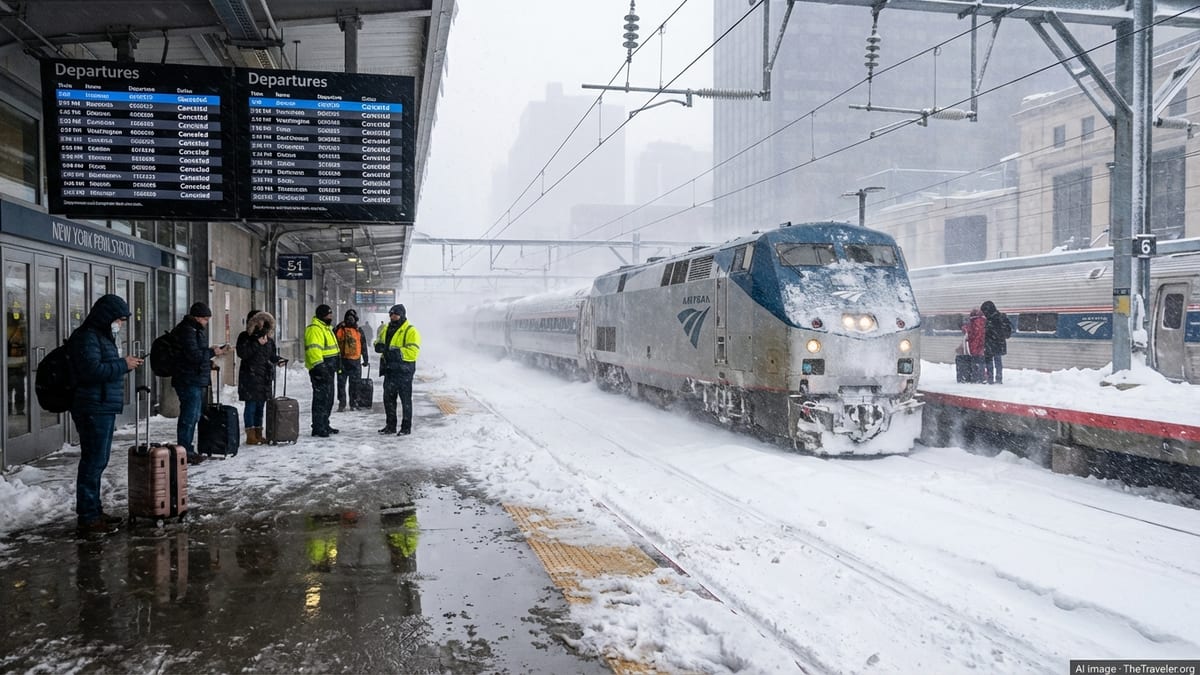
Protest-linked cancellations hit long-distance routes
According to published coverage, the Railway Board ordered the cancellation of dozens of long-distance trains scheduled to reach New Delhi and Hazrat Nizamuddin stations between 4 a.m. and 2 p.m. on October 10, citing the likelihood of heavy traffic congestion around the two hubs due to a large demonstration planned in the city.
Reports indicate that on Western Railway alone, at least five Mail and Express services on the Mumbai Delhi corridor were cancelled for departures on October 9, while two premium Rajdhani Express services, including the Mumbai Rajdhani and the August Kranti Rajdhani, were rescheduled by several hours. Other routes from cities such as Indore and Ahmedabad into the capital were also affected, amplifying the impact across multiple states.
Coverage in Hindi and English media shows that, in parallel, Central Railway and other zones have been adjusting operations on lines feeding into Delhi throughout the first half of October, including temporary blocks and cancellations on stretches such as the Delhi Rewari and Prayagraj Delhi corridors. For travelers starting from or passing through the Mumbai region, however, the October 9 announcements came at the critical start of weekend and holiday journeys.
While the stated rationale centers on decongesting approaches to New Delhi and Hazrat Nizamuddin in anticipation of demonstrations, the breadth of the cancellations effectively severed daytime long distance rail access to the capital for many passengers who were not connected with the protest.
Scenes of confusion at Mumbai and Palghar area stations
At Chhatrapati Shivaji Maharaj Terminus and Bandra Terminus in Mumbai, local media reports describe crowded platforms where passengers arrived with luggage expecting to board scheduled Delhi bound trains, only to discover that their services had been cancelled or heavily delayed. Some travelers appear to have received cancellation messages on their registered mobile numbers but had not checked their phones before leaving home.
Others, including families and elderly travelers, reportedly learned of the disruption only after reaching the station, prompting hasty attempts to find alternative trains, buses or flights. Visuals circulating in local coverage show senior citizens being ferried by station carts in search of substitute options and long queues at inquiry counters as passengers sought clarity on which services were still running.
For travelers originating from districts beyond Mumbai, such as Palghar along the Western Railway line, the disruption has been particularly acute. Publicly available reports and social media posts highlight cases of passengers who had completed a multi hour journey from towns in Palghar district into Mumbai terminals, only to be informed on arrival that their Delhi bound trains had been cancelled for operational reasons.
The result has been a familiar pattern at major junctions: families camping on platforms with bags and bedding, students and workers making calls to rearrange commitments in the capital, and visitors to Delhi facing the possibility of missing pre booked events, exams and onward international flights.
Scale of impact and evolving rail advisories
Railway notices reproduced in multiple outlets indicate that the October 9 directive covers trains reaching New Delhi and Hazrat Nizamuddin during a ten hour window on October 10, provided they departed their origin stations after mid afternoon on October 9. In practice, this has meant full cancellations for several long distance services and late night or early morning rescheduling for some Rajdhani class trains.
On the Western Railway side, published figures suggest that more than 5,000 passengers on the Mumbai Delhi sector alone may have been affected by cancellation or rescheduling decisions linked to the capital region disruptions, with further knock on effects on connecting journeys to cities such as Jaipur, Lucknow, Varanasi and Jammu.
In addition to the Mumbai origin services, travelers from Prayagraj and other northern cities have also reported cancellations of Delhi bound trains that were due to depart after mid afternoon on October 9, effectively curtailing same day connectivity into the capital before the start of the demonstration window. Earlier in the month, a separate Delhi Rewari rail block had already led to multiple cancellations and diversions between October 5 and 8 on that corridor, compounding uncertainty for regular users of the network.
Railway authorities have advised passengers with upcoming journeys into New Delhi or Hazrat Nizamuddin to check real time status on official inquiry platforms before leaving home, given that rescheduling or further operational changes remain possible as the situation in the capital evolves.
Refunds, rebooking and limited alternatives for travelers
According to media reports summarizing railway circulars, passengers with confirmed tickets on cancelled trains are eligible for a full refund of fares. Those who booked online are expected to receive automatic refunds to their original payment method, while travelers who purchased paper tickets at Passenger Reservation System counters have been asked to visit designated counters with their original tickets to initiate refund or rebooking processes.
Despite these measures, the timing of the cancellations has left many long distance travelers facing financial and logistical challenges. Families who coordinated connecting flights, hotel stays or onward train reservations around a now cancelled Delhi service may recover the rail fare but still bear non refundable costs on the rest of their itinerary.
For passengers who had already made the trip from outlying districts such as Palghar into Mumbai, the primary concern has been finding a way to complete essential journeys on time. With several key express services off the board and limited short notice availability on remaining trains, some stranded travelers have been weighing overnight bus options or last minute flights, both of which can be significantly more expensive than planned rail travel.
The disruption has also highlighted the pressures on India’s long distance network during periods of concentrated political activity, where security driven restrictions and operational adjustments can collide with peak travel demand, leaving limited capacity to accommodate displaced passengers at short notice.
What rail passengers should watch for in the coming days
Publicly available information suggests that the current round of cancellations is focused on services arriving at New Delhi and Hazrat Nizamuddin on the morning and early afternoon of October 10. However, rail watchers note that knock on effects in the form of altered rake movements, crew availability issues and temporary blocks on selected approaches to the capital may lead to additional schedule changes beyond that window.
Travelers planning trips into or out of Delhi in the next several days are being urged by railway advisories and local coverage to monitor the Cancelled, Diverted and Rescheduled sections of official train status platforms, rather than relying solely on printed tickets or earlier timetables. This is particularly important for passengers connecting from regions such as Maharashtra, Gujarat and Madhya Pradesh, where overnight trains to Delhi play a central role in intercity mobility.
For those already in Mumbai or intermediate districts like Palghar and contemplating last minute journeys to the capital, the safest course suggested by publicly accessible guidance is to verify the operational status of specific train numbers, consider flexibility on travel dates where possible, and factor in potential delays at interchange points if using multi stage itineraries.
While rail traffic through other Delhi area stations is expected to remain closer to normal outside the immediate protest zone, the experience of passengers stranded in Mumbai on October 9 underscores how quickly long distance plans can unravel when major transport corridors into the capital are curtailed, and how crucial clear, timely communication is for travelers who may already have come a long way just to board their trains.