


More news on this day
A powerful magnitude 7.7 earthquake struck off the southern coast of Panama on October 9, 2026, shaking cities across Central America and prompting tsunami alerts for parts of the Pacific coastline before warnings were scaled back.
Get the latest news straight to your inbox!
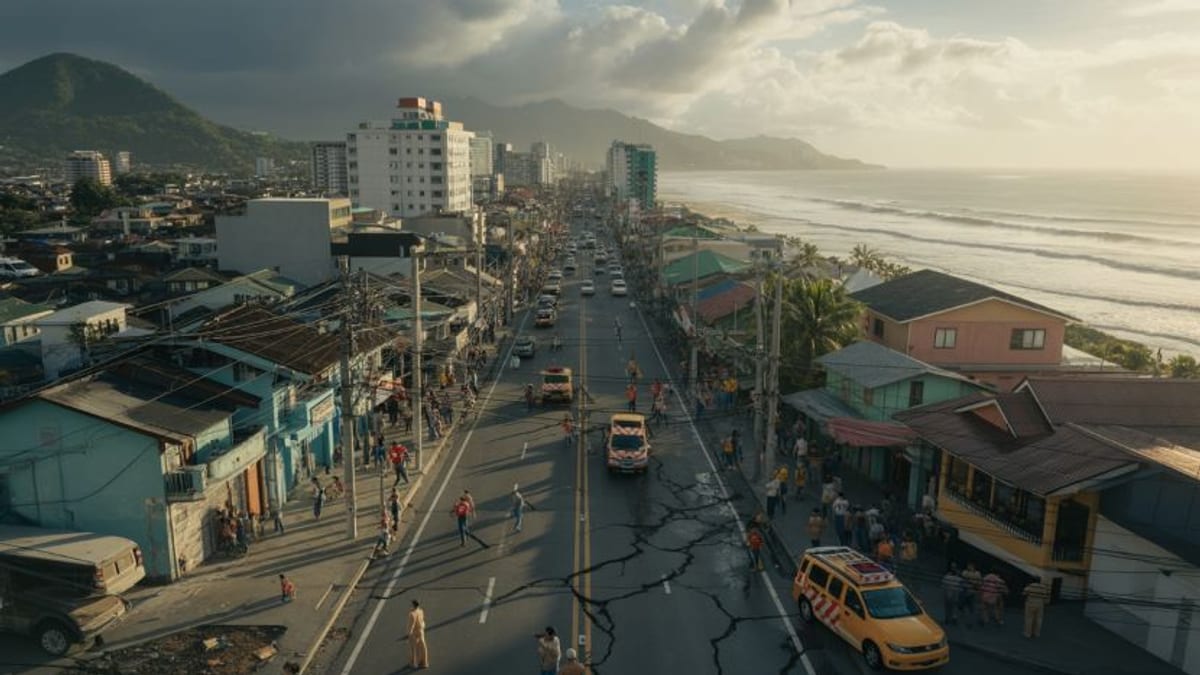
Strong offshore quake shakes southern Panama
According to publicly available seismic data, the earthquake occurred at 12:56 p.m. local time on Friday, October 9, with the epicenter located off Panama’s southern Pacific coast. Initial readings placed the magnitude at 7.6 before subsequent updates listed it at 7.7, classifying it as a major quake capable of causing serious damage in areas near the epicenter.
Reports indicate that the quake struck at a relatively shallow depth of around 10 to 20 kilometers beneath the ocean floor, increasing the intensity of shaking felt on land. Ground motion was reported across much of Panama, including Panama City, and in neighboring countries such as Costa Rica and Colombia. Shaking was strong enough in some communities to knock items from shelves and trigger brief power outages.
Regional monitoring systems and international agencies logged the event as one of the strongest earthquakes to hit Panama in recent decades. Impact assessments were still under way on Saturday, with local media describing damage to some buildings in provinces closer to the epicenter and scattered disruptions to electricity and communications.
Early reports from canal and port operators suggested that critical infrastructure, including the Panama Canal, continued functioning normally, though inspections were carried out as a precaution.
Tsunami alerts issued and later downgraded
Shortly after the quake, tsunami monitoring centers issued alerts for coastal areas around the eastern Pacific. Public bulletins indicated that hazardous tsunami waves of between one and three meters were possible along portions of the Pacific coasts of Panama and several Central and South American countries, including Costa Rica, Nicaragua, Colombia and Ecuador.
National meteorological and emergency agencies across the region relayed the messages, activating their coastal warning protocols. In low-lying areas of Panama and neighboring countries, local authorities urged residents to move away from beaches and, where feasible, to higher ground while the potential threat was evaluated.
As tide gauges and deep-ocean sensors reported data, publicly available information from tsunami centers later showed that any tsunami waves generated were limited in size. By several hours after the quake, bulletins indicated that the most serious threat had passed, and broad regional warnings were downgraded or canceled. Some centers described the event as a potential threat that did not evolve into a large-scale destructive tsunami.
Despite the relatively moderate sea-level changes ultimately observed, the alerts underscored how quickly an undersea earthquake of this magnitude can trigger precautionary warnings across wide stretches of coastline.
Impacts on communities and travelers
Local press and social media accounts described residents in coastal and inland cities rushing into streets as prolonged shaking rattled buildings. In provinces nearer the epicenter, people reported toppled furniture, cracked walls and disruptions to everyday activity. Some communities experienced interruptions to electricity and telecommunications services as grids and networks were checked for damage.
As of the latest published coverage, there were limited official details on casualties, and information about the full extent of structural damage was still emerging. Public reports suggested that, while serious impacts may have occurred near the epicenter, large-scale urban destruction did not immediately appear to match the strongest global earthquake disasters of recent years.
For travelers, the quake caused temporary anxiety and disruption. Hotels in parts of Panama City and key tourist areas activated emergency procedures and, in some cases, brief evacuations while buildings were inspected. Transport hubs monitored facilities for structural issues, with airlines and bus operators adjusting schedules while infrastructure checks were completed.
Travelers already in Panama or planning imminent trips have been advised, in publicly available advisories, to monitor local news, contact airlines or tour operators for the latest status of flights and services, and follow instructions from national emergency and civil protection services.
What the quake reveals about regional seismic and tsunami risk
The earthquake occurred in a tectonically active zone where the Cocos and Nazca plates interact with the Caribbean and South American plates. Geophysical agencies note that Panama, while not as frequently associated with powerful earthquakes as some parts of neighboring Chile, Mexico or Peru, still lies within a complex plate boundary region where major events are possible.
Historical risk assessments and training materials for the wider Caribbean and Central American region highlight that offshore earthquakes of around magnitude 7.6 to 7.8 at shallow depths, particularly beneath or very near the sea, can generate dangerous tsunamis. The October 9 event closely matched these parameters, explaining the rapid circulation of tsunami alerts even as experts worked to refine magnitude and depth estimates.
In recent years, regional and international organizations have conducted tsunami drills and preparedness exercises that simulate similar offshore earthquakes affecting Central American coasts. Publicly available documentation from these exercises emphasizes the importance of early warning messages, rapid evaluation of sea-level data, and clear evacuation guidance for low-lying communities and tourist areas.
The Panama quake is likely to renew attention on building standards, coastal evacuation routes and public awareness campaigns, particularly in resort towns, port cities and canal-adjacent communities that play a central role in regional travel and global trade.
Guidance for visitors in affected areas
Travel advisories issued in the wake of the earthquake encourage visitors in Panama and neighboring countries to stay alert for aftershocks, which are common following a major seismic event of this size. Even moderate aftershocks can cause additional damage to already weakened structures, especially in areas closer to the epicenter.
Visitors are encouraged to identify the nearest safe open areas and to familiarize themselves with hotel or accommodation emergency instructions. In many coastal destinations, posted signage indicates tsunami evacuation routes leading toward higher ground or inland zones that are considered safer from potential flooding.
International travelers planning to arrive in Panama in the days following the quake are advised to check with airlines for any schedule adjustments and to verify the operating status of accommodations and tour activities. Some attractions or coastal facilities may temporarily close to allow structural inspections, particularly in regions where shaking was most intense.
While major international gateways and the Panama Canal have publicly reported normal operations after inspections, conditions on the ground can vary by province and municipality. Up-to-date local information and official advisories remain essential for anyone moving through affected areas in the aftermath of the 7.7 magnitude quake.