


More news on this day
The United States Embassy in Jordan has issued new security alerts urging American citizens in the kingdom and across the wider Middle East to exercise heightened caution, citing the risk of regional attacks, airspace disruptions, and rapidly changing conditions for commercial travel.
Get the latest news straight to your inbox!
New alerts follow escalation in regional tensions
Publicly available alerts from the US Embassy in Amman dated October 8 and 9, 2026, indicate that American citizens are being advised to reconsider nonessential travel around the region amid heightened tensions involving Iran-backed Houthi forces and Saudi Arabia. Coverage by multiple regional outlets reports that the alerts warn of possible attacks on infrastructure, as well as disruptions to flights and airspace closures affecting routes across the Middle East.
According to recent reports, the embassy message highlights a “complex security environment” and notes that the situation can change with little or no warning. Travelers are urged to remain prepared for sudden changes to airport operations, airline schedules, and overflight permissions, even if Jordan itself remains relatively calm compared with neighboring states.
Jordan continues to be described in official advisories as a key transit and tourism hub, but also as a country exposed to spillover risks from conflicts on its borders and in the Gulf. The latest alerts build on earlier regional warnings and a worldwide caution issued by Washington earlier this year, all of which emphasize the potential for attacks on civilian and transportation infrastructure.
What the alerts mean for travelers in Jordan
For Americans already in Jordan, publicly available guidance stresses practical steps rather than immediate evacuation. The embassy messaging urges travelers to maintain a low profile, be alert in crowded public places and tourist sites, and pay close attention to security updates from both Jordanian authorities and US government channels.
The official Jordan travel advisory on the US State Department website currently calls on citizens to exercise increased caution, noting the risk of terrorism and cross-border violence in areas near Syria and Iraq. Certain northern and eastern border areas, including the vicinity of Ruwayshid and Mansheyat al Ghayyath, remain under firm US government travel restrictions for official personnel, and private travelers are strongly discouraged from entering these zones.
The embassy’s recent alerts also point to the possibility that Jordanian security services may react quickly to any credible threat, which can lead to road closures, visible security deployments, and enhanced screening at airports and major landmarks. Visitors heading to popular destinations such as Petra, Wadi Rum, and the Dead Sea are encouraged to build extra time into overland journeys in case of checkpoints or rerouted traffic.
Flight disruptions and transit risks through the region
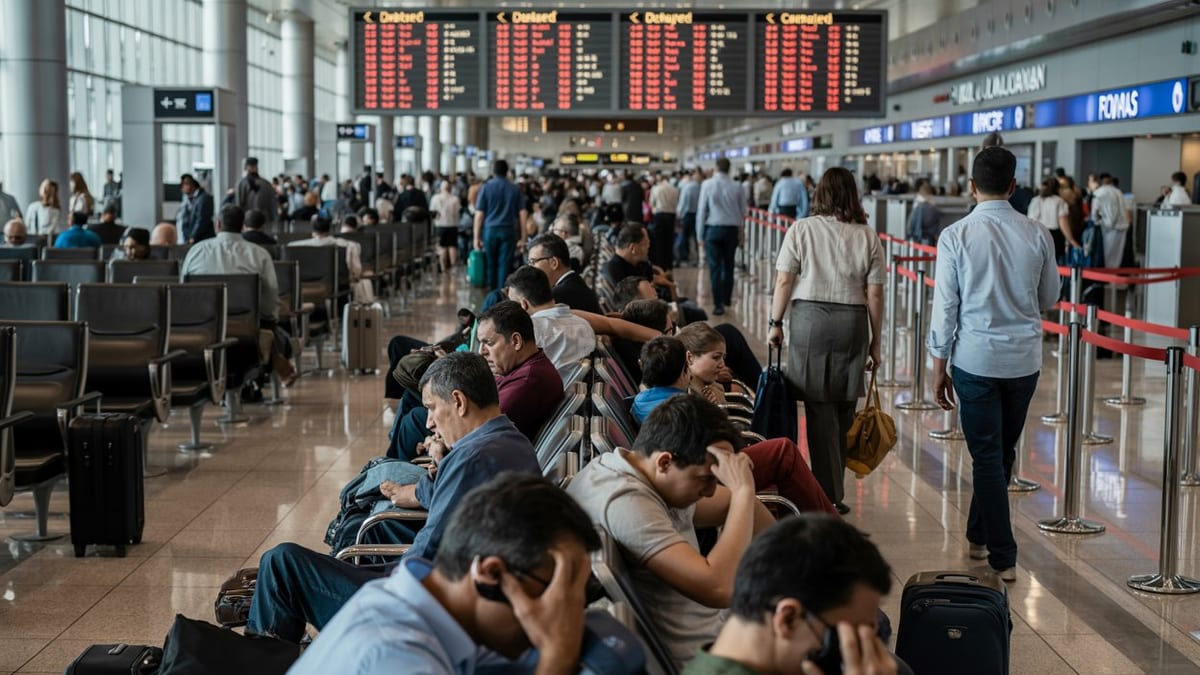
Reports summarizing the Amman alert note specific concern about commercial aviation, including the possibility that regional airspace could be closed with little notice during episodes of missile or drone activity linked to the conflict between Saudi Arabia and Houthi forces. In earlier episodes of regional tension, international carriers have rerouted or canceled flights transiting the Red Sea and Gulf air corridors, affecting passengers even when their final destination was unaffected.
American travelers using Amman’s Queen Alia International Airport as a hub to connect onward to destinations in the Gulf, Europe, or Asia are being advised in public coverage to closely monitor airline notifications and embassy communications. Sudden changes to overflight permissions or temporary closures of airspace could result in last minute cancellations or lengthy diversions that significantly alter itineraries.
The State Department’s global and regional guidance also reminds passengers that some neighboring countries may impose their own entry restrictions, additional security screening, or temporary closures of ports and airports during spikes in tension. Travelers planning complex multi-country routes, including overland trips into Saudi Arabia or onward to the Gulf, are encouraged to keep plans flexible and avoid nonrefundable bookings whenever possible until conditions stabilize.
Steps US citizens are urged to take
Public information from the State Department and the US Embassy in Amman highlights several specific actions for American citizens in Jordan. Travelers are urged to enroll in the Smart Traveler Enrollment Program, which enables the embassy to send security updates by email or text and makes it easier to contact citizens in an emergency. The broader Middle East guidance also points to consular contact numbers for Americans needing assistance in the region.
The embassy recommends that US citizens regularly review their personal security posture, including checking that passports and residency documents are valid, keeping digital and physical copies of travel documents, and identifying more than one way to reach the airport or exit the country if necessary. Travelers are also encouraged to maintain regular communication with family and friends in the United States so that someone is aware of their movements inside Jordan and any side trips to neighboring countries.
Published advisories emphasize the importance of following instructions from local authorities, including any curfews, road closures, sirens, or shelter-in-place directives. In areas where there is a history of protests or political gatherings, Americans are advised to avoid demonstrations and large public events, both because of potential unrest and the possibility that such gatherings could be targeted.
Balancing Jordan’s tourism appeal with new security realities
Despite the latest alerts, publicly available information shows that Jordan remains open to international visitors, and many of its major attractions continue to operate. Tourism is a central pillar of the Jordanian economy, and sites such as Petra, Jerash, Aqaba, and the Dead Sea still draw visitors from Europe, North America, and the Gulf. However, the cumulative effect of regional conflicts and periodic missile or drone incidents has created a more fragile operating environment for the travel sector.
Local media coverage indicates that hotel operators, tour companies, and transport providers in Jordan are closely tracking regional developments, particularly those affecting air routes over the Red Sea and Arabian Peninsula. Some operators have begun emphasizing flexible booking policies and the ability to adjust itineraries inside Jordan if regional disruptions interfere with planned connections.
For American travelers, the current situation presents a tradeoff between Jordan’s cultural and natural appeal and the uncertainties caused by a volatile regional security climate. The latest alerts from the US Embassy in Amman do not signal that tourism in Jordan has ceased, but they underline that trips now require more preparation, closer monitoring of official advisories, and a willingness to adapt plans quickly if conditions deteriorate.