


More news on this day
AAA is urging residents across Middle Tennessee to avoid nonessential travel and move quickly to secure homes, vehicles and emergency supplies as Hurricane Isaias pushes inland, with forecasts calling for dangerous wind, flash flooding and extended power outages across the region.
Get the latest news straight to your inbox!
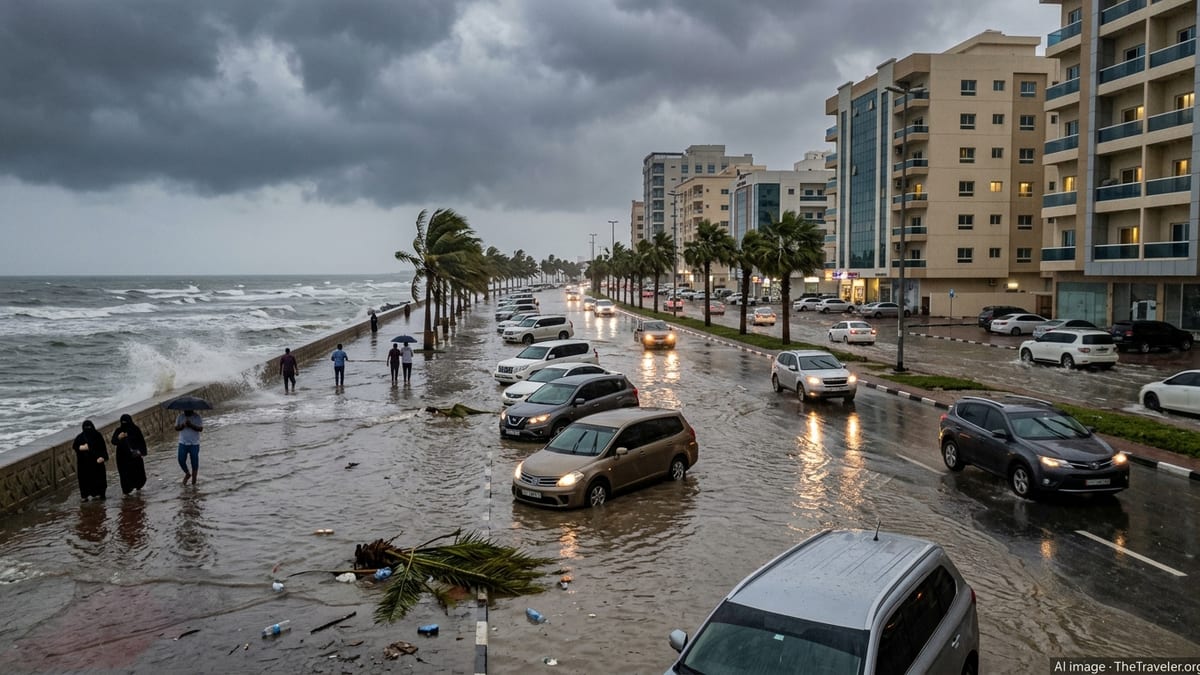
Isaias forecast to bring heavy rain, flooding and outages inland
Forecasts from national meteorological agencies indicate that Hurricane Isaias, now a major storm in the Gulf region, is expected to track north and northeast over the weekend, with its remnants crossing Alabama and moving into Middle Tennessee late Saturday into Sunday. Current projections call for several inches of rain in a short period, bringing a heightened risk of flash flooding on already saturated ground.
Published coverage of the storm track shows that Isaias has strengthened over warm Gulf waters, with peak winds over 110 miles per hour near landfall along the central Gulf Coast. While Middle Tennessee will be far from the landfall point, forecasters note that the system’s broad rain shield and embedded thunderstorms can still produce damaging wind gusts, localized tornadoes and prolific rainfall well inland.
Reports indicate that the greatest impacts for Middle Tennessee are likely to be roadway flooding, falling limbs and trees, sporadic tornadoes and widespread power outages that could last for days in some neighborhoods. Travel conditions are expected to deteriorate quickly once outer rain bands arrive, particularly overnight and during early morning hours when visibility is reduced.
Emergency management updates emphasize that precise rainfall totals and wind speeds for individual counties remain uncertain and may change as new advisories are issued. Residents are being urged to monitor local forecasts closely and adjust plans as updated information becomes available.
AAA urges drivers to avoid travel and never enter floodwater
In advance of the storm’s arrival, guidance from the Auto Club Group, which represents AAA members in Tennessee, is strongly discouraging nonessential travel during the height of Isaias’ impacts. AAA safety advisories referenced in recent Tennessee news reports stress that drivers should stay off the roads when heavy rain bands and strong winds are moving through.
AAA’s severe weather recommendations consistently highlight that flooded roadways remain one of the leading causes of hurricane-related deaths away from the coast. Publicly available AAA safety materials advise motorists to turn around rather than drive through standing or moving water, noting that as little as a foot of water can float many vehicles and obscure washed-out pavement, downed power lines or other hidden hazards.
AAA guidance for Tennesseans also calls on anyone who must travel for essential reasons to reduce speed, turn on headlights, increase following distance and avoid using cruise control in wet conditions. Hydroplaning becomes much more likely at highway speeds, and sudden gusts of wind can push vehicles out of their lane, especially on elevated roadways and bridges.
Recent AAA advisories aimed at Tennesseans emphasize planning ahead for possible closures of low-lying roads and underpasses that frequently flood in heavy rain. Residents are encouraged to map out alternate routes on higher ground, keep fuel tanks at least half full in case detours are necessary and store an emergency car kit with water, nonperishable snacks, a flashlight, basic tools and a portable phone charger.
Steps to harden homes before wind and rain arrive
AAA’s hurricane preparedness resources, along with regional news coverage, outline a series of immediate actions homeowners in Middle Tennessee can take before conditions deteriorate. These include bringing in or securely tying down outdoor furniture, grills, gardening tools, trash cans and decorations that could become airborne in strong gusts or be swept away by fast-moving runoff.
Home preparation checklists from AAA-backed guides advise residents to inspect gutters and downspouts, clear away leaves and debris, and confirm that water can drain freely away from foundations. Keeping roof drains and yard inlets clear can help reduce the chance that intense bursts of rain will back up against the house and enter basements, crawl spaces or ground-level rooms.
Insurance-focused guidance from AAA also recommends creating a quick home inventory using photos or video of each room and major possessions, then storing that documentation in cloud storage or on a portable drive. Reviewing homeowners and renters policies for wind and water coverage, hurricane or windstorm deductibles, and exclusions for flooding is described as an important step to take before a storm rather than afterward.
For residents in manufactured homes, older structures or low-lying properties that have previously flooded, widely shared preparedness materials suggest coordinating in advance with friends or family in sturdier housing on higher ground. Having a confirmed place to go if conditions worsen or if local officials later encourage relocation can make any evacuation faster and less stressful.
Power, communications and essential supplies
AAA hurricane readiness guides and broader emergency planning resources recommend that Middle Tennesseans prepare to be self-sufficient at home for at least several days. That includes storing enough drinking water for each person, purchasing nonperishable foods that do not require extensive cooking, and ensuring an adequate supply of prescription medications and key over-the-counter items.
Power outage preparation advice emphasizes charging phones, laptops, external batteries and rechargeable flashlights before the storm’s arrival, and having extra batteries on hand for standard flashlights and radios. Safety materials consistently highlight the importance of using battery-powered lanterns instead of candles during outages to reduce fire risk.
For households that own portable generators, AAA-aligned safety information stresses correcting placement and ventilation. Generators should be used only outdoors, positioned well away from doors, windows and vents to prevent carbon monoxide from accumulating indoors. Guidance warns that generators should never be operated inside garages, on enclosed porches or in other partially confined spaces, even if windows are open.
Residents are also encouraged to print or write down key phone numbers, including insurance contacts, utility outage reporting lines and nearby medical providers, in case mobile devices fail or networks are disrupted. Keeping a hard-copy list of medications and medical conditions for each family member can help if emergency care is needed while digital records are difficult to access.
Travel insurance, future plans and ongoing vigilance
Separate travel industry reporting from AAA notes that many Tennesseans had planned fall and late-season trips within driving distance of home, a pattern identified in survey data earlier in the year. With Isaias affecting road conditions across multiple southeastern states, the organization’s travel experts have been highlighting the value of flexible bookings and, when purchased in advance, certain types of travel insurance that may help recover prepaid, nonrefundable expenses when trips are disrupted by severe weather.
AAA’s public guidance on travel insurance stresses that coverage details vary significantly between policies and providers, and that protections for named storms generally apply only if policies are purchased before a system is officially identified. Residents considering future trips after the passage of Isaias are encouraged in these materials to review coverage limits, exclusions related to hurricanes and flooding, and any time-sensitive options such as cancel-for-any-reason upgrades.
While current forecasts suggest that conditions in Middle Tennessee should gradually improve after the storm lifts out of the region, weather and safety resources consulted for this report emphasize that hazards often linger. Standing water, downed trees, malfunctioning traffic signals and debris on roadways can all pose risks long after heavy rain has ended.
For now, the consistent message across AAA’s severe weather advisories and regional coverage is that residents in Middle Tennessee should finish preparations as soon as possible, remain off the roads during the worst of Hurricane Isaias’ passage, and continue to follow updates from trusted weather and public safety channels as conditions evolve.