


More news on this day
Air travel across Asia faced severe disruption on July 10 as a powerful typhoon system and existing operational strains combined to trigger hundreds of cancellations and delays at key hubs including Hong Kong, Singapore, Tokyo and Seoul.
Get the latest news straight to your inbox!
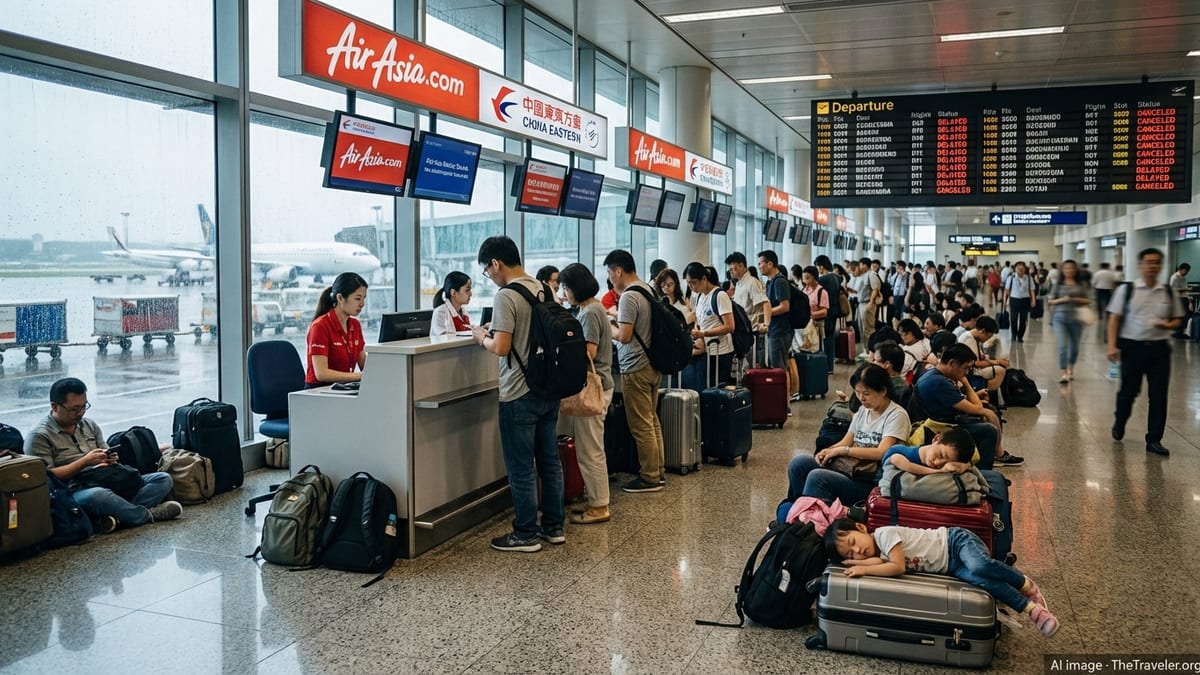
Typhoon Bavi Drives Wave of Weather-Related Cancellations
Disruption has centered on Super Typhoon Bavi, which has been tracking across the western Pacific toward Taiwan and the East China Sea, bringing intense winds and heavy rain to parts of East and Northeast Asia. Tropical cyclone tracking from regional meteorological services indicates that Bavi strengthened into a super typhoon earlier this week, prompting aviation alerts along its projected path near Taiwan, Japan and the Korean peninsula.
Publicly available airline notices show that Singapore Airlines and its low cost arm Scoot preemptively cancelled or retimed at least 18 flights between Singapore and Sapporo, Seoul, Taipei and Tokyo for July 10 and 11, citing adverse weather conditions linked to Bavi. These schedule changes affect both point to point passengers and those connecting through Changi Airport, one of the region’s largest transfer hubs.
In Hong Kong, carrier alerts from HK Express detail the cancellation of multiple round trip services between Hong Kong and Okinawa on July 10 due to the same storm system. Travelers heading to or from Japan’s southern islands have been advised to monitor flight status closely over the coming days as the typhoon continues to move northwest.
Reports from travelers in mainland China also indicate growing concern over potential shutdowns at Shanghai’s airports as Bavi approaches. Passengers booked on evening departures from Shanghai to Tokyo on July 10 have described heightened expectations of significant delays or last minute cancellations as air traffic controllers adjust operations for deteriorating weather.
Major Hubs from Tokyo to Hong Kong Experience Elevated Disruption Levels
Data from live flight tracking platforms shows elevated disruption scores at several of Asia’s busiest international airports over the past 24 hours, including Tokyo Haneda, Hong Kong International and Seoul Incheon. These indices aggregate the number of delayed and cancelled flights alongside average delay duration, with recent readings placing some airports in ranges associated with long waits and numerous cancellations.
While absolute figures fluctuate hour by hour, recent historical snapshots from regional aviation monitoring sites illustrate the scale of disruption that has become increasingly common. Earlier this year, compiled statistics from a regional news outlet documented more than 2,400 delayed flights and over 130 cancellations in a single day across key hubs such as Bangkok, Kuala Lumpur, Dubai, Jakarta, Singapore, Tokyo, Shanghai, Incheon and Beijing.
Hong Kong’s role as a connecting hub has made that airport particularly sensitive to shocks. Data released by Hong Kong’s Transport and Logistics Bureau in May highlighted that even with overall passenger traffic recovering, temporary spikes in cancellations at the city’s airport can have outsized ripple effects on itineraries compared with competing hubs in Singapore, Seoul and Tokyo.
Japan’s airports have also seen repeated bouts of weather-related disruption this season. In late May and early June, Typhoon Jangmi prompted the grounding of hundreds of flights across the country, affecting routes linking Tokyo, Osaka, Fukuoka, Kagoshima, Okinawa and Taiwan. That earlier episode is now serving as a reference point for airlines as they calibrate their response to Bavi and other systems forming over Pacific waters.
Stranded Passengers Face Crowded Terminals and Tight Rebooking Options
Across social media and travel forums, passengers described crowded terminals, long customer service queues and limited same day rebooking options at major Asian hubs as weather related cancellations piled up. Some travelers reported being shifted from direct flights to more complex routings via alternative hubs, while others faced overnight stays as they waited for available seats.
Online posts from passengers transiting Hong Kong and Singapore in recent months suggest that even under non typhoon conditions, recovery from large scale disruptions can stretch across one to two days as airlines reposition aircraft and crew. When storms force preemptive cancellations across multiple carriers, those backlogs can intensify, particularly on popular regional routes already operating near capacity during the northern summer peak.
Budget travelers appear especially exposed when flights are dropped entirely for seasonal or cost cutting reasons. In the Philippines, schedule filings and passenger accounts show that Philippines AirAsia suspended its Manila to Tokyo Narita flights from June through September and cancelled a Manila to Hong Kong route from May, reducing alternative options for disrupted travelers seeking to rebook between Southeast Asia and Northeast Asia.
Reports from passengers affected by the latest wave of operational changes describe a mix of outcomes, from automatic rebooking on later flights to extended waits for vouchers or refunds. The experience varies significantly between airlines and jurisdictions, depending on local consumer protection rules and individual carrier policies on weather related disruption.
Operational and Cost Pressures Add to Weather Shock
Beyond the immediate impact of Typhoon Bavi, regional aviation analysts have highlighted structural pressures that are making Asia’s flight network more vulnerable to disruption. Industry publications in recent months have pointed to sharp swings in jet fuel prices, cautious capacity planning and lingering staffing gaps as factors that have led some major Asian airlines to trim frequencies or maintain thinner buffers in their schedules.
Coverage in business media focusing on Hong Kong and other regional hubs has noted that some flagship carriers have cut a small percentage of flights on long haul routes to Europe and key Asian markets in response to higher operating costs and supply disruptions. These steps can improve short term financial metrics but also reduce flexibility when adverse weather or technical issues arise.
Earlier research into global disruption events, including large scale IT outages in 2024 that affected airline check in and reservation systems, showed how quickly bottlenecks at a handful of hubs can cascade into widespread delays across entire networks. Observers point out that today’s typhoon related cancellations are unfolding on top of an already tightly balanced system, magnifying the impact on passengers.
Industry briefings indicate that airports and airlines across the region are investing in contingency planning, including improved communication tools and data sharing between carriers, airport operators and air traffic authorities. However, the current episode underscores that even with better forecasting and coordination, extreme weather can still overwhelm available buffers during peak travel periods.
Travelers Urged to Monitor Flights and Build in Extra Time
With Typhoon Bavi still moving through the region and secondary weather systems possible later in July, publicly available guidance from airlines and airports strongly emphasizes proactive planning by travelers. Many carriers are advising passengers scheduled to fly through affected cities, particularly Hong Kong, Taipei, Seoul and Tokyo, to monitor their booking status frequently in the 24 to 48 hours before departure.
Several Asian airlines have published flexible rebooking policies for flights directly affected by the storm, allowing one time changes or credit vouchers without additional fees within specified travel windows. These waivers generally apply only to tickets on impacted dates and routes, and passengers are being encouraged to review the specific conditions listed on carrier information pages.
Airport authorities and aviation observers routinely recommend that passengers allow extra time to reach the airport during major weather events, as local rail and road networks can experience their own delays or temporary suspensions. In previous typhoon episodes affecting Tokyo and Hong Kong, rail line closures and flooded roads contributed to missed check in times even on flights that ultimately departed.
As the northern summer travel season continues, analysts expect further bouts of weather related disruption across Asia’s key hubs, particularly during peak typhoon months. The current wave of cancellations and delays highlights the importance for travelers of flexible itineraries, up to date information and contingency plans when crossing a region where powerful storms remain a recurring feature of the travel landscape.