


More news on this day
An Air Canada flight arriving at Montreal–Trudeau International Airport left the paved surface while exiting the runway in wet conditions on Thursday evening, temporarily closing one runway and prompting delays but causing no reported injuries, according to early reports.
Get the latest news straight to your inbox!
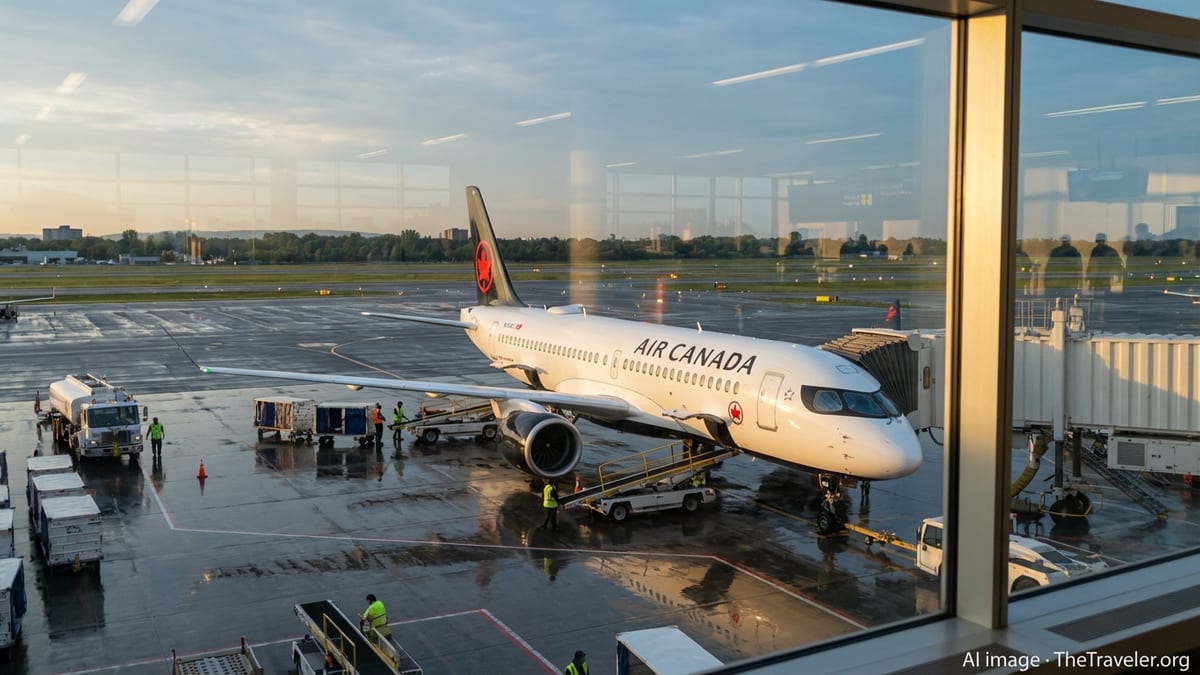
Jet exits paved surface after landing at Montreal–Trudeau
Publicly available flight tracking data and local media coverage indicate the incident occurred after the aircraft had landed and was turning off the runway onto a high-speed taxiway at Montreal–Trudeau International Airport. Instead of remaining fully on the taxiway, the jet continued into the adjacent grass area, coming to a stop off the paved surface.
Initial reports describe the aircraft as an Air Canada jet operating a scheduled passenger service into Montreal. The aircraft had completed its landing roll and appeared to be in the process of vacating the active runway when it veered away from the intended path. Images and descriptions shared on social media suggest the aircraft’s nose and main landing gear came to rest on soft ground rather than on concrete or asphalt.
There were no immediate indications of fire or structural damage to the airframe. Passengers on board described through publicly shared posts that airport fire trucks and emergency vehicles surrounded the aircraft after it stopped, consistent with standard airport response procedures when a plane leaves a designated movement area.
Montreal–Trudeau, Canada’s third-busiest airport, has two primary parallel runways and an extensive taxiway system. The incident took place in an area frequently used by arriving traffic to clear the runway quickly, an arrangement intended to maintain efficient movements during peak periods.
Weather and runway conditions under scrutiny
Reports from passengers and aviation enthusiasts following the flight indicate that the aircraft landed during heavy rain, with low visibility and wet pavement at the time of arrival. Such weather can significantly reduce braking efficiency and make tight turns off the runway more challenging, particularly on high-speed exits designed for rapid clearance.
Specialists in airport operations note that when water accumulates on taxiway surfaces, aircraft tires may have reduced grip, increasing the risk of sliding or overshooting turns if speeds are not sufficiently low. Early online commentary from pilots and frequent flyers observing the data has focused on the combination of wet conditions and the geometry of the taxiway exit as possible contributing factors.
Runway excursions and taxiway overruns are a recognized safety concern worldwide, prompting regulators and airports to analyze friction levels, drainage and signage. Montreal–Trudeau has ongoing infrastructure projects aimed at improving airfield fluidity, including work on parallel taxiways near the north runway system. Observers say any formal investigation will likely look at whether surface conditions, lighting, markings or ongoing works in the area had any bearing on the event.
At this stage, publicly available information does not suggest that strong crosswinds or severe thunderstorms were present at the exact moment of the landing, but the persistent rain in the region on Thursday created less than ideal braking conditions across the airfield.
Runway closure triggers delays and diversions
Following the incident, one of Montreal–Trudeau’s runways was temporarily taken out of service while emergency crews attended to the aircraft and assessed ground and pavement conditions. Flight tracking platforms and passenger accounts show that arriving and departing traffic shifted to the remaining active runway, resulting in airborne holding patterns, ground delays and a small number of diversions.
Some travelers reported waiting on board aircraft at the terminal for pushback clearance, while others described extended taxi times after landing as operations were compressed onto a single runway. Delays appeared to vary from short schedule adjustments to more substantial knock-on disruptions for later evening departures.
Airport traffic at Montreal–Trudeau typically remains steady into the late evening hours, with a mix of domestic, transborder and transatlantic services. The temporary reduction in runway capacity during a busy period increased congestion, but publicly available data indicates that operations gradually stabilized once the affected runway was inspected and partially returned to use.
For connecting passengers and those on tight schedules, the brief shutdown had ripple effects, including missed onward flights and rebooking challenges. Travel forums began filling with accounts of disrupted itineraries and questions about compensation rules for weather-affected and operationally delayed flights.
Passengers safely disembarked after on-ground assessment
Reports from individuals on board state that passengers remained on the aircraft for a period while airport emergency teams inspected the jet and the surrounding area. Cabin announcements referenced checks being carried out by fire services and ground staff before any movement of the aircraft, which is consistent with safety protocols when an aircraft comes to rest off the paved surface.
Publicly shared accounts indicate that, once authorities determined it was safe to do so, passengers were eventually transferred from the jet to the terminal using ground vehicles and mobile stairs. No injuries were reported among travelers or crew, and there were no confirmed indications of fuel leaks or other environmental hazards.
Leaving an aircraft in soft ground can complicate recovery efforts, as towing must be carefully managed to avoid damage to the landing gear, fuselage and engines. Based on descriptions from the scene, the aircraft appeared to be largely upright and stable, which typically allows recovery teams to work methodically to return it to a serviceable area for detailed inspection and maintenance checks.
Passengers posting online expressed a mix of relief at the safe outcome and frustration over delays and limited initial information. Travel specialists often advise that, in such situations, operational updates can be constrained while crews focus on immediate safety checks and coordination with airfield managers.
Investigation and wider safety context
In Canada, serious runway and taxiway incidents typically fall under the purview of the Transportation Safety Board, which reviews flight data, cockpit procedures, weather reports and airport infrastructure. While it was not immediately clear what level of formal investigation would follow this event, aviation analysts expect officials to examine flight recorder data, brake and steering inputs, and the condition of the taxiway surface.
Airlines generally conduct their own internal safety reviews in parallel, using flight data monitoring programs to identify any deviations from standard operating procedures and to refine training where needed. For larger carriers such as Air Canada, these programs can involve detailed analysis of thousands of flights to detect patterns in unstable approaches, hard braking or high-speed exits.
The incident at Montreal–Trudeau comes at a time of heightened awareness around runway safety globally, with regulators encouraging airports to improve taxiway design, deploy better surface condition reporting tools and expand the use of safety areas around runways. Near-misses and excursions at other airports have led to recommendations ranging from modified exit angles to additional lighting and clearer signage.
For travelers, events of this kind serve as a reminder that commercial aviation remains highly safe, with accidents and serious injuries extremely rare relative to the volume of flights. Nonetheless, disruptions such as Thursday’s excursion can have an outsized impact on passenger confidence and schedules, particularly during peak summer travel periods when aircraft and crews are tightly scheduled.