


More news on this day
Massive typhoons sweeping across East Asia have unleashed a fresh wave of disruption for air travelers, with aggregated aviation data indicating 136 flight cancellations and 5,846 delays across the region as airlines scramble to navigate powerful winds, torrential rain and airspace restrictions.
Get the latest news straight to your inbox!
Twin Storms Drive a New Wave of Disruptions
Publicly available flight boards and aviation tracking dashboards for late June 2026 point to intense weather disruption concentrated around Japan, Taiwan and portions of coastal China, where back-to-back storms have tracked across heavily used air corridors. The latest disturbance follows several weeks of elevated weather-related stress on Asia’s aviation network, compounding earlier episodes of disruption triggered by Typhoon Jangmi and other early-season systems.
Recent reports from regional outlets describe Severe Tropical Storm Mekkhala, downgraded from a typhoon, and a companion system bringing gusts above 140 kilometers per hour and heavy rain to southern and western Japan. In response, airlines have adjusted or scrubbed services into and out of key Japanese gateways, while knock-on effects have appeared at secondary airports as aircraft and crews fall out of position.
Within this broader pattern, compiled operational data for a single 24 hour window shows 136 cancellations and 5,846 delays linked to these storms across Asian airports. While these figures represent only a snapshot, they highlight the strain that clustered weather events place on a system already operating close to capacity at the start of the region’s peak summer travel period.
Travelers connecting between Northeast and Southeast Asia, as well as those heading to popular island destinations, are feeling the impact most acutely. Extended rolling delays have become common as carriers juggle safety constraints, crew duty limits and airport slot availability once the worst of the weather passes.
Japan’s Major Hubs Bear the Brunt
Japan continues to sit at the center of the latest wave of flight disruption. Published coverage from regional news organizations indicates that domestic and international services at Tokyo’s Haneda Airport, Osaka’s Kansai Airport and several southern gateways have been heavily affected by storm-related air traffic control restrictions and crosswinds outside normal operating envelopes.
Haneda, one of Asia’s busiest mixed-use hubs, has functioned as a weather bottleneck during recent typhoon episodes, with hundreds of flights experiencing pushback, taxi or airborne holding delays as controllers meter traffic flows for safety. Tracking dashboards during the latest storms show especially high delay volumes on trunk routes linking Tokyo with Sapporo, Fukuoka, Okinawa and major overseas hubs in East and Southeast Asia.
In parallel, a significant share of cancellations has been concentrated on shorter domestic legs and regional links to outlying islands, where aircraft types are more sensitive to crosswinds and where airport infrastructure can be more vulnerable to flooding or power interruptions. Publicly available schedules show that some of these services have been proactively withdrawn for entire operating days, rather than risk repeated go or no-go decisions as conditions fluctuate.
The pressure on Japanese hubs reverberates across the wider region. Missed connections at Haneda and Kansai can cascade into delays at onward destinations in Korea, Taiwan, Singapore and beyond, reducing the ability of airlines to return to normal operations quickly once weather conditions improve.
Regional Carriers Struggle to Rebuild Schedules
Airlines across Asia are still working through a month of weather-related disruption even as new storms form. Earlier in June, aviation data compiled from airport displays showed more than 200 cancellations and several thousand delays in a separate severe weather episode that affected Japan, Hong Kong, Singapore, Malaysia, India and Indonesia. Those earlier events left many carriers with tight aircraft rotations and little slack for additional disruption.
Public information from airline schedules and operational dashboards suggests that large full-service airlines and low cost carriers alike are resorting to a mix of reactive and preemptive measures. In some cases, flights are retimed by several hours to avoid the peak of storm impact or to work around airport curfews. In others, rotations are consolidated, with passengers rebooked onto fewer services so that crews and aircraft can be concentrated on routes with stronger demand or better weather prospects.
These decisions have contributed to the current tally of 136 cancellations tied to the most recent typhoon episode, but they may also help limit the risk of even more extensive day-of-travel disruption. By cancelling earlier, carriers can reduce the number of aircraft and crew stranded out of position and maintain more predictable operations on unaffected routes.
However, the high volume of delays indicates that many flights are still attempting to operate within narrow weather windows. For passengers, this often translates into prolonged periods in terminals, repeated gate changes and late arrivals that ripple into missed connections on onward long haul services to Europe, North America and the Middle East.
Travelers Face Crowded Terminals and Limited Rebooking Options
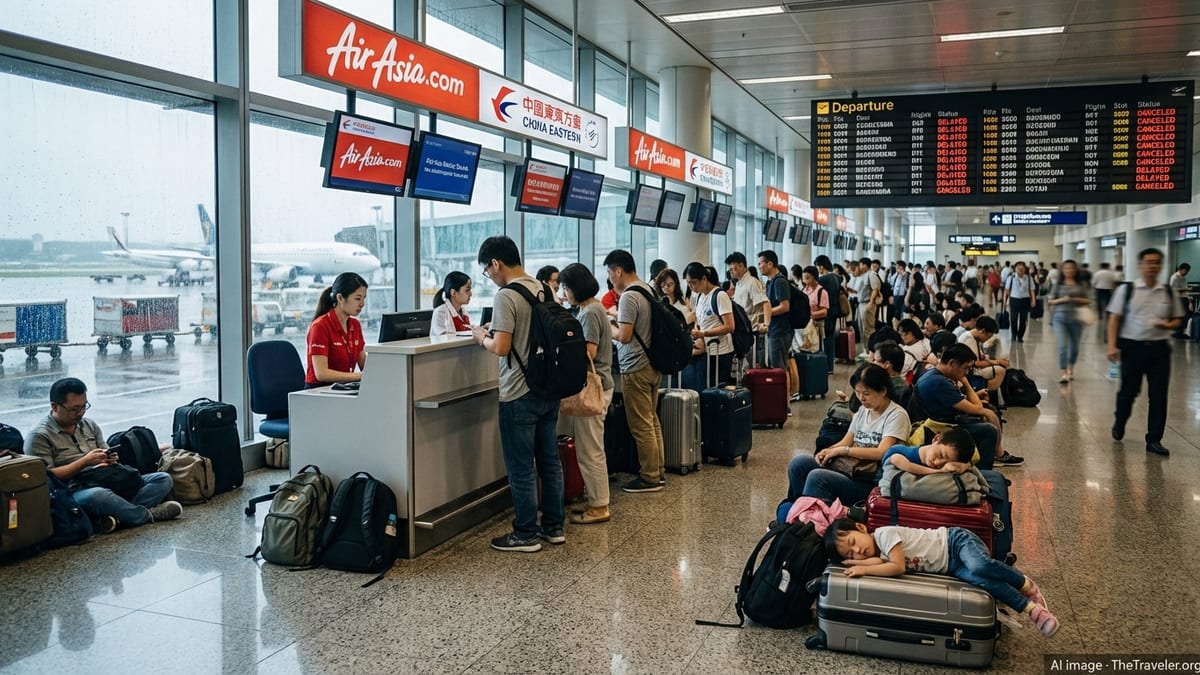
Across the region, images from airport departure halls and local media footage show long queues at check in counters and transfer desks as travelers seek new routing options. With so many flights delayed rather than outright cancelled, spare seats on later services can be limited, particularly on peak leisure routes into Japan’s resort islands and major Southeast Asian cities.
Consumer guidance from travel rights organizations and aviation advisory platforms emphasizes the importance of monitoring flight status closely as typhoons approach, using both airline channels and independent tracking tools. Travelers are also urged to have contingency plans for overnight stays, including keeping receipts for accommodation and meals, which may be needed later when seeking reimbursements or goodwill gestures under airline policies.
In some Asian jurisdictions, passenger protections around weather-related disruption remain relatively limited, especially compared with regimes in parts of Europe. Publicly available information on airline contracts of carriage shows that many carriers classify typhoons as extraordinary circumstances that relieve them from some compensation obligations, even while they may still provide basic care such as meals and hotel vouchers on a discretionary basis.
The surge in delays has also exposed pressure points in customer service systems. Social media commentary and local reports describe long response times on call centers and chat channels at peak disruption periods, prompting some travelers to seek assistance from on-the-ground airport staff instead. Those who booked through third party agencies can face additional layers of complexity when trying to make changes during fast moving weather events.
Preparing for an Active Typhoon Season
With the Northwest Pacific typhoon season still in its early stages, meteorologists and transportation planners anticipate further episodes of travel disruption in the months ahead. Historical climatological data indicates that the peak of storm activity typically arrives later in the northern summer and early autumn, suggesting that the recent flurry of weather systems may represent the opening phase of a prolonged period of operational risk for airlines.
Aviation analysts note that Asia’s air traffic recovery and ongoing capacity growth have left major hubs running with little spare runway and terminal capacity, making them more vulnerable to cascading delays when storms trigger temporary closures or flow restrictions. In such an environment, even a moderate typhoon can produce outsized knock-on effects if it strikes during peak travel days or in quick succession with other weather or operational challenges.
Travel planners and corporate travel managers are increasingly building weather risk into their itineraries, advising clients to allow longer connection times at key hubs and to avoid last flight of the day options on routes frequently affected by tropical systems. Some are also steering travelers toward routings with more alternative flight options in case of disruption, even if that means accepting slightly longer total journey times.
For individual travelers, the latest episode of 136 cancellations and 5,846 delays serves as a reminder that flexibility is essential when flying through typhoon prone regions. Booking changeable tickets, traveling with carry on luggage where possible, and maintaining up to date contact details with airlines can all help reduce the impact when severe weather again collides with Asia’s crowded skies.