


More news on this day
American Airlines is emerging as the least reliable major U.S. carrier for checked baggage, according to recent federal data and independent analyses that place it ahead of United Airlines and several regional partners in mishandled luggage rates.
Get the latest news straight to your inbox!
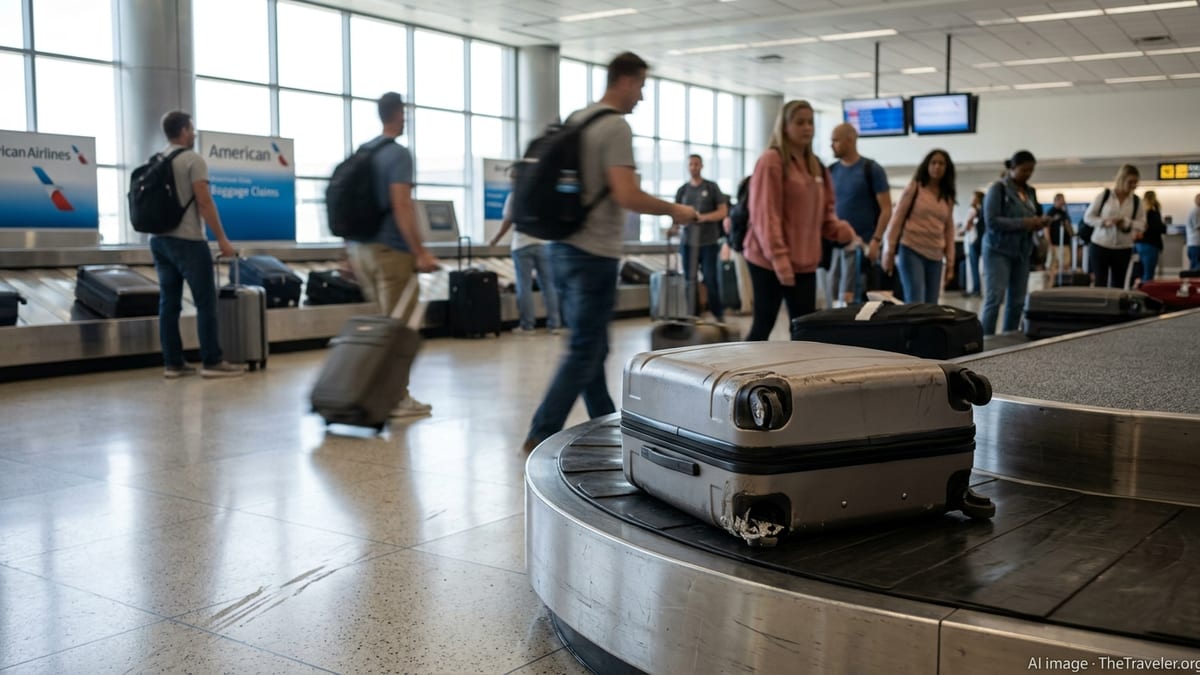
Federal Data Highlight American’s Outsize Baggage Problem
U.S. Department of Transportation Air Travel Consumer Reports for late 2023 and the first half of 2024 show American Airlines near the bottom of the industry when it comes to mishandled baggage rates. In monthly rankings covering large and regional carriers, American consistently posts one of the highest numbers of bags mishandled per 100 or 1,000 checked pieces, even after accounting for its size as one of the country’s biggest airlines.
Analyses of multi year data compiled from the agency’s reports indicate that American has mishandled more bags than any other U.S. airline since 2021. One study of 2021 to 2024 figures, using government statistics, found that more than 7 million bags were reported mishandled over that period, with American at the top of the list by both total incidents and rate per bags enplaned.
More recent federal tables for late 2023 and mid 2024 continue to show American handling checked luggage less reliably than most peers. In April 2024 data, for example, American’s mishandled baggage rate sits above that of United, Delta and Southwest, underscoring a pattern that extends beyond seasonal disruptions or a single travel surge.
Because the government definition of “mishandled” includes bags that are lost, delayed, damaged or pilfered, the figures speak not only to outright lost luggage but also to the likelihood that a traveler’s checked bag will arrive late or in poor condition when flying with American.
United Follows Close Behind Among Major Network Carriers
United Airlines, while not posting the same top level rates as American, also ranks among the major carriers with a comparatively high share of mishandled bags in recent government tallies. In published tables for late 2023 and early to mid 2024, United’s rate typically falls in the lower half of the pack, above Delta and several low cost carriers but still better than American’s figures.
Consumer facing compilations of baggage performance have increasingly grouped American and United together as airlines that travelers should watch closely when checking luggage. Travel and data analysis outlets that track mishandled bag rates over a full year often place both carriers at or near the bottom of rankings, with United occupying a middle ground between Delta’s relatively strong performance and American’s weaker record.
Complaint narratives filed to consumer agencies and watchdog organizations add to that statistical picture. Publicly viewable cases describe United passengers chasing missing bags for days or weeks and disputing reimbursement for delayed or damaged luggage. While anecdotes do not replace aggregate data, their volume and detail have contributed to a perception that United’s baggage service can be inconsistent, especially during peak travel periods or complex itineraries involving partner airlines.
Despite this, United’s most recent federal metrics still generally track better than American’s, suggesting that while both network carriers face heightened scrutiny, American remains the clear outlier on lost and delayed bags.
Regional Affiliates and System Complexity Worsen Outcomes
The statistics behind American and United’s baggage records include flights operated by their regional affiliates, such as Envoy Air and PSA Airlines for American and several regional partners for United. These operators, flying under the mainline brands on smaller jets, often post higher mishandled baggage rates than their parent carriers, pulling overall performance down.
Federal data tables show that some of these regional airlines record more mishandled bags per 100 or 1,000 checked than many larger competitors. Because passengers usually book through the mainline carrier and see a single brand on their tickets, they may not realize that a high risk regional partner is handling their luggage. When bags go missing, the complaint is commonly associated with the mainline name, feeding broader reputational damage for American and United.
Network complexity also plays a role. Both American and United run extensive domestic and international hub systems with tight connections and heavy reliance on short haul feeder flights. Every extra handoff between aircraft and airports increases the opportunity for bags to be misrouted, delayed or damaged. Analysts note that carriers with simpler point to point networks, or those operating largely within one region, often show lower mishandled baggage rates as a result.
As a consequence, the worst statistics for lost and delayed bags tend to cluster not only around specific brands but also around the intricate webs of flights that support their hub and spoke models.
How Travelers Are Responding to Baggage Risk
The growing body of data around mishandled baggage is increasingly visible to travelers. Consumer facing travel sites and news outlets now publish regular rankings of U.S. airlines by lost and delayed bags, often drawing directly from each year’s Air Travel Consumer Report. These overviews typically highlight American as the airline most likely to mishandle luggage, followed by United and several regional or niche carriers.
In response, many passengers are rethinking when and how they check bags, especially when flying on carriers that appear at the bottom of these rankings. Travel advisories commonly recommend carrying on luggage whenever possible, using tracking devices inside checked bags and keeping essential medications, documents and valuables out of the hold regardless of airline.
Industry observers note that some travelers are also using baggage performance data to decide between similar itineraries. When ticket prices are close, a route on an airline with a better track record for baggage handling can be more attractive than one on a carrier associated with higher lost bag rates, particularly on trips involving tight connections or international transfers.
For now, publicly available information suggests that American remains the primary carrier under scrutiny for mishandled luggage, with United and several affiliates not far behind. As federal data for the rest of 2024 and into 2025 is released, travelers and analysts alike are expected to watch closely for signs that these airlines are either improving their baggage operations or continuing to lead industry rankings for lost and delayed bags.