


More news on this day
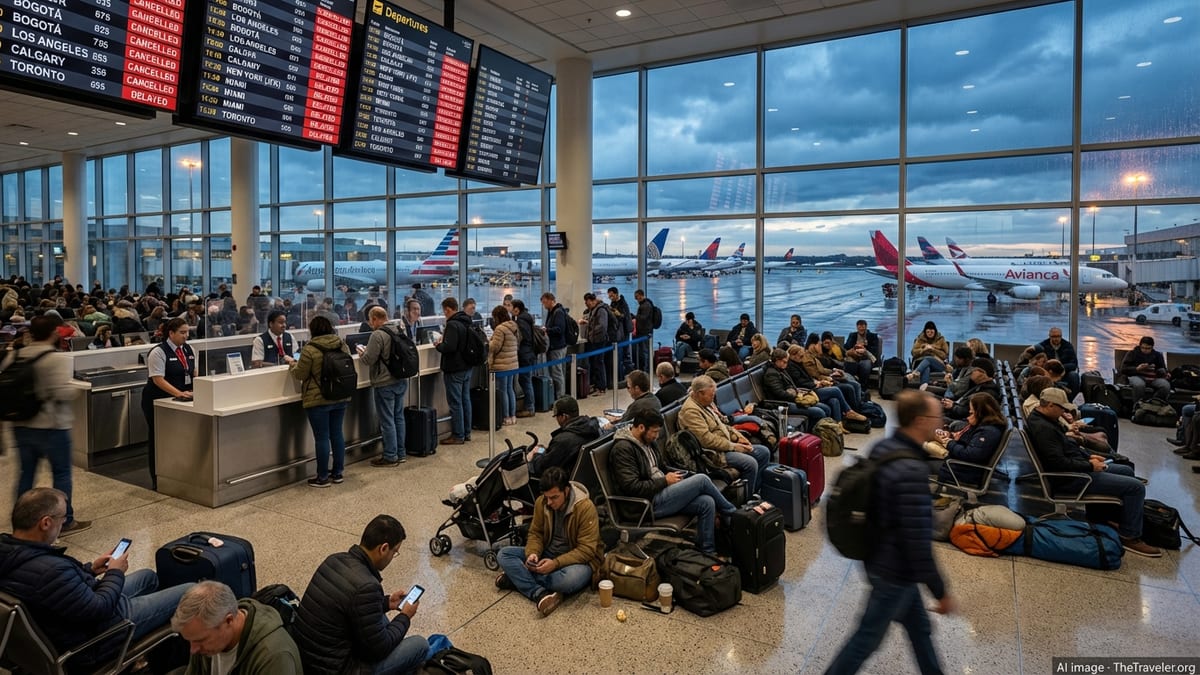
Air travel across the United States faced fresh disruption on July 14 as live data showed 3,042 flights delayed and 143 canceled within, into, or out of the country, affecting passengers on major carriers including American Airlines, Southwest and Republic Airways.
Get the latest news straight to your inbox!
Weather Systems And Traffic Management Slow U.S. Skies
Publicly available flight tracking data for July 14 indicates that the bulk of the day’s disruption is concentrated around severe summer weather and resulting air traffic control programs. A combination of thunderstorms, unstable air and high humidity has slowed operations at several large hubs, particularly in the Mid Atlantic, Texas and the Carolinas.
Storm cells moving through the Washington, DC region have periodically reduced arrival and departure rates at Reagan National, Dulles and Baltimore/Washington, prompting holding patterns and extended taxi times. Similar conditions around Dallas and Houston have created bottlenecks across Texas, where early morning and mid day departures have been subject to rolling ground delay programs.
In the Southeast, unsettled weather over the Carolinas has added further strain, with Charlotte and Raleigh Durham handling reduced flows during the busiest parts of the day. These regional constraints feed into the wider national network, meaning that disruptions in one area are quickly felt across connections in the Midwest and Northeast.
Air traffic management advisories published on federal aviation platforms for July 14 show the use of ground stops and ground delay programs to meter flights into weather affected airspace. These tools are designed to maintain safety and prevent airborne holding from escalating, but they inevitably translate into longer waits on the ground and a higher risk of missed connections.
American, Southwest And Regional Carriers Among The Most Affected
Major network carriers and their regional partners feature prominently in the disruption figures. American Airlines, which operates significant hubs in Washington, Charlotte and Dallas, has seen a portion of its schedule slowed or canceled as aircraft and crews struggle to stay in position. Longer lines at customer service desks and crowded gate areas have been reported at several of the airline’s key connection points.
Southwest Airlines, with its dense point to point network and substantial operations in Texas and the Mid Atlantic, has also been heavily exposed to the day’s storms. Even when individual flights are not outright canceled, knock on effects from late arriving aircraft and crew time limits have translated into multi hour delays on some routes.
Regional operators such as Republic Airways, which flies on behalf of major brands, are particularly sensitive to cascading disruption. When upstream mainline flights arrive late or out of sequence, regional connections can fall behind quickly, creating gaps in small city schedules and reducing options for rebooking. Publicly available performance data from recent federal reports illustrates that these regional carriers typically operate with thinner buffers in their daily schedules than the largest mainline airlines.
For travelers, the distinction between mainline and regional operators is often invisible on the day of travel, but the operational links between them are critical. A weather hold in Washington or Dallas on a mainline aircraft can ultimately strand passengers scheduled on a late evening regional departure hundreds of miles away.
Washington, Texas And The Carolinas Face Operational Bottlenecks
The geographic spread of delays on July 14 underscores how a handful of constrained airspace sectors can slow a large share of the country’s flights. In the Washington area, reduced visibility and storm cells across approach corridors have pushed controllers to space out arriving aircraft, lowering the number of landings per hour at already busy airports.
In Texas, thunderstorm complexes drifting across the state have affected both departure streams and arrivals into hubs such as Dallas Fort Worth and Houston. Reports from local media describe temporary ground stops at major airports as traffic managers pause departures to avoid routing aircraft into active storm cells.
North Carolina’s position along the East Coast corridor means that any slowdown in its airspace can ripple north and south. Weather over Charlotte and Raleigh Durham has coincided with peak travel periods, creating congestion on routes linking Florida, the Northeast and the Midwest. When combined with simultaneous constraints in Washington, this effectively narrows two key segments of the eastern aviation corridor at once.
Secondary airports in affected states, including those serving state capitals and popular coastal destinations, have also seen elevated delay levels. While these airports may not appear in national rankings as frequently as the largest hubs, their schedules are often less resilient, so the loss or delay of a handful of flights can disrupt travel plans for entire communities.
Data Puts Today’s Disruptions In A Wider Context
Historical data from the U.S. Department of Transportation shows that, on average, less than 1 percent of scheduled flights in a typical month are canceled, with the majority of operations arriving on time or within a short grace period. Against that backdrop, 143 cancellations on a single day represent a noticeable spike in disruption for travelers across multiple regions.
Delay figures are even more striking. With 3,042 flights delayed within, into or out of the United States on July 14, tens of thousands of passengers are likely to arrive later than planned. Live tracking dashboards indicate that a significant share of those delays extend well beyond 30 minutes, with some routes experiencing holds of an hour or longer as weather and traffic management programs remain in effect.
Federal reporting divides the causes of delays and cancellations into categories such as extreme weather, air carrier issues, national aviation system constraints and security. While only preliminary assessments are available for the current day, the pattern of thunderstorms and flow control measures suggests that a substantial portion of today’s problems fall under weather and national system headings rather than airline internal issues.
These distinctions matter when travelers later seek compensation or refunds, because consumer protection rules are applied differently depending on whether an airline could reasonably have prevented the disruption. Today’s patterns indicate that many affected passengers may instead rely on travel insurance, credit card protections or flexible ticket policies to recover costs.
What Travelers Can Expect As The Day Progresses
With storms continuing to track across parts of the Mid Atlantic, Texas and the Southeast, late afternoon and evening flights on July 14 remain vulnerable to further disruption. Airlines typically attempt to recover their schedules as weather windows open, but crew duty time limits and aircraft positioning challenges can slow that recovery.
Travel portals and aviation trackers suggest that passengers booked through Washington area airports, major Texas hubs and North Carolina should prepare for the possibility of extended waits. Tight connections are at particular risk as inbound flights run behind schedule and minimum connection times prove difficult to meet during rush periods.
Published guidance from travel experts generally recommends that passengers monitor their flight status frequently through airline apps, arrive at the airport earlier than usual when storms are forecast, and keep essential items such as medication, chargers and documents in carry on bags in case of unplanned overnight stays. For those yet to start their trips, same day rebooking to earlier departures or alternative routings can sometimes reduce exposure to the worst of the delays.
As the national aviation system adjusts to the day’s weather and traffic constraints, operational data will continue to evolve. For now, the combination of 3,042 delayed flights and 143 cancellations highlights the fragility of summer schedules across key U.S. corridors, particularly when multiple storm systems converge on Washington, Texas and the Carolinas on the same day.