


More news on this day
The United States continues to rate Saudi Arabia as a Level 3 “Reconsider Travel” destination, while maintaining a more severe Level 4 “Do Not Travel” warning for areas near the kingdom’s border with Yemen, reflecting ongoing security concerns tied to drone and missile attacks, armed conflict and terrorism.
Get the latest news straight to your inbox!
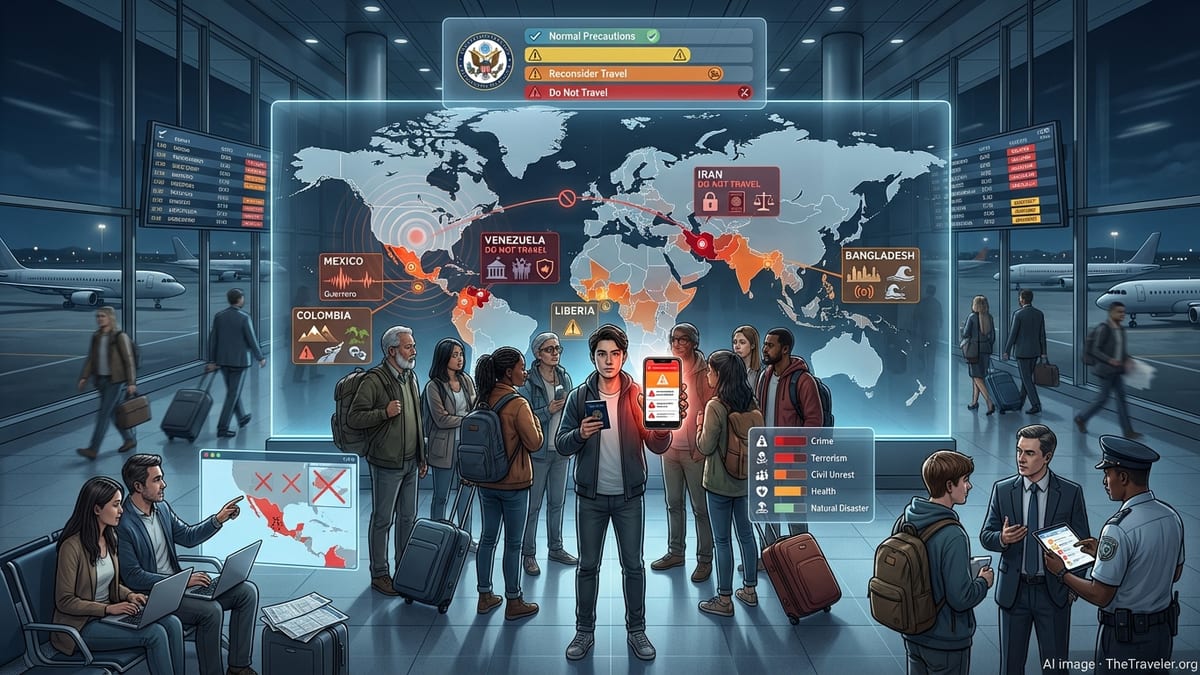
Latest U.S. Advisory: Level 3 for Saudi Arabia, Level 4 Near Yemen
According to publicly available information on the U.S. Department of State’s travel advisory portal, the most recent advisory for Saudi Arabia was issued on September 15, 2026. The country remains classified at Level 3, meaning U.S. travelers are urged to reconsider travel. The advisory cites risks related to armed conflict, terrorism, Iranian drone and missile targeting of American interests, exit bans and local laws governing online speech.
The same advisory applies a stricter standard to parts of the country bordering Yemen. The Yemen border region is marked Level 4, the department’s highest warning level, indicating “Do Not Travel.” Guidance specifies that U.S. government personnel in Saudi Arabia are prohibited from traveling within 20 miles of the Yemen frontier due to the threat of cross-border attacks, and the advisory notes that the U.S. government has limited ability to assist citizens in those areas in an emergency.
The State Department advisory is reflected in broader regional messaging. A security alert issued in June 2026 for several Middle Eastern countries underlined that Saudi Arabia, along with nearby Gulf states, remains at Level 3, while Yemen itself continues to be rated Level 4, underscoring the contrast between major Saudi cities and the volatile southern border zone.
Separate travel guidance for Yemen emphasizes that the entire country is at Level 4, “Do Not Travel,” due to widespread armed conflict, terrorism, and the absence of routine consular services for U.S. nationals. The elevated risk across the border reinforces the heightened concern for towns and rural districts on the Saudi side facing the same conflict dynamics.
Cross-Border Threats Along the Yemen Frontier
Publicly available security reporting highlights that the Yemen border region has experienced repeated incidents involving missiles, rockets and armed drones launched from Yemen. Saudi military briefings and international media coverage describe attacks aimed at southern provinces such as Najran, Jazan and Asir, areas that lie closest to the front lines of Yemen’s long-running conflict.
Recent coverage from international news agencies points to episodes in which strikes near the border have caused civilian casualties, including foreign workers, and damaged infrastructure. These attacks, often attributed to armed groups based in Yemen, reinforce the State Department’s decision to advise against all travel near the frontier and to restrict movement by its own personnel.
Travel advice from other governments echoes these concerns. Updated guidance from the United Kingdom and Australia, for example, identifies the Asir, Jazan and Najran provinces and areas within tens of kilometers of the Yemen border as higher-risk zones due to the possibility of renewed or sporadic cross-border fire. These assessments describe a security environment in which hostilities can flare with limited warning.
While the pattern and intensity of cross-border incidents may vary over time, governments assessing risk to their citizens treat the Yemen frontier as a distinct security environment compared with Saudi Arabia’s major cities and tourist centers. The Level 4 designation for the border region reflects the view that the risk of being caught in an attack or facing limited access to emergency support is unacceptably high for discretionary travel.
Conditions in Major Saudi Cities and Key Travel Hubs
In contrast to the Yemen border region, the State Department advisory notes that many parts of Saudi Arabia, including Riyadh, Jeddah and Dammam, are open to official travel with precautions. Public information shows that as of late August 2026, family members of U.S. government employees have been permitted to accompany them to posts in the kingdom, an adjustment that suggests a more stable environment in core urban areas despite the overall Level 3 designation.
Travel advisories and embassy security notices nonetheless point to specific risks that extend nationwide. Terrorist groups are described as continuing to plan possible attacks throughout Saudi Arabia, with targets that could include public spaces, transportation hubs, religious sites, large gatherings, and facilities associated with foreign interests. Guidance encourages travelers to remain alert in locations frequented by international visitors and to be aware that security conditions can change quickly.
International travel advice also references previous long-range missile and drone attempts directed at airports and critical infrastructure in cities such as Riyadh, Jizan, Abha, Taif and Jeddah. While air defenses have intercepted many projectiles, the persistence of such attempts is one of the reasons the overall advisory has not been lowered below Level 3.
For most inbound travelers, the primary entry points remain King Khalid International Airport in Riyadh, King Abdulaziz International Airport in Jeddah and King Fahd International Airport near Dammam. Public advisories recommend monitoring local media and official channels for any alerts related to these hubs, as short-notice changes to flight operations or temporary closures have been reported in the past following regional security incidents.
Practical Implications for U.S. Travelers
The Level 3 advisory does not ban private travel to Saudi Arabia, but it signals that U.S. citizens should weigh security risks carefully and consider whether the trip is essential. The State Department advises travelers to enroll in its free Smart Traveler Enrollment Program so that they can receive security updates and make it easier for consular staff to contact them in an emergency.
Publicly available guidance highlights several concrete restrictions and recommendations. U.S. government employees in Saudi Arabia are subject to movement limitations, including bans on personal travel within 20 miles of the Yemen border and special authorization requirements to visit certain areas such as Qatif. Travelers are encouraged to take these internal rules as indicators of where private travel may carry higher risk.
Advisories also point to the importance of understanding local laws and customs. References to “Other” as a risk indicator in the Saudi Arabia advisory include potential legal exposure related to social media posts, religious expression and behavior that may be considered offensive or unlawful under local regulations. Travelers are urged to review detailed consular guidance on legal conditions in Saudi Arabia before arrival.
For those who decide to proceed with travel, government advisories and embassy alerts recommend maintaining a high level of situational awareness, having contingency plans for sheltering in place, and preparing for possible disruptions to air travel or local transportation during periods of heightened regional tension.
Regional Context and Outlook
The decision to maintain Saudi Arabia at Level 3 and the Yemen border at Level 4 is closely tied to broader regional dynamics. Public statements and travel maps from the State Department show that several nearby countries, including Yemen, Iran, Iraq and parts of the Levant, are currently rated Level 4 due to overlapping risks from armed conflict, terrorism, kidnapping and civil unrest.
A security alert released in June 2026 summarized the situation by advising U.S. citizens across the Middle East to exercise increased caution due to the potential for escalation involving Iran and groups aligned with it. That alert singled out drone and missile attacks by armed factions in Yemen targeting Saudi territory and infrastructure as a continuing concern.
Independent security analyses and travel-risk assessments published in recent months also emphasize that, while daily life in Saudi Arabia’s main cities continues with relative normality, the regional picture remains volatile. Experts cited in these reports note that the trajectory of peace talks in Yemen, shifts in Iran’s regional posture and developments in Red Sea shipping lanes could all influence the risk landscape for travelers.
For now, official advisories indicate that travelers considering Saudi Arabia should distinguish clearly between urban centers and the country’s southern borderlands. The current Level 3 and Level 4 ratings signal that while travel to much of the kingdom remains possible with caution, journeys near the Yemen frontier are strongly discouraged and considered unsafe for tourism or non-essential visits.