


More news on this day
The U.S. State Department is urging Americans to reconsider travel to and through the Middle East as tensions involving Iran heighten, warning that the security environment can shift quickly and that air travel disruptions may occur with little notice.
Get the latest news straight to your inbox!
What the latest U.S. warning says
Recent State Department guidance has emphasized that Americans in the Middle East should exercise heightened vigilance and be prepared for practical disruptions such as flight cancellations, periodic airspace closures, and other travel interruptions. The same guidance advises Americans outside the region to reconsider travel to and through the Middle East, including transits that rely on major hub airports.
While the language is broad, it reflects a scenario travelers often feel first: schedules changing rapidly, reroutes around closed airspace, and longer or more expensive itineraries as carriers adjust. The State Department has also pointed to the potential for U.S.-linked interests overseas to be targeted, a caution that extends beyond any single country in the region.
For many travelers, the most important detail is that the advice is not limited to leisure destinations. It can affect business trips, study-abroad programs, cruise itineraries that call at Gulf ports, and even indirect connections between the U.S., Europe, and South Asia that route through Middle Eastern airports.
How this intersects with country-level travel advisories
The State Department’s global caution sits on top of its country-by-country advisory system, which can change independently based on conditions on the ground. Iran itself remains a “Level 4: Do Not Travel” destination in U.S. advisories, reflecting risks that include wrongful detention and limited U.S. ability to provide routine consular support inside the country.
Elsewhere in the region, advisory levels vary, but some key destinations and transit points can still carry higher-than-normal guidance. For example, Saudi Arabia has been listed at “Level 3: Reconsider Travel” in recent State Department materials, with warnings that include the possibility of drone and missile threats tied to regional tensions.
For travelers trying to interpret the guidance, the practical takeaway is to read both layers: the broad regional or worldwide security alert for the travel climate and the specific country advisory for what can happen once you arrive. The two may align, but they do not always move at the same pace.
What travelers may see first: airspace changes and reroutes
Published coverage of the current situation has repeatedly flagged the risk of sudden airspace restrictions and disruptions to commercial aviation. In past Middle East escalations, such restrictions have forced airlines to reroute long-haul flights, add fuel stops, or cancel certain city pairs entirely, and the State Department’s recent caution underscores that these scenarios remain plausible now.
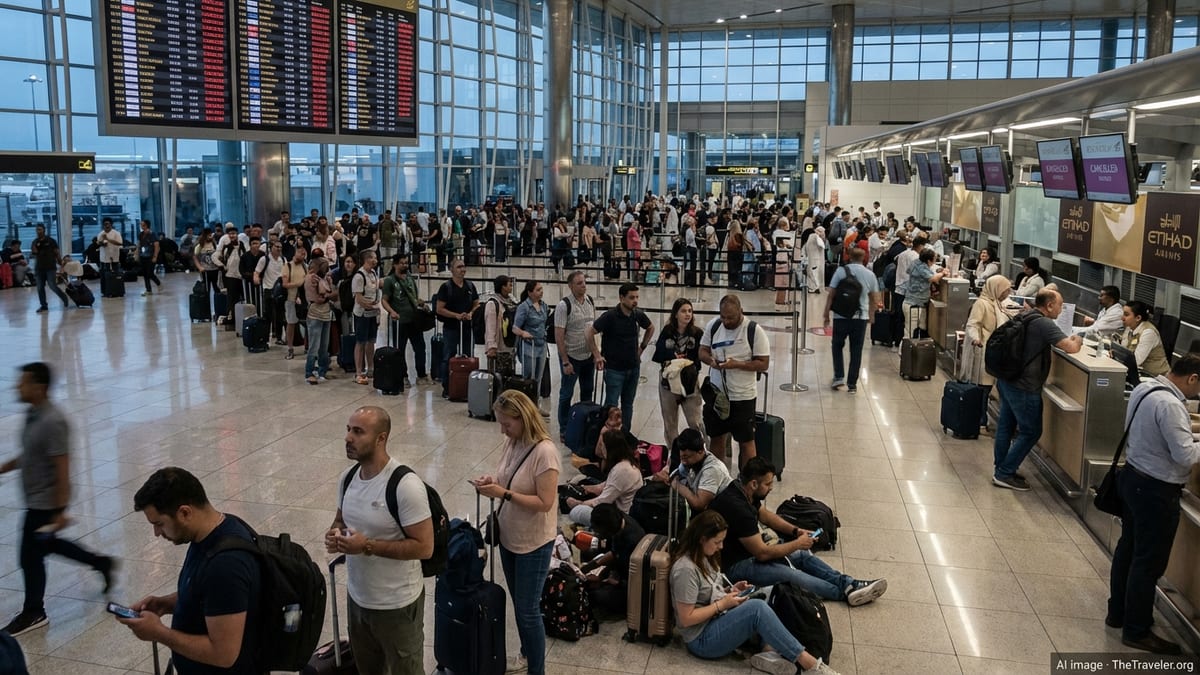
For passengers, that can translate into missed connections, overnight delays, or last-minute itinerary changes even if a traveler’s final destination is outside the region. Middle East hub airports play a major role in global connectivity, so disruptions can cascade into Europe-Asia and U.S.-Asia routings.
Travelers with tight schedules or fixed-event trips should consider building buffer time into itineraries, especially for multi-segment international journeys. Monitoring airline alerts and airport operations becomes as important as following security headlines.
Steps Americans can take before and during a trip
State Department guidance has encouraged Americans to monitor local embassy and consular security updates and to enroll in the Smart Traveler Enrollment Program (STEP) so they can receive location-relevant alerts. The department’s travel advisories and security alert pages also consolidate updates by country and by global events affecting travel.
Before departure, travelers can reduce risk by confirming passport validity requirements for their itinerary and by reviewing trip insurance details carefully, including what is and is not covered if disruptions are linked to conflict, airspace closures, or rapidly changing government advisories.
During travel, the main focus tends to be practical readiness: keeping documentation accessible, maintaining flexible plans, and tracking flight status directly with carriers. Travelers should also be mindful that security measures at airports and venues can shift quickly during periods of heightened regional tension.
Why the guidance matters even for travelers not going to Iran
The most common misconception is that warnings related to Iran mainly affect travel to Iran. Publicly available information shows that the State Department’s current caution is framed more broadly, reflecting concerns about regional spillover effects and the possibility of disruptions that reach well beyond a single border.
That broader framing matters for Americans planning trips to destinations that feel geographically or politically distant from Iran but are linked by flight networks, maritime routes, or regional security dynamics. It also matters for travelers who are simply transiting, since a connection through a Middle Eastern hub can be impacted by airspace changes elsewhere.
For now, the State Department’s posture is best read as a planning signal: Americans do not need to assume every itinerary will be canceled, but they should be prepared for disruptions and should make destination-by-destination decisions using the latest advisory level, current security alerts, and real-time airline operations.