


More news on this day
The U.S. Virgin Islands is emerging as a standout in a renewed global tourism boom, with fresh data showing record or near record visitor arrivals as the territory and several other destinations expand air capacity, add new routes and court higher spending travelers.
Get the latest news straight to your inbox!
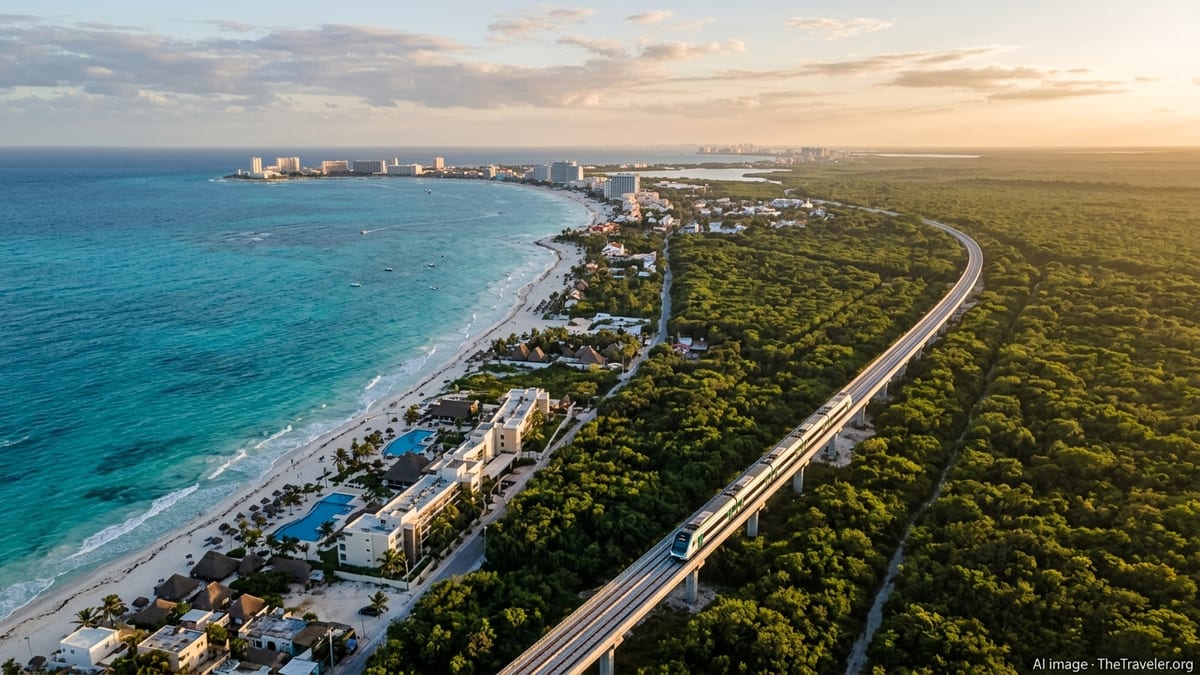
U.S. Virgin Islands Rides Record Arrivals and More Airlift
Recent public documents for the U.S. Virgin Islands indicate that tourism has remained on a record setting trajectory, with air service described as being at some of its highest levels and passenger arrivals projected to keep rising in the 2024 to 2025 season. Budget testimony and planning materials show expectations for continued growth in stayover visitors as the territory pivots toward strengthening air traffic alongside its longstanding cruise business.
Publicly available information from the territory’s tourism authorities points to targeted efforts to secure additional nonstop service from major U.S. gateways and to lengthen seasonal schedules. Airlines have responded by maintaining or increasing capacity into St. Thomas and St. Croix, giving the islands more seats to sell during peak winter and shoulder periods.
Industry reporting notes that this strategy is helping to shift the visitor mix toward higher value overnight travelers who typically spend more per trip than cruise passengers. Hotel and villa operators in the U.S. Virgin Islands have reported tighter occupancies during peak months, while forward booking indicators cited in local planning documents suggest that demand is likely to remain robust through the upcoming high season.
The trajectory places the U.S. Virgin Islands among the Caribbean’s most closely watched destinations as global carriers and investors gauge which islands can support sustained growth in premium airlift and diversified tourism products.
British Virgin Islands Underscore the Caribbean Surge
Elsewhere in the Virgin Islands archipelago, the British Virgin Islands have also posted historic numbers. A national tourism policy released in early 2026 cites data from the Central Statistics Office showing that total tourist arrivals climbed above 1.09 million in 2024 and then reached about 1.2 million in 2025, described in government documents as the highest tourism arrivals ever recorded in the territory’s history.
Planning papers highlight that this rebound has been driven in part by improvements in regional air connectivity and ferry links that tie the British Virgin Islands more closely to U.S. and Caribbean hubs. The figures also illustrate how smaller island economies are increasingly exposed to global travel cycles, with tourism once again confirmed as a dominant pillar of growth.
Analysts following Caribbean tourism trends say the twin performance of the U.S. and British Virgin Islands underlines how destinations that can pair niche products such as sailing and yachting with better air access are outpacing regional averages. Their experience is seen as a test case for how other small islands might leverage limited airport infrastructure while still tapping into long haul demand.
However, planning documents from the British Virgin Islands also emphasize the vulnerability of such growth to external shocks and the need for resilience in infrastructure and environmental management as visitor volumes climb.
Dominican Republic Consolidates Its Regional Lead
The Dominican Republic continues to anchor Caribbean tourism growth, posting record arrivals and actively pursuing new airline partnerships. Biographical and policy information on the country’s tourism leadership notes that the destination welcomed about 11.2 million visitors in 2024, followed by 4.3 million in the first four months of 2025, with projections to surpass 12 million by year end.
Coverage of major trade events such as the Dominican Annual Tourism Exchange and the international tourism fair in Madrid describes the country closing recent editions with strong investment commitments and new alliances in air connectivity. These include a mix of long haul and regional carriers adding capacity into resort areas such as Punta Cana and into emerging destinations like Miches, Puerto Plata and Santiago.
Market observers point out that the Dominican Republic’s ability to pair large scale resort development with aggressive route development has made it a reference point for other sun and sand destinations. The country’s expanding network of nonstop services from North America and Europe has also intensified competitive pressure on neighboring islands, including the U.S. Virgin Islands, to protect and grow their own air links.
While some U.S. gateway airports have reported recent softening in passenger volumes on specific Caribbean routes, current data still places the Dominican Republic among the region’s strongest performers in both visitor counts and air capacity.
Japan’s Record Tourism Highlights Long Haul Air Demand
Beyond the Caribbean, Japan has emerged as one of the clearest examples of how expanded air connectivity is reshaping global tourism flows. Statistics compiled by Japan’s national tourism bodies and summarized by international media report that the country hosted roughly 36.9 million foreign visitors in 2024, surpassing pre pandemic records and underscoring the appeal of a weaker yen and improved air access.
Monthly figures through 2024 and into 2025 show repeated instances of all time highs, with several months exceeding three million arrivals. Visitor volumes from the United States and other long haul markets have climbed sharply as airlines reinstated and extended transpacific schedules, while low cost and full service carriers in Asia expanded short haul links.
Tourism research organizations note that Japan’s situation illustrates how exchange rates, safety perceptions and air capacity can combine to rapidly transform a destination’s scale. The record numbers have renewed debates inside Japan about overtourism, regional dispersal and infrastructure investment, themes that resonate with many island and coastal destinations now experiencing their own surges.
For Caribbean destinations such as the U.S. Virgin Islands, Japan’s experience offers a distant but instructive comparison on how quickly visitor volumes can mount once connectivity, currency conditions and global demand align.
Secondary Hubs and Regional Airports Join the Recovery
Global air connectivity studies released over the past year highlight how the tourism rebound is not limited to flagship hubs. Research from industry associations shows that multiple secondary airports have recorded new passenger highs as carriers look for underserved markets and diversify beyond traditional gateways.
One example cited in public aviation data is Adelaide in Australia, where international passenger volumes reached a record in 2025 amid an expansion of new overseas routes and the return of services that had been suspended during the pandemic. The airport has seen new nonstop links to cities such as San Francisco and Shanghai alongside resumed services to regional destinations, broadening options for both inbound tourists and local travelers.
Other case studies in air connectivity reports point to emerging nonstop routes from long haul markets into smaller tourism driven economies in Asia, Europe and the Americas. In several instances, the first direct services between specific city pairs have been marketed around access to nature, culture or niche experiences rather than mass tourism alone.
These developments mirror the ambitions of territories like the U.S. Virgin Islands, which are seeking more direct links from major source markets without overwhelming local infrastructure. Analysts suggest that as airlines continue to reconfigure networks, destinations able to demonstrate consistent demand, resilient tourism products and supportive aviation policies are most likely to secure new or expanded service.
A Competitive Race for Routes and High-Value Visitors
Taken together, recent tourism and aviation data portray a world in which multiple destinations are competing intensely for airline capacity and high value visitors. The U.S. Virgin Islands, with its focus on upgrading airlift and attracting longer staying guests, sits within a cohort that includes the British Virgin Islands, the Dominican Republic, Japan and several rising secondary hubs.
Industry research shows that international air connectivity is approaching or in some regions exceeding pre pandemic levels, even as patterns of demand shift toward certain leisure focused corridors. Destinations that can offer airlines a mix of stable demand, diversified products and supportive regulatory frameworks are seeing the greatest gains in new routes and frequencies.
For travelers, the result is a wider range of nonstop options to islands, coastal regions and cultural capitals that were harder to reach only a few years ago. For tourism dependent economies, the opportunity is substantial but comes with renewed pressure to manage visitor flows, protect natural resources and ensure that record arrival numbers translate into sustainable long term benefits.
In that landscape, the performance of the U.S. Virgin Islands and four other high growth destinations provides an early snapshot of how the next phase of global tourism may look as airlines and travelers continue to redraw the world’s air map.