


More news on this day
The U.S. government has renewed warnings for Americans to reconsider travel to and through the Middle East as tensions involving Iran and Iran-aligned groups raise the risk of sudden escalation, including possible airspace closures and short-notice flight cancellations across key transit hubs.
Get the latest news straight to your inbox!
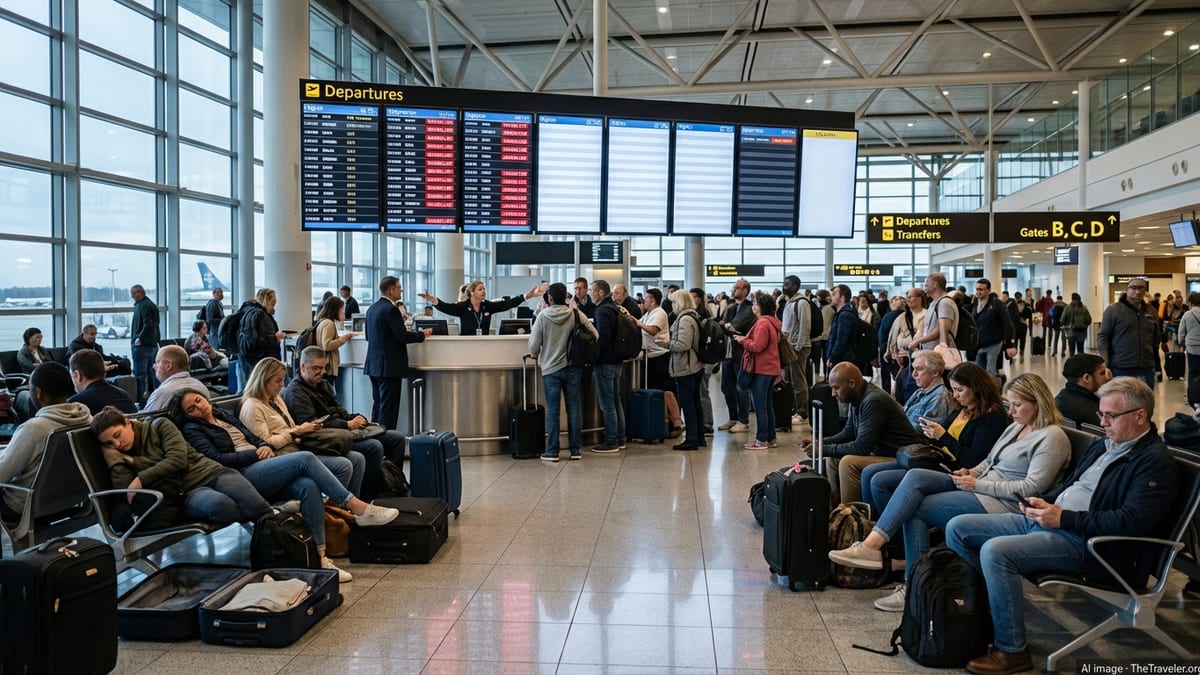
What the latest U.S. alert says
Publicly available U.S. Department of State guidance emphasizes that the security environment in the Middle East can change quickly, and that travelers should be prepared for disruptions such as periodic airspace closures and airline schedule changes. The advisory language has also highlighted concerns that Iran and groups supportive of Iran may target U.S.-associated interests abroad, not only within the region but potentially elsewhere as well.
The most prominent recent update in this cycle is the State Department’s “Worldwide Caution” security alert dated July 22, 2026, which specifically notes that Americans outside the Middle East should reconsider travel to and through the region and that those who proceed should monitor airport and airline operations closely.
Separate State Department pages compiling “global events” advisories for the Middle East have continued to direct travelers to destination-specific alerts and to enroll in the Smart Traveler Enrollment Program (STEP) for updates from U.S. embassies and consulates.
Country advisories: a patchwork of “reconsider” and “do not travel”
For travelers, the practical impact often comes down to the country-by-country Travel Advisory levels rather than a single regionwide warning. The U.S. advisory system ranges from Level 1 (exercise normal precautions) to Level 4 (do not travel), and the Middle East currently includes many destinations at Levels 3 and 4.
Iran remains a Level 4 “Do Not Travel” destination in State Department guidance, with the advisory stressing that the U.S. government cannot provide routine or emergency consular services there. The guidance also notes additional risk factors for U.S. citizens, including arbitrary detention and other security threats, and points travelers to limited third-country assistance options.
Iraq is also listed as Level 4 “Do Not Travel,” with the advisory describing risks that include terrorism, kidnapping, armed conflict, and the U.S. government’s limited capacity to provide emergency services in-country.
At the same time, some major Gulf transit points and partner destinations in the region are still broadly categorized at Level 3 “Reconsider Travel” rather than Level 4, reinforcing that the U.S. posture is not a blanket closure of the region for Americans but a cautionary approach that can shift quickly with events.
Why this matters for flight routes and airport connections
Even travelers who are not planning to visit high-risk areas can be affected because the Middle East is a global crossroads for long-haul flights between North America, Europe, Africa, and South and Southeast Asia. When security alerts mention possible airspace closures and flight cancellations, that can translate into longer routings, sudden layover changes, and last-minute rebookings through alternative hubs.
The State Department’s July 22, 2026 security alert explicitly flags the possibility of flight cancellations and periodic airspace closures, and it advises travelers to check directly with air carriers to confirm whether flights are still operating. In practice, that means travelers should expect that an itinerary involving connections through the region may need backup options, especially during periods of rapidly changing security conditions.
Recent published coverage has also pointed to renewed hostilities involving Iran-aligned groups in the broader region, which can influence airline risk assessments and operational decisions. Even when airports remain open, carriers may adjust departure times, aircraft routings, or connection banks to account for evolving airspace constraints.
What Americans with upcoming trips can do now
Travelers with near-term itineraries are generally best served by verifying the status of each flight segment directly with the operating airline, rather than relying only on third-party booking platforms or older schedule information. The State Department alert language has emphasized that travelers should monitor airport and airline operations and contact carriers for change details if a flight is affected.
For those already in the region, the most actionable step in U.S. guidance is to monitor security alerts issued by the nearest U.S. embassy or consulate and to enroll in STEP. Those alerts can include localized instructions that are more specific than the overarching worldwide caution notice.
For travelers considering new bookings, the current environment makes flexibility especially valuable. While airline policies vary by carrier and fare type, travelers may want to prioritize refundable fares or changeable tickets where possible, and avoid tightly scheduled self-connect itineraries that could unravel if a single leg is delayed or rerouted.
Travel planning amid shifting regional dynamics
The current advisory posture reflects a tension between ongoing travel demand and heightened security uncertainty. Published coverage in recent weeks has noted changes in U.S. diplomatic posture in parts of the region, including reports indicating that some embassy staffing restrictions have been adjusted compared with earlier phases of the confrontation.
At the same time, the State Department’s maintained Level 4 advisories for destinations such as Iran and Iraq underscore that the U.S. assessment of risk remains severe in specific places, and that consular limitations can complicate assistance if something goes wrong.
For Americans weighing leisure travel, family visits, or business trips, the most practical takeaway is to treat the Middle East as a region where conditions can change on short notice, and to base decisions on the latest official advisories for the exact country and city, not only on a broad regional headline.