


More news on this day
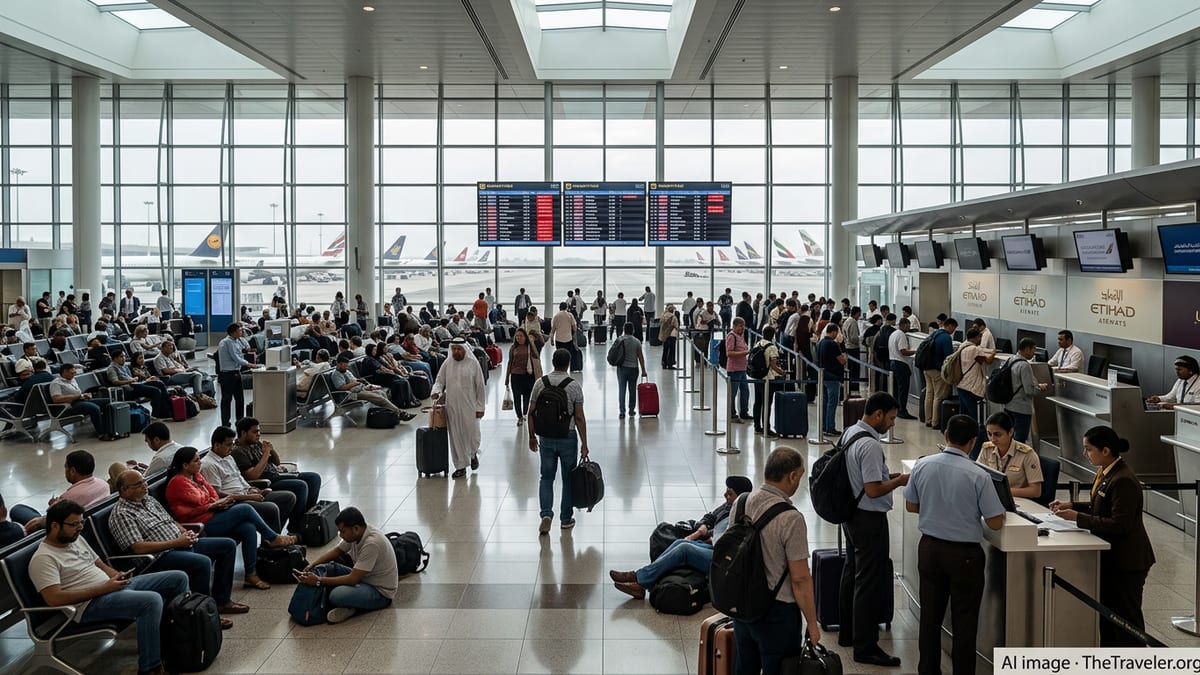
Flights in and out of the United Arab Emirates are again facing rolling delays and schedule changes in September 2026, as airlines adjust routings and ground operations at Dubai International and Abu Dhabi’s Zayed International Airport in response to ongoing US–Iran tensions and a patchwork of evolving airspace advisories.
Get the latest news straight to your inbox!
Heightened Tensions Keep Pressure on Gulf Air Corridors
Publicly available advisories show that the broader pattern of disruption traces back to late February 2026, when hostilities between the United States and Iran escalated into direct strikes inside Iranian territory, followed by Iranian missile and drone attacks across the Gulf. Regional analysis indicates that between 28 February and mid March thousands of flights were cancelled or diverted at major hubs including Dubai, Abu Dhabi and Doha before traffic partially recovered.
By late summer, ceasefire announcements had reduced the immediate risk of large scale strikes, but the security backdrop remains fragile. A June assessment from European and international aviation bodies extended conflict zone bulletins over parts of the Middle East, reflecting concern about residual threats to civil aviation. Subsequent updates in July shifted from blanket regional warnings to more targeted notices on Iran and neighboring airspace, while still flagging medium to high risk conditions along key overwater routes in the Persian Gulf and Gulf of Oman.
Risk information platforms that aggregate state and industry guidance highlight repeated closures and reopenings of UAE airspace since February, as well as ongoing restrictions by some states on overflights in Gulf flight information regions. These measures have encouraged airlines to maintain contingency routings, add extra fuel and build longer block times into schedules, factors that translate directly into knock on delays for passengers.
Parallel travel guidance from foreign governments has reinforced the picture of a challenging operating environment. A late August 2026 advisory from the United States notes an ongoing threat of drone and missile attacks linked to the conflict and cautions that civil aviation transiting the region faces elevated risk, with specific reference to disruptions affecting commercial flights serving the UAE.
Rolling Delays at Dubai and Abu Dhabi Airports
While both Dubai International Airport and Abu Dhabi’s Zayed International Airport remain open, recent operational snapshots point to rolling disruptions as airlines respond to changing risk assessments and airspace availability. Local media coverage in early September described significant delays and scattered cancellations at both hubs, particularly on services connecting to regional destinations around the Gulf and to select CIS, North African and South Asian cities.
Reports on the ground from Dubai indicate that outbound flights are largely departing, but often with extended departure queues or revised departure slots when aircraft must wait for safe routing windows through congested or reconfigured corridors. Inbound services can be affected by knock on effects from earlier delays, resulting in late arrivals that further compress turnaround times in an already busy schedule.
Abu Dhabi has experienced similar volatility. Earlier in 2026, the emirate’s airport operator documented a period of severe disruption that required a phased resumption of flight operations and an extensive passenger care effort, including hotel accommodation and ground transport for stranded travelers. Although that episode was linked to earlier phases of the conflict, the same airport systems and contingency plans are now being used to manage smaller but recurring waves of delay in September.
Airline specific data compiled by regional outlets show that carriers such as flydubai, Air Arabia Abu Dhabi and several South Asian and CIS operators have been forced to retime or cancel selected frequencies when routings through higher risk airspace or adjacent flight information regions become unavailable at short notice. Even when cancellations are limited, these adjustments can cause extended waiting times at check in, longer queues at rebooking desks and increased pressure on airport hotels.
Airspace Advisories and Rerouting Shape Airline Schedules
Behind the airport level disruptions, a complex web of state and industry advisories continues to shape how airlines can safely operate across the Gulf. The US Federal Aviation Administration maintains an advisory for overwater airspace above the Persian Gulf and Gulf of Oman, urging civil operators to exercise caution and carefully consider the risk of miscalculation in a crowded and militarized environment. Background documents highlight the possibility of GPS interference and communication jamming, further complicating navigation.
European regulators have issued several iterations of conflict zone information bulletins and information notes on the Middle East and Persian Gulf during 2026. Earlier versions advised operators to avoid or carefully assess airspace covering Bahrain, Kuwait, Qatar, the UAE and parts of the Gulf of Oman. More recent updates have moved toward medium level risk characterizations for the broader region, alongside separate, higher risk notices focused on Iran, Iraq and Lebanon, where the potential for direct military activity remains greater.
Specialist aviation risk services synthesizing these official positions note that multiple national authorities, including some European states, continue to restrict their own operators from crossing specific segments of Gulf airspace or require enhanced risk mitigation when doing so. Practical responses have included routing widebody aircraft further south over the Arabian Sea, climbing earlier to higher cruising altitudes to reduce exposure and avoiding certain waypoints close to Iranian controlled flight information regions.
These workarounds extend flight times by minutes or in some cases more than an hour, depending on origin, destination and the exact routing required on a given day. For hub and spoke networks anchored in Dubai and Abu Dhabi, even modest increases in average sector length accumulate across tightly timed banks of arrivals and departures, making on time connections more difficult to guarantee.
Traveler Impact: Longer Journeys, Tighter Connections
For travelers using Dubai and Abu Dhabi as transit or destination airports, the most visible impact of the current situation is uncertainty around departure and arrival times rather than widespread, days long shutdowns seen earlier in the year. Live departure boards and airline updates over recent weeks suggest that the majority of flights are still operating, but minor delays have become more frequent and can expand rapidly during peak waves of traffic.
Industry bulletins emphasize that the key operational challenge is the need for flexibility. Airlines are keeping additional reserve crews and aircraft where possible, adjusting flight paths late in the planning cycle and, in some cases, capping loads on certain services to maintain operational resilience. These measures aim to preserve connectivity while staying within evolving safety guidance, but they also leave less margin for recovery when disruptions do occur.
Publicly available advice from government agencies and aviation analysts consistently encourages passengers to build in extra time for connections through Gulf hubs, monitor airline notifications closely and keep itineraries as flexible as possible. Travelers holding non changeable tickets or tight self made connections across separate tickets face higher risk of missed flights if military or airspace conditions shift on short notice.
On the ground, both Dubai and Abu Dhabi airports have expanded their information channels since the February and March closures, with operators using websites, social media and airport displays to push real time updates. Local coverage of earlier disruption at Abu Dhabi’s Zayed International also highlighted large scale passenger care operations, an indication of the type of measures that can be activated again if tensions escalate.
Outlook: Persistent Volatility Despite Partial Deescalation
Medium term assessments from aviation security bodies suggest that some form of elevated risk environment is likely to persist across Gulf airspace for the remainder of 2026, even if current ceasefire arrangements between the United States and Iran hold. Analysts underline that the presence of advanced weapons systems, combined with the possibility of sudden escalatory incidents, justifies continued caution for civil aviation.
At the same time, regional airports and airlines have demonstrated a capacity to gradually restore operations after acute shocks. Traffic data and industry reporting show that by mid year many Gulf carriers had returned to near normal scheduling, albeit with more conservative routings and higher operating costs. The current pattern of rolling but limited disruption at Dubai and Abu Dhabi reflects that balancing act between maintaining connectivity and prioritizing risk mitigation.
Diplomatic messaging from the UAE throughout 2026 has consistently stressed a desire to avoid its territory and airspace being used for hostile military actions, coupled with an emphasis on de escalation and adherence to international law. While such positions cannot eliminate the knock on effects of regional conflict, they form part of a broader effort to keep the UAE’s aviation sector functioning under difficult circumstances.
For now, travelers planning to transit the country’s two main hubs face a landscape defined less by blanket closures and more by shifting schedules and incremental delays. Close attention to advisories, airline communications and flexible routing options will be essential for managing trips through Dubai and Abu Dhabi as the security situation in the wider region continues to evolve.
U.S. Department of State – United Arab Emirates Travel Advisory
European Union Aviation Safety Agency – Middle East Conflict Zone Advisories
SafeAirspace – United Arab Emirates Airspace Risk Summary
The National – UAE flight delays and cancellations at Dubai and Abu Dhabi
Abu Dhabi Media Office – Zayed International Airport operations update