


More news on this day
Asia’s aviation network has been hit by another sharp spike in disruption, with real-time tracking data showing 4,504 flight delays and 278 cancellations in a single day, and major hubs in Delhi, Shanghai and Jakarta bearing much of the strain.
Get the latest news straight to your inbox!
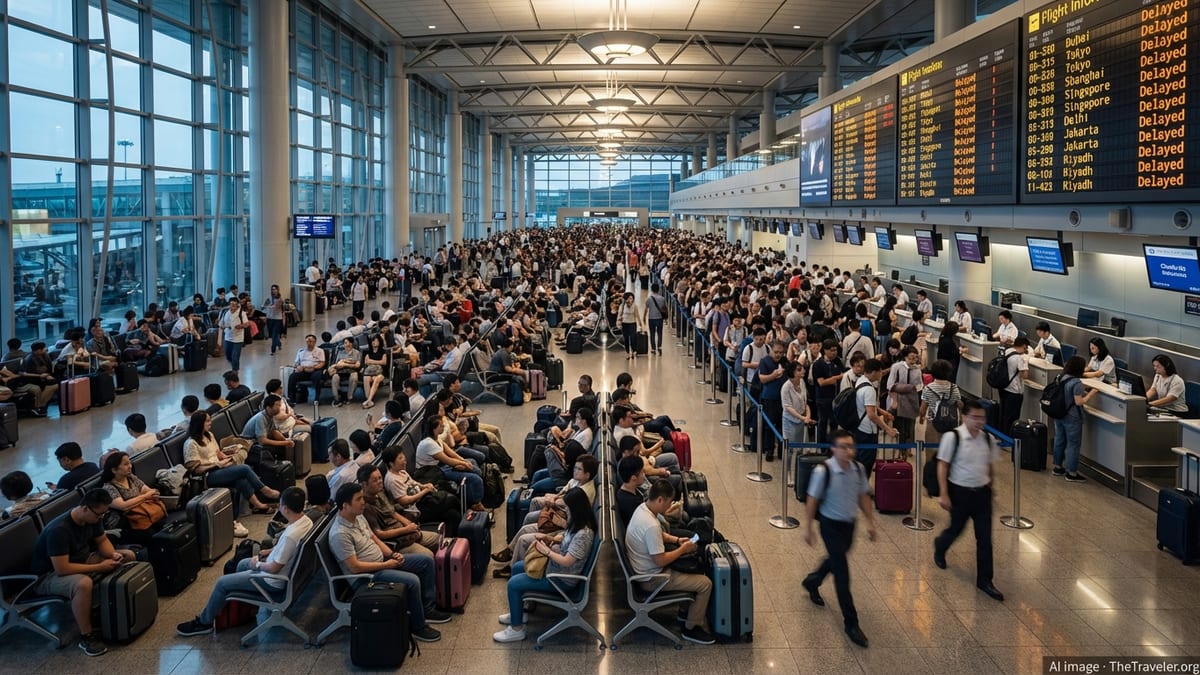
Delhi, Shanghai and Jakarta Stand Out in a Difficult Day for Asia Travel
Published data from aviation and travel industry outlets indicates that the latest disruption wave has been widely spread across Asia but has clustered around key hubs in India, China and Indonesia. Reports highlight that Indira Gandhi International Airport in Delhi, Shanghai’s large dual-airport system, and Jakarta’s Soekarno Hatta International Airport are among the busiest gateways affected, amplifying the impact on regional and long-haul connections.
According to recent coverage of Asia-wide performance, India has recorded some of the highest airport delay figures in the region, with Delhi frequently appearing at the top of disruption tables on peak days. One recent analysis of a comparable disruption event noted Delhi handling close to 500 delayed flights in a single snapshot, underscoring how operational bottlenecks at one major hub can shape statistics for the wider region.
In Southeast Asia, Soekarno Hatta International Airport in Jakarta has similarly featured as a major trouble spot, with recent reports describing more than 200 delays and the highest cancellation tally among a group of monitored airports on a particularly difficult day. As one of the primary connecting platforms between Indonesia’s domestic network and international routes, problems at Jakarta quickly cascade into missed onward flights and aircraft rotations across the archipelago.
Shanghai continues to be a critical pressure point in East Asia, with both Shanghai Pudong and Shanghai Hongqiao handling large volumes of domestic and international traffic. Recent bulletins on China’s airports have described multi-thousand flight disruption days affecting Beijing and Shanghai, and the latest regional figures suggest that conditions at these hubs remain a bellwether for how smoothly or unevenly Asia’s broader aviation system is performing.
Numbers Reveal a Network Under Strain
The headline totals of 4,504 delays and 278 cancellations in a single day illustrate how quickly routine schedules can unravel when multiple large hubs experience operational stress at the same time. Regional news and data-driven summaries describe these figures as part of an emerging pattern in which spikes of several thousand delayed flights across Asia are no longer rare, especially during periods of challenging weather or tight airspace capacity.
Analysis of recent disruption snapshots shows that even when classified as “minor” or “moderate” on specialist disruption indices, airports can still be handling dozens of cancellations and a large number of late departures and arrivals. At the Asia level, those seemingly moderate conditions at multiple gateways add up to several thousand affected flights, which translates into tens of thousands of passengers dealing with missed connections, rebookings and extended time in terminals.
In earlier significant events this season, published case studies have highlighted days with well over 4,000 delays and more than 400 cancellations across Asia, driven by severe monsoon conditions around Delhi or typhoon systems affecting the Shanghai and Tokyo areas. The latest tally of 4,504 delays and 278 cancellations fits into that evolving picture of a network that is operating with limited margin when the weather or operational environment deteriorates.
Industry data on airport performance also points to persistent baseline challenges. For example, airport statistics over the past month show that major Asian hubs such as Delhi, Shanghai and Jakarta continue to record measurable rates of late departures and cancellations, even outside headline-grabbing disruption days. This underlying volatility means that passengers are increasingly advised, in public-facing travel guidance, to allow more time for check-in, security and border formalities when moving through these congested hubs.
Weather, Congestion and Knock-on Effects Across the Region
Recent reporting across aviation and travel platforms links the latest disruption numbers to a combination of weather events, seasonal demand and congestion in already busy airspace. Monsoon storms in northern India have repeatedly affected Delhi’s operations in recent weeks, while typhoon activity in East Asia has disrupted schedules in and out of Shanghai and other coastal cities, prompting reroutes, holding patterns and ground delays that ripple through airline networks.
Environmental factors have also been cited in connection with Jakarta, where haze and visibility issues have complicated operations at Soekarno Hatta on several occasions. When these weather-related constraints intersect with peak travel times, runway and terminal capacity can quickly be overwhelmed, with aircraft waiting for departure slots and arriving flights facing extended taxi or holding times.
Knock-on effects are particularly pronounced on multi-segment itineraries that connect Asia with Europe, the Middle East and North America. Some disruption summaries from recent weeks describe how delays at Asian hubs can leave passengers stranded at intermediate points, even when their original departure airport appears to be functioning normally, as airlines struggle to reposition aircraft and crews in line with fast-changing conditions.
These operational challenges come on top of broader geopolitical and airspace issues that have affected long-haul routings into and out of Asia this year. Published reports from earlier in 2026 have detailed how airspace closures in parts of West Asia increased flight times and constrained routing options for airlines serving India and other Asian markets, leaving the system more vulnerable to additional disruption when local weather deteriorates.
What Travelers Can Expect at Key Asian Hubs
For travelers passing through Delhi, Shanghai and Jakarta during this period of heightened disruption, publicly available guidance from travel and aviation sources consistently emphasizes preparation and flexibility. Passengers are advised to monitor flight status across multiple channels and to build in extra connection time where possible, particularly when itineraries require transfers between different terminals or carriers.
Recent articles tracking Asia-wide disruption patterns suggest that even when overall indices at major hubs sit within what is described as a “minor problems” band, individual passengers can still encounter long queues at check-in and security, aircraft waiting for stands, and last-minute gate changes. Crowded departure halls and limited seating capacity in busy terminals add to the strain on days when delay counts rise into the hundreds at a single airport.
Industry-focused analyses also note that airlines and airports across the region are working within tight turnaround windows, especially on busy domestic and regional routes. When early-morning services are delayed, it can take most of the operational day to recover, leaving travelers on later departures exposed to knock-on delays even after the initial trigger, such as a storm cell or temporary runway restriction, has passed.
Given the continuing recovery in passenger numbers at major Asian airports, with Delhi, Shanghai and Jakarta all ranking among the region’s busiest hubs by traffic volume, the latest figures on delays and cancellations highlight how demand has returned faster than resilience in some parts of the system. Travelers planning upcoming trips through these gateways are likely to keep a close eye on disruption data and adjust their plans accordingly.
Sources
Flightradar24: Asia airport disruption map
AirHelp: Asia flight disruptions after Delhi monsoon storms
NomadLawyer: Shanghai, Delhi and Jakarta flight delays and cancellations