


More news on this day
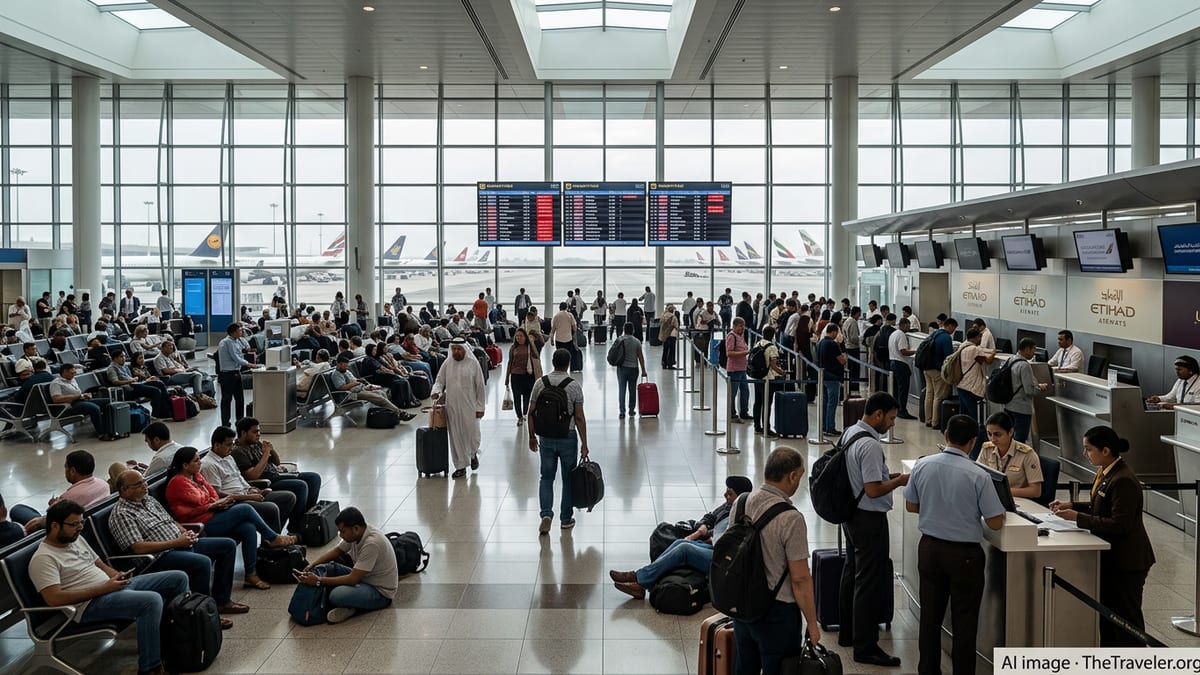
Flight disruption figures across the United Arab Emirates have escalated, with 514 delays and 23 cancellations reported in recent days as airlines navigate regional tensions, shifting airspace restrictions and tight capacity at the country’s major hubs.
Get the latest news straight to your inbox!
Regional Tensions Feed Growing Operational Strain
Published coverage indicates that the rise in delays and cancellations is closely linked to renewed tensions in the wider Gulf region, which have affected airspace availability and prompted schedule changes on short notice. Carriers using Dubai International, Abu Dhabi’s Zayed International and Sharjah International are adjusting routings and flight times as they respond to evolving risk assessments and regulatory directives.
Reports from regional outlets show that services connecting the UAE to Kuwait, Bahrain and parts of Saudi Arabia have been among the most affected, with a series of tactical cancellations and extended suspensions. These route‑specific changes have knock‑on effects across airline networks, contributing to the total of 514 delayed flights as aircraft and crews fall out of position.
While most disruptions have been concentrated on regional services, some long‑haul connections have also experienced delays as aircraft transit congested corridors or await updated clearances. Publicly available flight status boards for Dubai and Abu Dhabi continue to display predominantly on‑time operations, but with a visible cluster of late departures and arrivals that reflect the current operational pressure.
Travel industry analysis notes that even limited airspace closures can quickly ripple through tightly timed schedules in the Gulf, where hubs handle large volumes of transfer traffic. When combined with capacity constraints on the remaining open routes, this environment creates conditions in which delay counts can rise sharply, even if outright cancellations remain comparatively limited.
Airlines Adjust Schedules and Extend Targeted Cancellations
According to recent aviation coverage, UAE carriers have responded with a mix of schedule thinning, rolling suspensions on specific city pairs and tactical delays designed to protect onward connections. Etihad Airways has extended cancellations on certain flights between Abu Dhabi and Kuwait and has periodically halted services to Bahrain for operational reasons, while other national carriers have introduced isolated cancellations on select Gulf routes.
International airlines serving the UAE have also revised their schedules, with some European and Asian carriers suspending flights to Dubai or other Gulf destinations for defined periods. These measures are often presented as precautionary, reflecting route‑planning decisions and risk assessments rather than blanket bans on travel to the Emirates.
Despite the elevated numbers, the overall pattern remains one of partial disruption rather than a system‑wide shutdown. Most flights continue to operate, and many of the 514 delays are measured in less than two hours, according to available tracking data. However, the uneven nature of the disruptions complicates planning for travelers who may find their particular route subject to sudden change.
Observers note that airlines operating large connecting hubs in the UAE face a delicate balance between maintaining network connectivity and avoiding rolling delays that cascade through multiple sectors. Targeted cancellations on lower‑demand flights are one tool used to create buffer in the schedule, but these decisions also contribute to the growing tally of disrupted services.
Capacity Management Measures at UAE Airports
In parallel with airline‑level adjustments, aviation authorities have introduced structured procedures to manage arrival capacity at UAE airports when delays mount. Official aeronautical publications describe a system under which departures destined for a congested UAE airport can be temporarily paused from specified regional zones once arrival delays reach a defined threshold and are expected to worsen.
This form of flow management, commonly used in busy aviation markets, is intended to prevent excessive airborne holding, reduce fuel burn and limit the strain on air traffic control. By briefly halting departures from designated origin airports, controllers can clear backlogs of arriving aircraft and restore more predictable spacing on final approach.
However, these protective measures are also visible to passengers as delays and missed departure slots. When traffic is stopped at its origin to relieve congestion at a UAE hub, flights may depart significantly behind schedule, adding to the daily disruption totals even though the underlying safety and capacity objectives are being met.
Industry commentators point out that such procedures are particularly relevant during periods of regional tension, when rerouted traffic and constrained airspace channels concentrate flows into fewer corridors. In that environment, pre‑planned capacity management tools can mean the difference between manageable delays and widespread gridlock across multiple hubs.
Exceptional Flights and Gradual Network Stabilisation
Recent statements from the UAE’s aviation sector highlight the introduction of “exceptional” flights designed to assist stranded passengers and gradually normalise travel patterns. Public information from the national news agency notes that airports have been coordinating with carriers to operate additional services on selected routes once conditions permit, prioritising passengers affected by earlier cancellations.
These exceptional flights, which typically operate outside normal timetables, are used to clear backlogs and reposition aircraft and crews. They are especially important for travelers who missed onward connections during the height of the disruption and for those whose journeys involve multiple segments across the Gulf and beyond.
Analysts observing flight‑tracking data suggest that as exceptional operations increase and airspace routings stabilise, the proportion of outright cancellations could decline, even if elevated delay levels persist. For passengers, this means a growing likelihood that flights will operate, albeit sometimes significantly behind schedule.
Nonetheless, the figure of 23 cancellations tied to the recent disruption cycle underlines that some services remain unviable under current conditions. Airlines must weigh demand, crew duty limits, aircraft availability and regulatory guidance before reinstating flights, which can result in cautious step‑by‑step restoration rather than an immediate return to pre‑disruption schedules.
Advice for Travellers Navigating the Disruptions
Travel advisories from multiple governments and airlines emphasise the importance of close monitoring for anyone flying to or from the UAE in the current environment. Public guidance repeatedly encourages passengers to check their flight status on official airline channels before leaving for the airport, to ensure contact details are up to date and to allow additional time for check‑in and security.
Consumer travel experts recommend that passengers on critical itineraries consider flexible or refundable tickets where possible, and that they familiarise themselves with airline rebooking and refund policies. Many carriers have issued waiver policies during the disruption periods, allowing affected travelers to change dates or routes without standard penalties.
Observers also underline the role of travel insurance, while noting that coverage for disruptions related to regional tensions or airspace closures can vary significantly between policies. Passengers are advised to review policy terms carefully, particularly exclusions related to conflict or government‑ordered restrictions, before relying on insurance to cover additional costs.
With 514 delays and 23 cancellations highlighting the scale of the current challenge, industry specialists suggest that conditions may continue to fluctuate in the near term. Travellers planning journeys through UAE hubs are therefore encouraged to maintain flexibility, stay informed through official channels and be prepared for last‑minute adjustments as airlines and regulators respond to a fast‑moving regional situation.