


More news on this day
UAE airlines are contending with a fresh wave of operational turbulence as renewed Middle East tensions, evolving airspace warnings and sporadic attacks across the Gulf force Emirates, Etihad Airways, Air Arabia and flydubai to adjust schedules, reroute flights and in some cases suspend services to nearby hubs.
Get the latest news straight to your inbox!
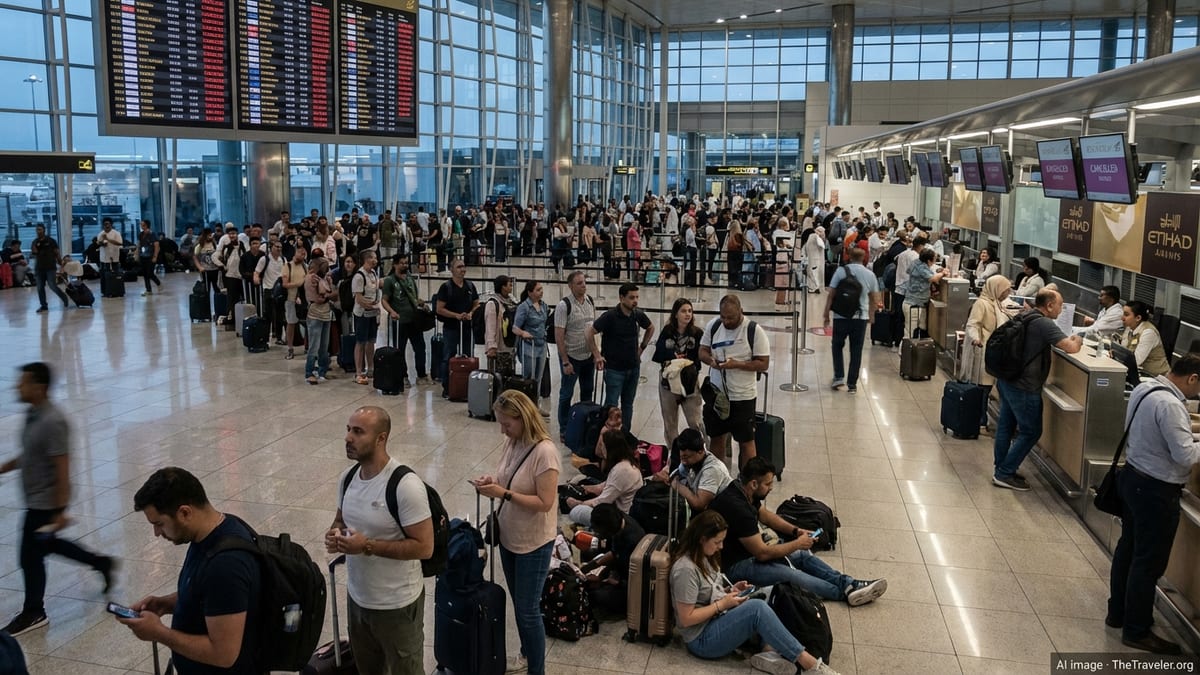
Gulf security flare-up reshapes airspace and schedules
The latest round of disruption follows months of instability in Gulf airspace after Iranian strikes earlier this year targeted infrastructure in the UAE, Kuwait and other regional states, prompting several temporary airspace closures and emergency operating procedures. Regulators in Abu Dhabi confirmed in early May that the UAE’s airspace had technically returned to normal after earlier shutdowns, but subsequent missile and drone activity around the Gulf has kept aviation risk levels elevated.
European and specialist aviation risk advisories highlight that, despite the formal reopening of UAE skies, conflict-zone assessments over Iran, Iraq, Lebanon and parts of the Gulf of Oman remain at high or medium risk. Carriers have been steering clear of several corridors, adding flight time and reducing flexibility on key routes between Europe, the Middle East and Asia.
Industry briefings and travel-security bulletins describe a system that is open but fragile: airports in Dubai, Abu Dhabi and Sharjah remain operational, yet routings can change at short notice when military activity intensifies. As a result, passengers are advised across multiple public sources to treat published timetables as provisional and to check flight status close to departure.
Advisories issued in July and updated into August stress that the current environment is characterised less by blanket shutdowns and more by reactive airspace avoidance, complex detours and an elevated risk of same-day disruption. This has created a patchwork of operations in which UAE carriers continue to fly to most destinations, while some foreign airlines curtail or suspend services into the region.
Emirates: hub remains busy, but with diversions and delays
Dubai-based Emirates continues to operate a broad global network, serving more than 130 destinations according to its own published schedules, yet regional tensions are visibly reshaping how many of those flights reach and leave its hub. Conflict-zone mapping shows multiple Gulf and Levant airways restricted, which has pushed some Emirates services onto longer, more northerly routings to avoid high-risk airspace.
Recent passenger reports and operational notices describe Dubai flights occasionally held on the ground or re-timed because of airspace capacity limits when military traffic or risk spikes in nearby sectors. In several instances over the past month, jets have faced extended departure queues overnight as controllers sequence civilian traffic around temporary restrictions.
Travel-industry updates indicate that Emirates has also been among the carriers pausing or adjusting frequencies into airports most directly affected by strikes and closures, including Kuwait and Bahrain earlier in the summer. When those hubs restricted operations, Emirates consolidated services or temporarily rerouted passengers via alternative gateways until local conditions stabilised.
Official guidance on the airline’s public channels continues to urge travellers to monitor email notifications and to re-check flight status before heading to the airport. While the majority of Emirates services are operating, the combination of longer routings, congested corridors and fast-changing advisories means that even on days without headline cancellations, travellers can encounter rolling delays and last-minute gate changes.
Etihad Airways: selective suspensions and gradual resumptions
Abu Dhabi’s Etihad Airways has taken a particularly visible role in adjusting to the security picture, at times suspending services to nearby Gulf capitals when airport infrastructure or local airspace has come under pressure. Publicly available coverage in early August detailed how Etihad had halted flights to Bahrain and Kuwait at the height of mid-July attacks that damaged facilities and closed surrounding skies, before confirming staged resumptions once operating conditions improved.
Reports from regional outlets show that Etihad has been phasing flights back as restrictions ease, starting with limited daily services and maintaining flexibility to scale up or down. The airline’s published schedules to and from Abu Dhabi also reflect rerouted sectors around constrained zones over Iraq and western Iran, which adds flying time on select long-haul pairings.
Security and travel-advisory briefings aimed at corporates describe Etihad, along with Emirates, as benefiting from priority access to scarce airspace slots when the UAE briefly reopens constrained corridors, a factor that has helped the national carriers keep core trunk routes running even as some international airlines divert away from the region entirely.
Nonetheless, forward-looking analyses from aviation consultancies warn that Etihad’s network will likely face an extended period of timetable volatility. Decisions on whether to maintain services into certain Gulf and Levant destinations are being closely tied to evolving risk assessments, which can shift rapidly in response to new strikes or diplomatic moves.
Air Arabia and flydubai: regional networks under strain
Sharjah-based Air Arabia and Dubai’s flydubai, both heavily reliant on short-haul and regional connectivity, have been on the front line of the changing security map. Their networks crisscross Gulf states, Iraq, parts of Iran’s periphery and the wider Middle East, exactly the regions where conflict-zone bulletins highlight elevated risk.
Travel and business media across the Gulf have documented how Air Arabia has at times maintained daily links into markets where other operators scaled back, including certain Gulf and North African cities, while simultaneously trimming or suspending flights into destinations more directly exposed to missile and drone activity. Adjustments have frequently been made with limited lead time, reflecting the reactive nature of security-driven airspace controls.
Flydubai, which runs an extensive narrow-body network from Dubai International and Al Maktoum airports, has similarly navigated a mix of targeted suspensions and rerouted services. Industry intelligence reports describe the carrier as using alternative stopovers or modified routings on some eastern and northern sectors, trading efficiency for risk avoidance when traversing sensitive corridors.
Public guidance from UAE travel advisories and regional tourism bodies emphasises that customers flying on these carriers should allow longer connection windows, particularly when transiting between regional and long-haul services. Because the stress points are dynamic, a flight operating normally one week may face delay or diversion the next if military or political developments alter the risk profile along its path.
What passengers should expect when flying via UAE hubs
Despite the challenging environment, the consensus across aviation risk assessments is that the UAE’s main hubs remain open and functional, with airlines, air-navigation providers and airport operators using layered safeguards to manage overflight risks. However, those same assessments underline that the situation across the wider Middle East is fluid, and that sudden changes to routings or schedules cannot be ruled out.
Travel-advisory documents shared with corporate clients in recent months recommend that passengers keep contact details updated with their airline, monitor booking-management tools closely in the 24 hours before departure and remain prepared for rebooking or overnight stays in the event of significant delays. Insurance and ticket-flexibility policies have also become more important for travellers transiting the region during periods of heightened tension.
For the UAE carriers themselves, analysts point out that operational resilience now hinges on their ability to dynamically manage fleets and crews around episodic airspace closures, while maintaining safety margins and regulatory compliance. The need to detour around conflict zones, operate with contingency fuel for possible diversions and occasionally thin out schedules has cost implications, but has so far allowed Emirates, Etihad, Air Arabia and flydubai to keep core international links open.
With conflicting timelines on ceasefires and no definitive end-date to regional tensions, industry watchers expect a prolonged phase in which Gulf airlines operate under tight security oversight and evolving routing constraints. For travellers planning to fly through Dubai, Abu Dhabi or Sharjah, that means factoring in extra time, staying informed in real time and accepting that, for now, the Middle East’s busiest hubs are operating under conditions that can change from one day to the next.
Sources: The National – regional travel and flight disruption coverage; European Union Aviation Safety Agency – conflict zone advisories; SafeAirspace.net – UAE airspace risk profile; UAE General Civil Aviation Authority notice on temporary airspace closure; Aviation and travel trade analysis of Gulf disruptions