


More news on this day
Passengers flying to and from the UAE are facing continued disruption, with delays and cancellations reported across Emirates, Etihad, Air Arabia and flydubai services as Air France maintains a temporary halt on its Dubai route amid heightened regional tensions.
Get the latest news straight to your inbox!
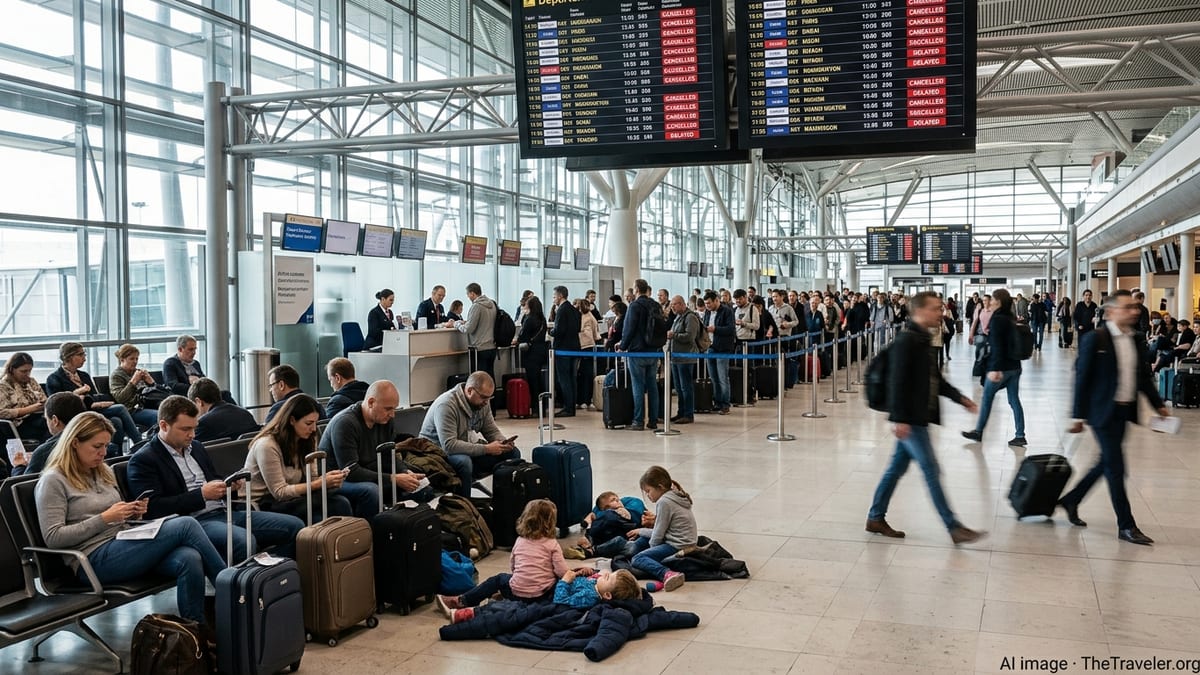
Regional tensions keep UAE aviation under pressure
Recent weeks have brought a new wave of schedule changes for travellers using Dubai and Abu Dhabi, as airlines navigate the impact of renewed US Iran tensions and associated airspace risks. Publicly available information shows that the European Union Aviation Safety Agency has extended its conflict zone bulletin for Gulf airspace until September 30, reinforcing a cautious approach to routing and frequencies across the region.
Reports from UAE-based media indicate that Emirates, Etihad Airways, Air Arabia and flydubai continue to operate the bulk of their networks, but with a growing number of affected flights on particularly exposed routes. Services to Kuwait, Bahrain and selected Saudi Arabian cities have seen repeated cancellations or timetable adjustments this summer, with schedules often being reviewed day by day.
Airport operations in the UAE remain fully open, yet airlines are adjusting departure times, rerouting flights around closed or restricted airspace and, in some cases, trimming frequencies. The result for passengers is a patchwork of normal operations on many routes alongside rolling delays and last minute cancellations on others.
Emirates and Etihad adjust schedules on key regional routes
Flag carrier Emirates has focused much of its disruption on short haul Gulf routes, where operational pressures and airspace constraints are most acute. Coverage from regional outlets shows that flights between Dubai and Kuwait in particular have been repeatedly suspended or reduced, even as a limited daily service to Bahrain has been restored. Longer haul flights are mostly operating, although some westbound services are flying longer routings to avoid closed airspace, adding to journey times.
Abu Dhabi based Etihad Airways is experiencing a similar pattern. A travel advisory published this week highlights delays to more than a dozen inbound and outbound flights touching Europe, Asia and the wider Middle East, as aircraft and crew are repositioned around bottlenecks. Earlier in the summer, Etihad extended the cancellation of specific Kuwait flights for several days at a time, citing operational reasons, and those routes remain among the most vulnerable to further adjustments.
Industry tracking shows that both Emirates and Etihad are prioritising continuity on trunk routes to major global hubs while using regional services to absorb much of the schedule volatility. Passengers booked on shorter Gulf sectors are therefore more likely to encounter changes than those flying to key destinations in Europe, North America or East Asia, even though all flights remain subject to late running.
Air Arabia and flydubai feel the knock on effects
Low cost carriers Air Arabia and flydubai, which provide much of the UAE’s connectivity to secondary cities across the Middle East, Central Asia and North Africa, are also feeling the strain. Published coverage in July and August recorded multiple cancellations and lengthy delays on routes such as Abha in Saudi Arabia and Kuwait City, with some flights operating hours behind schedule and others scrubbed altogether.
A more recent travel advisory for Dubai International and Abu Dhabi’s Zayed International Airport lists a cluster of disrupted flydubai flights from cities including Almaty, Bishkek, various Moscow airports, Jeddah, Astana, Minsk, Addis Ababa, Damascus, Abha and Baghdad. On the same day, an Air Arabia Abu Dhabi departure was also cancelled, underscoring how regional turbulence is filtering through to both full service and budget operators.
Operational updates from flydubai stress that the airline is running a reduced network with some routes temporarily rerouted or operating on limited frequencies. For travellers, the experience can range from a routine on time departure to extended ground holds or last minute rebookings, sometimes on the same route later in the day as conditions allow.
Air France extends Dubai suspension as other foreign carriers remain cautious
Against this backdrop, foreign airlines are taking a more conservative stance on flying into the Gulf. According to recent Gulf based reporting, Air France has prolonged its suspension of Dubai services, with flights remaining paused through at least early September. The airline initially halted operations as regional tensions escalated earlier in the summer and has since pushed back its planned resumption date in line with evolving risk assessments.
Other international carriers have followed similar patterns, extending or introducing suspensions and diversions on routes that would normally overfly conflict affected areas. Coverage from regional travel media notes that airlines such as Air Canada and KLM have paused or curtailed selected services to Dubai and other Gulf destinations in recent months, contributing to reduced capacity for travellers relying on European connections.
Despite these withdrawals, Dubai International Airport and Abu Dhabi’s Zayed International Airport remain operational and continue to process large volumes of traffic on local carriers and those international airlines that are still serving the UAE. However, the absence of some European and North American operators is narrowing options, particularly for passengers who prefer or are required to travel on specific alliance partners.
What passengers flying from the UAE should expect now
The overall picture for travellers in early September is one of partial normality tempered by lingering uncertainty. Many flights on Emirates, Etihad, Air Arabia and flydubai are departing broadly on time, yet a significant minority continue to face delays or cancellations, often announced close to departure. Air France’s extended suspension of Dubai services adds a further complication for passengers with existing bookings or onward connections through Paris.
Public advisories consistently recommend that passengers avoid heading to the airport without a confirmed, operating flight and that they monitor their booking status regularly on airline websites or mobile applications. With schedules being adjusted at short notice and routings occasionally lengthened, travellers are also being encouraged to allow extra time for connections and to keep contact details updated in their reservations so carriers can issue alerts.
For now, the direction of travel will depend largely on how regional security conditions and airspace restrictions evolve over the coming weeks. If tensions ease and regulators relax warnings, more international airlines may begin to restore suspended services and UAE carriers could firm up their timetables. Until then, passengers flying from Dubai, Sharjah or Abu Dhabi should be prepared for a fluid operating environment in which flexibility and real time information remain essential.
Gulf News: UAE flight update today
Gulf News: Emirates, Etihad, Air Arabia, flydubai delays
The National: UAE travel advisory on airport delays
Gulf News: Air France Dubai suspension and travel advisories