


More news on this day
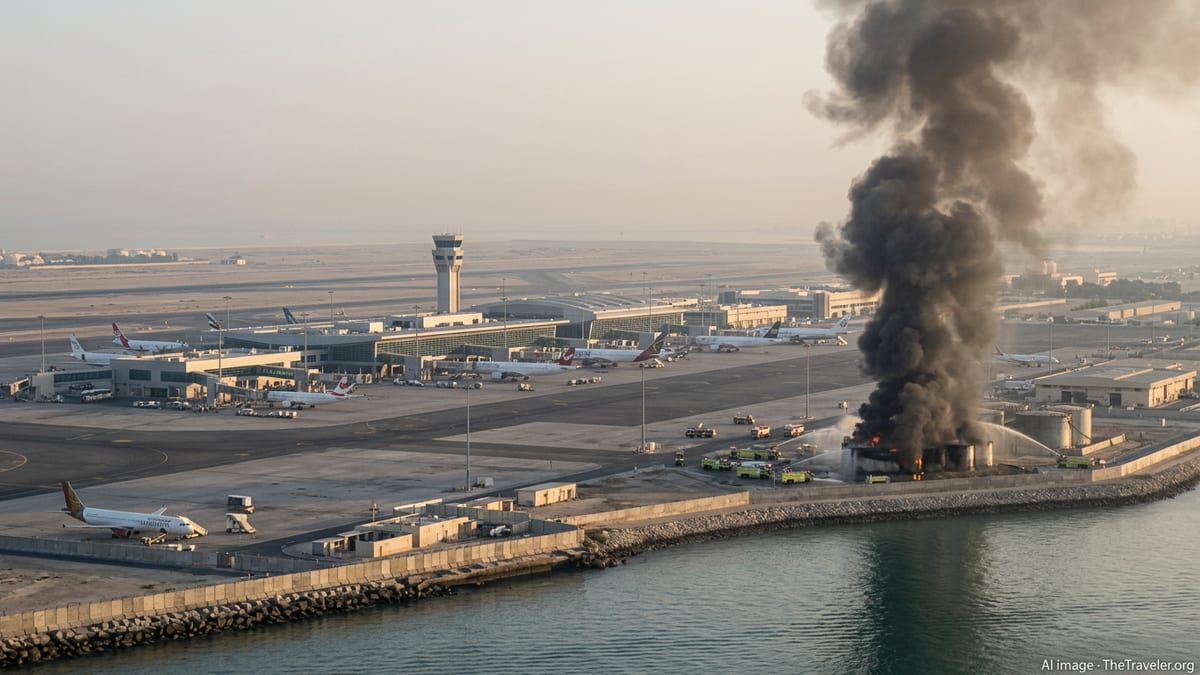
Flight operations at Russia’s Sochi International Airport were heavily disrupted on September 4 after an overnight drone attack set nearby fuel facilities ablaze, triggering hours of restrictions, widespread delays and dozens of cancellations at one of the country’s busiest resort gateways.
Get the latest news straight to your inbox!
Flights Diverted, Delayed and Canceled After Overnight Strikes
Publicly available data and local media coverage show that Sochi’s airport operated with significant restrictions for more than 11 hours following the night time attack of September 3 to 4, which targeted fuel infrastructure close to the airfield. During that period, take offs and landings were repeatedly halted, with some aircraft diverted to alternative airports in southern Russia while others remained grounded on the tarmac.
Estimates compiled by independent Russian outlets indicate that around 90 aircraft were unable to depart or arrive on schedule, with an additional several dozen inbound flights canceled outright. One tally cited more than 100 flights either delayed or canceled as operators attempted to restructure their schedules around the sudden loss of capacity and shifting safety rules.
Separate tracking of day of travel performance shows an unusually high number of cancellations and multi hour delays at Sochi on September 4, far above typical levels for this time of year. Sochi usually averages just over 100 daily movements, but on the day after the attack dozens of departures were either scrubbed or pushed back by many hours as operational limits remained in place.
Fuel Depot Fires and Refueling Limits Near the Airport
The most serious physical damage appears to have occurred at two fuel facilities serving the wider Sochi area, including one depot in the Sirius federal territory located roughly 100 meters from the airport perimeter. Visual evidence circulated on Russian and international platforms shows extensive fires and thick black smoke rising from tank farms overnight, with flames visible from residential districts and coastal resort zones.
Following the strikes and subsequent fires, notices to airmen introduced emergency controls on aircraft refueling at Sochi. According to multiple reports based on these notices, refueling was at first restricted across all providers at the airport, before being narrowed to a single fuel operator under temporary rules scheduled to run through midday on September 5. Industry observers note that even partial limits on refueling can create bottlenecks for turnarounds, forcing airlines to adjust routings or tanker extra fuel from other airports.
Regional officials have also warned that damage to the fuel network could ripple beyond aviation. Statements cited in Russian press reports highlight concerns about possible disruptions to gasoline supplies for road users if the affected depots cannot quickly restore normal operations, although as of September 5 routine filling station closures had not been widely reported.
Repeated Safety Shutdowns Keep Travelers Waiting
In addition to the initial overnight halt to operations, Sochi airport introduced further temporary suspensions of take offs and landings on September 4 as aviation authorities reassessed airspace risks. Public communications from the federal aviation regulator described these pauses as safety measures, with each closure followed by a gradual resumption of flights once clearances were restored.
By Friday morning, the airport had briefly returned to standard operations, according to Russian news agency reports. However, later in the day restrictions were reimposed more than once, underscoring the fragility of the situation and prolonging the disruption for passengers attempting to reach or depart the Black Sea resort at the tail end of the summer season.
Travelers posting on Russian social media channels reported extended waits in terminal buildings and at departure gates, as well as last minute schedule changes. Some Aeroflot passengers cited in local coverage were informed that their rescheduled departures from Sochi would not operate until dates well into mid or late September, reflecting the challenge airlines face in rebalancing capacity after a sudden, large scale interruption.
Impact on Sochi’s Role as a Major Holiday Gateway
The drone attack and resulting delays come during a period of increased pressure on air travel to and from Sochi, which has evolved into one of Russia’s most important domestic leisure hubs. Industry data show that the airport typically connects to more than 70 destinations, with a strong focus on internal routes that feed resort traffic to the Black Sea coast and nearby mountain areas.
Analysts following Russian aviation trends have noted that Sochi has already been coping with a volatile operating environment in 2026. Previous Ukrainian drone strikes earlier in the year prompted temporary closures at Sochi and other southern Russian airports, contributing to a pattern of recurring delays and elevated cancellation rates across the region. Travel market research cited in business media has linked these disruptions, along with higher fares, to a cooling in demand for Sochi package holidays.
The latest incident is likely to reinforce that trend in the short term, as both airlines and passengers weigh the risk of further sudden shutdowns. Tour operators catering to domestic tourists may need to adjust itineraries, shift capacity to rail or road options where possible, or build in larger buffers for potential flight changes on itineraries that still rely on Sochi airport.
What Travelers Need to Know Right Now
As of the morning of September 5, Sochi airport has been moving back toward its regular schedule, but residual disruption remains visible in the form of delayed departures and aircraft rotations out of sync with published timetables. Travelers heading to or from the region in the coming days are likely to encounter longer than usual queues and potential day of departure changes as carriers work through the backlog.
Industry and media monitoring suggest that the most affected customers are those booked on peak time domestic services, which make up the bulk of the airport’s operations. Passengers holding tickets for early September have been encouraged, through airline and travel agency channels, to check flight status frequently and remain flexible about rebooking options.
For visitors already in Sochi, local reporting indicates that core urban infrastructure, hotels and seaside attractions are operating normally despite the dramatic scenes around the fuel depot fires. Air quality checks reported by municipal authorities on September 4 did not show levels above permitted limits in districts closest to the airport and the Sirius area, easing immediate health concerns for residents and tourists.
Looking ahead, the episode adds to a growing list of security related air travel disruptions in southern Russia that travelers and travel planners must now factor into route choices. For many domestic tourists, Sochi remains an anchor destination, but the reliability of air links into the region has become a central question for the season ahead.
Meduza: More than 100 flights delayed or canceled at Sochi airport after drone attack
EU Today: Sochi drone attack hits fuel network and disrupts airport operations