


More news on this day
Passengers flying from the United Arab Emirates this July are facing a fast shifting mix of airspace risks, airline schedule changes, new health restrictions and one of the busiest summer travel peaks the country has seen since before the pandemic.
Get the latest news straight to your inbox!
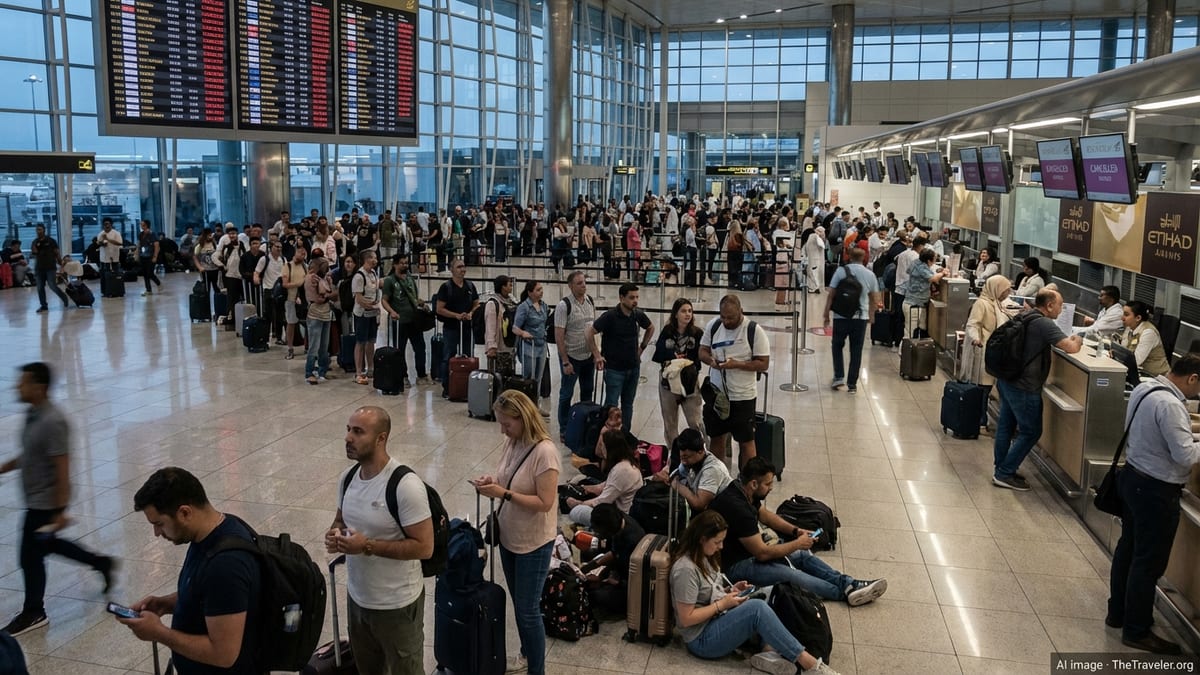
Regional security tensions still shaping UAE air travel
Commercial flights from the UAE continue to operate against the backdrop of the 2026 conflict involving Iran and the United States, which has triggered repeated disruptions across Gulf airspace in recent months. International coverage of the conflict describes a pattern of missile and drone activity and temporary airport closures that has forced airlines to reroute traffic around high risk zones rather than over the Strait of Hormuz and parts of western Iran.
Publicly available safety bulletins from European and international regulators highlight the Middle East as a high risk region for civil aviation, advising carriers to exercise extreme caution or avoid several conflict affected flight information regions entirely. For passengers, this typically translates into longer routings, higher fuel costs that can feed through to fares, and occasional last minute schedule changes when airspace restrictions tighten at short notice.
Foreign office style advisories from a number of governments maintain warnings about the possibility of renewed attacks affecting major Gulf hubs, even after the most acute phases of the conflict. These notices generally stop short of telling travelers not to fly through the UAE altogether, but they do urge anyone transiting or departing from the country to monitor airline updates closely, keep contact details current in their bookings and register for travel alerts from their own government where available.
Travel analysts note that the risk profile is uneven across the region. While some neighboring states have seen direct hits on airport infrastructure or repeated airspace closures, the UAE has focused on maintaining open corridors and layered air defenses, which has helped Dubai and Abu Dhabi restore much of their hub connectivity since the worst disruptions earlier this year.
Emirates, Etihad and key UAE carriers adjust routes and capacity
Emirates, Etihad, flydubai and Air Arabia have all reshaped their networks for the summer season, balancing strong demand with the need to steer clear of restricted airspace. According to recent schedule data and airline notices, many long haul services to Europe, Africa and the Americas are now operating on slightly longer routings that arc south over Saudi Arabia and the Arabian Sea instead of transiting the Gulf’s most sensitive zones.
Trade press and regional coverage indicate that Emirates has restored a significant portion of its global network after the spring shutdowns, even adding new destinations in Africa and selectively boosting frequencies on high demand leisure routes from Dubai. However, some secondary city links, especially where alternative hubs exist nearby, remain reduced or suspended as the carrier concentrates aircraft on trunk routes that can support the extra flight time and fuel burn.
Etihad has taken a similar approach from Abu Dhabi, running a more compact schedule focused on core markets in Europe, the Indian subcontinent and Asia while deferring or trimming marginal routes. Online updates from travelers suggest that premium connecting banks are largely operating, but with tighter connection windows and occasional retimings as the airline fine tunes routings to avoid congestion in remaining open corridors.
Low cost operators such as flydubai and Air Arabia have been more exposed to regional volatility, given their heavier reliance on short haul links around the Gulf and to Central and South Asia. Flydubai’s operational updates show recent terminal changes at key regional airports and advise passengers to reconfirm departure terminals and timings before travel, while general conditions of carriage explain options for rebooking or vouchers when flights are disrupted. Air Arabia, meanwhile, has drawn scrutiny from some passengers for slower refund processing and a greater use of travel credits after cancellations earlier in the conflict period.
New health and entry rules for select origin countries
Security is not the only factor reshaping who can fly into and out of the UAE this month. Updated travel notices from several foreign ministries report that the Emirates has introduced additional health related restrictions on travelers arriving from countries affected by an Ebola outbreak in parts of Africa. These measures apply primarily to citizens or recent visitors from Uganda, South Sudan and the Democratic Republic of the Congo, and can include entry bans or enhanced screening and documentation checks.
At the same time, UAE authorities continue to coordinate closely with destination countries on visa, vaccination and documentation requirements for outbound travelers. The official UAE travel updates portal and major local carriers advise passengers to verify that passports and, where accepted, Emirates ID cards have at least six months of remaining validity and that any required visas, onward tickets and health paperwork are in order well before reaching the airport.
Different rules also apply depending on whether passengers are UAE nationals, residents or visitors. Citizens benefit from tailored arrangements with a growing number of destinations that allow for e-visas or visa on arrival, while expatriate residents often face stricter visa documentation checks on return, particularly if their residency status has recently changed. Travel planners recommend that all travelers use airline and government portals to confirm the latest requirements for their specific route rather than relying on outdated assumptions or third party summaries.
Travelers transiting the UAE without entering the country remain subject to the rules of both their origin and final destination, including any transit specific health or biometric checks at Dubai International or Abu Dhabi International. With regulations evolving quickly in response to security and public health developments, carrying printed or easily accessible digital copies of key documents can reduce the risk of missed connections or denied boarding.
Airport congestion and what to expect at Dubai and Abu Dhabi
Even as airlines grapple with regional airspace constraints, passenger traffic through Dubai International remains robust. Local media reports ahead of the school holidays forecast around three million travelers moving through the hub in the first half of July alone, with peak days reaching pre conflict summer volumes as residents and transit passengers funnel through the world’s busiest international airport.
Dubai Customs and airport operators have responded by increasing staffing and ramping up readiness across security, immigration and baggage handling. Public guidance highlights the importance of arriving early, especially for morning and late evening departure waves when multiple widebody flights are scheduled within short windows. Passengers are being encouraged to complete online check in, pay close attention to terminal and gate assignments and use dedicated fast track or family lanes where eligible.
Abu Dhabi International is also seeing elevated traffic, particularly on routes operated by Etihad and its codeshare partners that provide alternatives to disrupted corridors elsewhere in the Middle East. While the newer terminal infrastructure has helped absorb some of the surge, travelers report that queues at security and outbound passport control can still lengthen significantly at peak times, especially when flights are bunched to take advantage of safer overflight windows.
Transit passengers should be prepared for re-screening and longer walks between gates as airlines consolidate operations into particular concourses. Airports advise that anyone with tight connections monitor departure boards and airline apps closely and, if necessary, seek assistance from ground staff as soon as they land rather than waiting until boarding starts for their onward flight.
Practical advice for passengers flying from the UAE now
For travelers preparing to fly from the UAE in the coming days, the most consistent message across airline communications, airport advisories and foreign travel guidance is to stay flexible and informed. Schedules remain more vulnerable than usual to late adjustments driven by geopolitical shifts, evolving airspace notices and operational knock on effects elsewhere in the global network.
Passengers are strongly encouraged to keep a close eye on airline apps and text or email notifications in the 48 hours before departure, as flight numbers, timings and routings can change without making headline news. Where disruptions occur, carriers based in the UAE generally offer a mix of free date changes within a defined window, full refunds or vouchers, with specific options depending on the fare type and circumstances of the cancellation.
Travelers with tight onward connections or fixed time commitments at their destination may wish to allow extra buffer time, consider slightly earlier departures on the same day or avoid the last flight of the evening where possible. Purchasing travel insurance that explicitly covers war related airspace disruptions and extended delays can also provide an additional layer of protection, though policy terms vary widely and should be checked carefully.
Above all, experts suggest that passengers treat flying from the UAE this summer as manageable rather than impossible. Despite elevated risks and a complex regional backdrop, Dubai and Abu Dhabi remain critical global hubs, with airlines, regulators and airports working to keep traffic flowing while prioritizing safety. Travelers who prepare thoroughly, build in flexibility and stay alert to official updates are best placed to navigate the season with minimal disruption.