


More news on this day
Dubai remains open to visitors and major attractions are operating, but a combination of recent regional conflict, evolving government travel advisories and extreme summer heat means travellers are weighing safety and comfort more carefully than in previous years.
Get the latest news straight to your inbox!
How current travel advisories frame the risk
Government travel advice for the United Arab Emirates has shifted several times in 2026 as the regional security picture has evolved. In March, the United States ordered the departure of non‑emergency staff and family members from its missions in the UAE, citing the threat of armed conflict and potential attacks linked to hostilities involving Iran. Since then, advisories have encouraged travellers to monitor developments closely and maintain a high level of awareness.
European and other international guidance has been recalibrated during the northern summer. Updated advice from the United Kingdom in early July noted that previous warnings against all but essential travel to the UAE had been eased, although the situation was still described as unpredictable and subject to change at short notice. Similar language appears in other national briefings, which characterise the risk as elevated but manageable for informed visitors.
Regional hostilities earlier in the year included missile and drone attacks directed at UAE territory, which briefly disrupted flights and led to heightened security measures. Publicly available reporting indicates that the country’s air‑defence systems intercepted the vast majority of projectiles, but incidents in Abu Dhabi and temporary closures at Dubai International Airport demonstrated that travel can be affected when tensions spike.
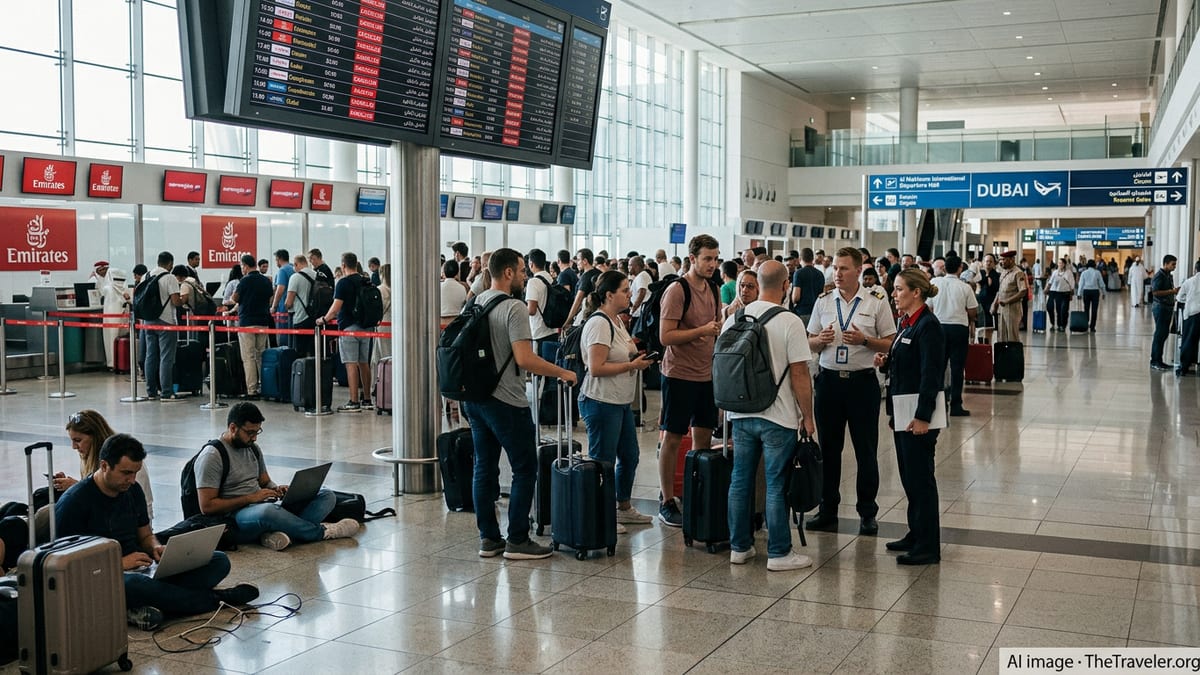
At present, commercial flights are operating into Dubai, although some international airlines have adjusted schedules, routings or capacity. Travellers are being urged by airlines and travel agents to check booking conditions, routing changes and any special waiver policies before departure, as operations remain more fluid than in a typical year.
On‑the‑ground security and what visitors are experiencing
Within Dubai itself, the day‑to‑day picture is markedly different from the headlines about regional conflict. Shopping malls, resorts and key attractions are open, and Dubai’s popular summer events calendar, including large indoor shopping and entertainment promotions, is going ahead. Local coverage highlights ongoing campaigns to attract visitors with hotel offers and indoor festivals designed to keep tourism activity buoyant despite the heat and regional uncertainty.
Security in public areas such as malls, hotels and transport hubs remains visible and structured, reflecting long‑standing measures rather than sudden changes on the streets. Travel risk consultancies generally describe urban crime rates as low compared with many major cities, with petty theft more of a concern than violent crime. For most visitors, the primary manifestations of the regional situation are in the form of additional checks at airports, occasional delays and a higher volume of security information, rather than direct exposure to conflict.
Nevertheless, the experience of earlier missile and drone episodes has underlined that disruption can occur with little warning. Travellers are therefore advised by official and independent sources to register with their consular services where possible, stay informed through credible news outlets, and be prepared for schedule changes. Travel insurance that explicitly covers security‑related disruptions, missed connections and extended stays is being widely recommended.
Prospective visitors are also being reminded that local laws on public behaviour, alcohol, relationships and online activity can be stricter than in many home countries. Guidance from several foreign ministries stresses that breaches of public decency or social media rules, even if unintentional, can lead to legal difficulties, and encourages travellers to review official advice on local regulations before arrival.
Heat, health and seasonal comfort challenges
Beyond security, the most immediate risk for many visitors in mid‑2026 is the weather. Dubai’s peak summer has arrived with temperatures in the low to mid‑40s Celsius in the city and even higher inland, with local media reporting potential highs above 50 degrees in parts of the UAE. High humidity makes conditions feel hotter, particularly along the coast, and public campaigns have been running to warn residents and workers about heat stress.
Health authorities and meteorological agencies have emphasised the risks of dehydration, heat exhaustion and heatstroke during the middle of the day. They advise limiting outdoor activity, using shade and air‑conditioned spaces, and paying close attention to children, older travellers and anyone with cardiovascular or respiratory conditions. Visitors unaccustomed to desert summers may find even short walks uncomfortable during daylight hours.
Tourism operators and airlines are leaning into indoor experiences as a result. Promotional material for the current summer season emphasises shopping, indoor theme parks, galleries and air‑conditioned attractions, with messaging that Dubai is “built for all seasons.” While this offers respite from the climate, it also means that travellers hoping for beach time, extended pool days or long outdoor excursions may be disappointed by how little time is realistically comfortable outside.
For those who do decide to travel in the hottest months, practical steps include booking accommodation with robust air‑conditioning, planning sightseeing in the early morning or late evening, drinking plenty of water and avoiding alcohol before long periods outdoors. Travellers with underlying health issues may wish to consult a medical professional before committing to summer dates, or consider shifting their trip to the cooler months between roughly November and March.
Air links, visas and practical entry considerations
Dubai’s role as a global air hub has been tested in 2026, yet its airports remain key transit points between Europe, Asia, Africa and Australasia. While Dubai‑based carriers continue to operate extensive networks, some foreign airlines have temporarily suspended or rerouted services, particularly during periods of heightened tension earlier in the year. Industry updates suggest that routings over certain neighbouring airspaces have been adjusted, resulting in longer flight times on some routes.
Passengers connecting through Dubai are advised to monitor airline notifications closely in the days before departure and to build extra time into tight connections. In previous months, sudden airspace closures in the wider region led to knock‑on effects for schedules, with some travellers facing long delays and difficulties rebooking. Travel experts now suggest choosing flexible fares, ensuring contact details are correct on bookings and having a contingency plan if onward flights are disrupted.
Visa and entry rules for the UAE remain broadly consistent with pre‑crisis procedures, although travellers should always verify requirements with official government or airline sources before flying. Many nationalities receive visas on arrival for short tourist stays, while others must obtain electronic or pre‑arranged visas. Those planning to leave the airport during a transit stop may need a specific transit visa depending on nationality and length of stay, and are being encouraged to confirm this well in advance.
Normal entry checks on travel history, documentation and health requirements are still in place. As with any long‑haul journey, travel medicine specialists recommend being up to date with routine vaccinations and considering additional precautions based on personal health profiles, especially given the heat and the increased time that travellers may spend indoors in air‑conditioned spaces.
Balancing appetite for risk with trip objectives
With Dubai’s tourism industry actively courting visitors and major events still on the calendar, many travellers are choosing to go ahead with trips, particularly those focused on shopping, dining, business and indoor leisure. Others are postponing or rerouting, either because of security concerns or because the extreme summer heat clashes with their expectations of a relaxing holiday.
Travel analysts suggest approaching the decision as a personalised risk assessment rather than a simple yes‑or‑no question. Key factors include an individual’s tolerance for geopolitical uncertainty, health status in relation to high temperatures, the importance of the specific trip, and whether travel dates can be moved to cooler months. Families and solo travellers may also weigh risks differently.
Publicly available information at mid‑July 2026 indicates that while travel to Dubai is possible and the city is functioning, conditions are less predictable than in past years. Prospective visitors are being encouraged to track official advisories from both their home country and the UAE, purchase comprehensive insurance, remain flexible with plans and stay informed throughout their journey.
For now, the question of whether it is “safe enough” to travel to Dubai has no universal answer. Instead, it depends on how each traveller balances the residual risk of regional flare‑ups and operational disruption against the continued appeal of one of the world’s busiest and most visited cities.