


More news on this day
UAE airports are operating with generally stable schedules today, but regional security concerns and weather conditions continue to trigger pockets of delays and cancellations across Emirates, Etihad, Air Arabia and flydubai services.
Get the latest news straight to your inbox!
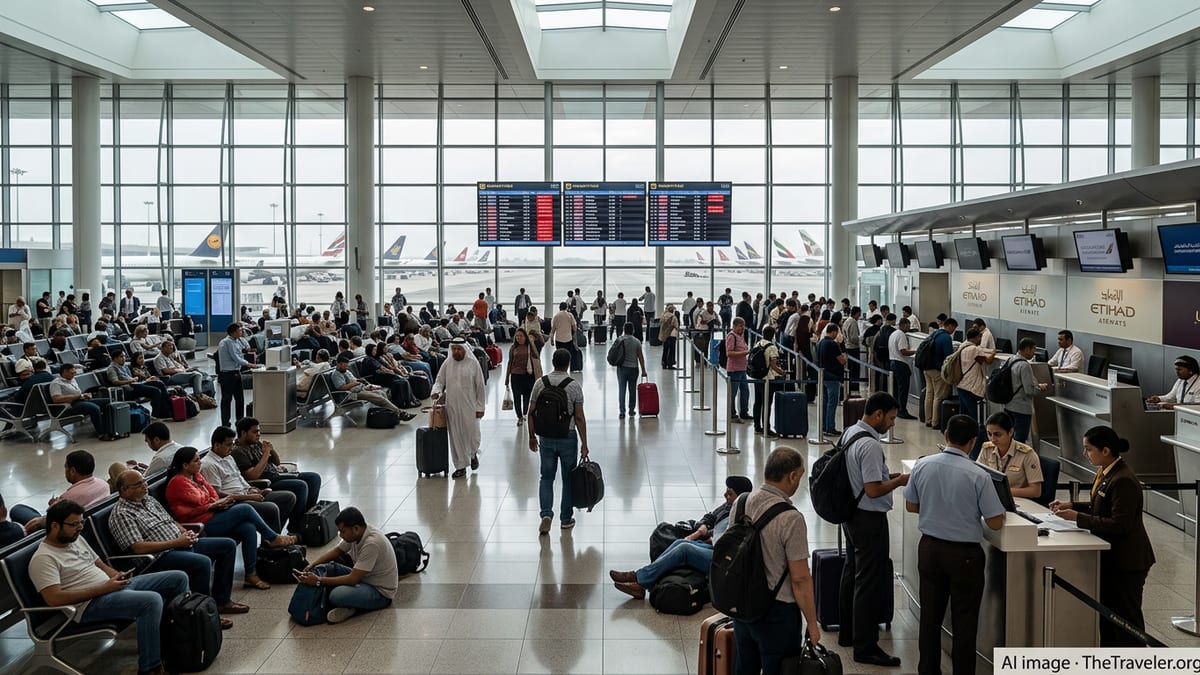
Overall operational picture at UAE hubs
Publicly available airport boards and flight trackers show Dubai International, Abu Dhabi’s Zayed International and Sharjah International handling normal passenger volumes today, with most flights operating close to schedule. However, a noticeable minority of services, particularly on regional routes, are experiencing timing changes ranging from modest delays to full cancellations.
Data from multiple tracking platforms indicates that the majority of long haul services on Emirates and Etihad are departing and arriving broadly on time, including flagship routes to Europe, North America and Asia. Short haul services and codeshares to nearby hubs appear more exposed to adjustments as airlines react to evolving airspace and security assessments.
Weather does not appear to be a primary driver of disruption this morning, with aerodrome weather reports for Dubai and Abu Dhabi showing clear conditions, good visibility and light to moderate winds. Forecasts from the UAE’s National Center of Meteorology point to typical late summer heat rather than storms or low visibility that might force widespread schedule changes.
The more complex picture comes from regional geopolitical tensions and knock on effects from airspace restrictions in parts of the Middle East, which continue to influence routings, block times and on the day operational decisions for carriers based in the UAE.
Emirates and flydubai: Dubai operations under pressure
At Dubai International, live departure boards reviewed this morning show most Emirates flights listed as scheduled, particularly wide body services to major European gateways, North America and key Asian destinations. Some flights that departed earlier in the day, including services to South Asia and parts of the Middle East, show minor delays of under an hour, which appear consistent with air traffic flow management and busy peak bank activity.
Low cost sister carrier flydubai, which operates an extensive regional network from Dubai, continues to be more directly exposed to volatility on shorter routes. Tracking data for recent and current departures highlights several flights operating behind schedule, especially to secondary cities where airspace routing or congestion can add complexity. While many departures still show as on time, travellers on flydubai are seeing a higher likelihood of revised departure or arrival times compared with long haul Emirates passengers.
Separate third party analytics on Dubai operations point to a meaningful proportion of services across all airlines arriving or departing later than scheduled, with average delays climbing beyond 20 minutes in some recent 24 hour periods. Ground congestion, tight turnaround windows for narrow body fleets and regional overflight constraints are all contributing to this pattern.
Passengers travelling from or through Dubai today are being urged, in published advisories and travel coverage, to recheck flight status repeatedly in the hours before departure and to allow extra time at the airport during peak morning and late night departure banks.
Etihad and Abu Dhabi: Focus on long haul reliability
In Abu Dhabi, Zayed International Airport appears to be maintaining a relatively steady departure profile, supported by Etihad’s emphasis on long haul intercontinental services. Live status information for several key Etihad routes today, including flights to major North American and European hubs, shows departures and arrivals operating close to timetable, reflecting a focus on schedule integrity for connecting traffic.
Some Etihad flights earlier in the week recorded moderate departure delays followed by partial recovery in the air, with arrivals landing only marginally behind schedule. This pattern reflects the use of flexible routings and cruise speeds to absorb disruption where possible, a common strategy on longer sectors where there is scope to make up time in flight.
Abu Dhabi’s airport statistics in recent days suggest that while there have been cancellations and delays linked to the wider regional situation, the overall volume of flights has remained comparatively stable. Etihad’s network, which leans more heavily toward long haul destinations than regional shuttle sectors, may be somewhat less exposed to frequent last minute schedule changes than low cost or point to point operators.
Nonetheless, connecting passengers using Abu Dhabi as a transfer hub are being advised in public guidance to monitor minimum connection times carefully, as even modest delays on inbound legs can put pressure on tightly timed onward links during busy bank periods.
Sharjah and Air Arabia: Regional routes feeling the strain
At Sharjah International Airport, home base for Air Arabia, weather data and aerodrome warnings early today show benign operating conditions, with clear skies, moderate temperatures and no active local warnings. Despite this, regional point to point operations across the low cost carrier’s network remain sensitive to changes in neighbour states’ airspace policies and security guidance.
Recent days have seen instances of Air Arabia services being rescheduled or cancelled on selected regional routes, according to Gulf based aviation coverage and traveller reports. These adjustments tend to cluster around destinations closest to areas of heightened tension or where local authorities have tightened air traffic management procedures.
Sharjah’s role as a hub for cost conscious travellers across the Middle East, North Africa and parts of South Asia means any wave of short notice changes can have immediate knock on effects for passengers relying on tight itineraries and limited alternative options. Same day rebooking may be challenging on certain high demand routes, especially at weekends and overnight.
Passengers using Air Arabia from Sharjah today are being encouraged by public advisories to build flexibility into their plans where possible, including considering earlier departures or alternative regional airports in the UAE if their destination is served from more than one hub.
Practical guidance for travellers flying today
Across the UAE’s main carriers, the picture for today is one of generally functioning operations tempered by localised delays and sporadic cancellations, particularly on short haul and regional routes. Travellers are being reminded in widely shared guidance to verify their flight status repeatedly on the day of travel through official airline channels and airport information displays, as third party trackers may lag behind operational decisions.
Check in cut off times remain strict, even where delays are already posted, so arriving early at the airport is still recommended. For long haul services on Emirates and Etihad, many travel advisers suggest arriving at least three hours before departure, and longer during peak overnight periods when security and immigration processing can take additional time.
For those with onward connections, both within the Gulf and beyond, building generous buffers into itineraries is increasingly viewed as prudent. A connection that might have been considered comfortable in calmer times may now be tight if an inbound leg encounters an airspace related reroute or a ground hold en route.
Travel insurance that covers disruption and missed connections is also being highlighted in consumer guidance as a useful safeguard in the current environment. Policies differ markedly in their coverage of delays and cancellations linked to security events, so passengers are being urged to review terms closely before purchase and to retain documentation of any airline notifications or schedule changes received today.