


More news on this day
Around 200 long-term passengers who bought into a “cruise for life” concept have been left scrambling for housing and onward travel in Cambodia after their residential ship, the Villa Vie Odyssey, abruptly suspended operations in the port of Sihanoukville, citing soaring fuel and operating costs.
Get the latest news straight to your inbox!
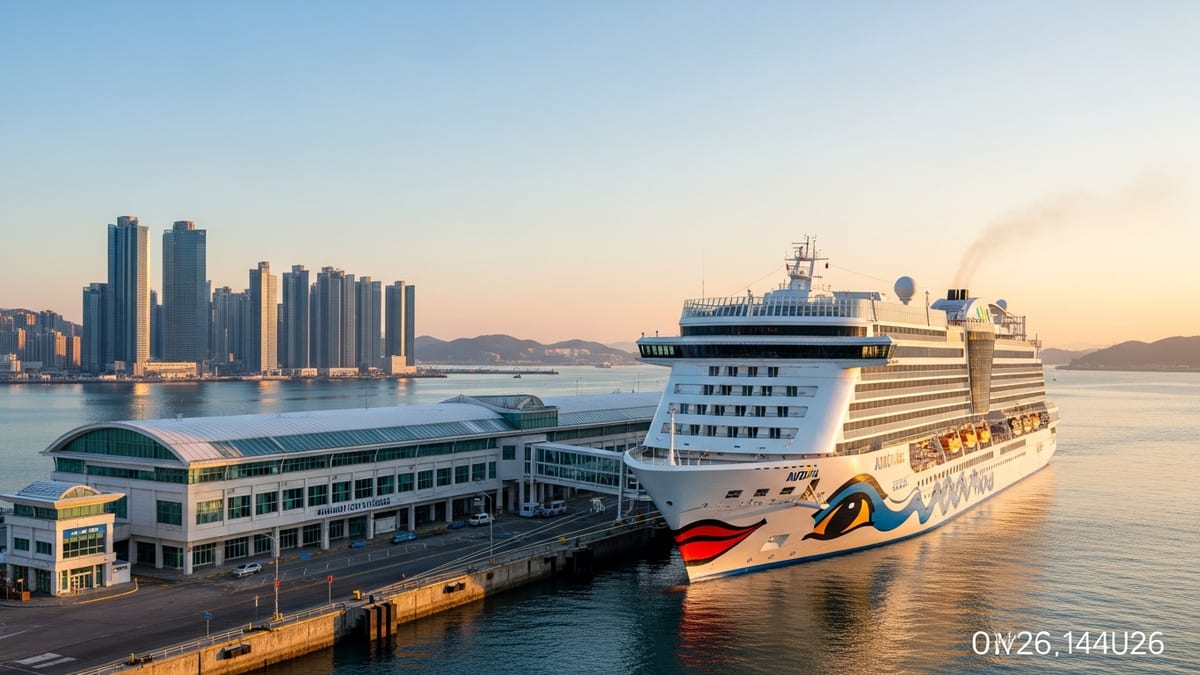
World-cruise dream halts in Sihanoukville
The Villa Vie Odyssey, operated by U.S.-based Villa Vie Residences, has been moored at Sihanoukville, on Cambodia’s Gulf of Thailand coast, since late October 2026. Publicly available company communications and news reports indicate that residents were told on 27 October that operations were being paused and that they would need to disembark while the business seeks new financing and restructuring options.
The ship had been marketed as a residential “endless” world cruise, offering owners and long-term renters the chance to live at sea for years at a time while circling the globe on multi-year itineraries. The current voyage began in October 2024 after refit work in Belfast, with plans for a 3.5-year global route spanning all seven continents and extended port stays instead of short, conventional cruise calls.
Reports from passengers and regional media describe a compressed, chaotic end to that vision in Cambodia. Residents were given only hours to pack up what, for many, amounted to their entire household, before being taken ashore and dropped in central Sihanoukville to find hotel rooms and onward flights on their own.
Local coverage in Southeast Asia and wire-service reporting describe the Odyssey as carrying roughly 200 to 250 residents at the time of the shutdown, although the vessel is designed for around 650 passengers at full capacity. Crew and staff numbers are reported to be in the mid-hundreds, many of whom are also facing uncertainty about repatriation.
Rising fuel costs and a fragile business model
In public statements and written notices shared with residents, Villa Vie Residences has attributed the suspension to steep increases in marine fuel prices on the ship’s current routing in Asia. Industry-focused outlets report that the company described fuel expenses per occupied cabin rising from historical averages of under $2,000 per month to an estimated $6,000 to $8,000 in recent weeks, a level it said was unsustainable without a rapid capital injection.
The Odyssey is a 1990s-built ship originally constructed for conventional cruising before being converted into a residential vessel. The model relies on passengers purchasing or leasing cabins for extended periods, paying an upfront amount plus substantial monthly maintenance and services fees intended to cover operating costs such as crew salaries, food, port charges, insurance and fuel.
According to published coverage, some residents committed six-figure sums for multi-year stays. Media reports from onboard passengers describe entry-level “life of ship” units priced from around 120,000 dollars, with more spacious suites costing several hundred thousand dollars. Monthly fees for two occupants on longer-term contracts are reported in the low- to mid-four-figure range, in exchange for accommodation, most onboard dining, housekeeping, utilities and basic medical services at sea.
Analysts quoted in cruise-industry publications have noted that such residential models can be highly sensitive to swings in fuel costs and occupancy, particularly when a ship sails long distances at relatively higher speeds to keep ambitious world itineraries on schedule. Slower repositioning, seasonal rerouting and more frequent overnight port stays can mitigate some volatility, but abrupt fuel price spikes can still overwhelm thin operating margins if additional capital or higher resident fees are not immediately available.
Residents who sold homes now face an abrupt reset
The human impact behind the numbers has drawn global attention. International outlets and travel-industry blogs have highlighted passengers who sold primary homes, downsized possessions and reorganized healthcare and finances around the expectation of spending at least a decade at sea. Some residents were reported to have budgeted close to 1 million dollars in total for long-term stays when combining upfront cabin purchase, monthly fees and incidental travel costs.
Interviews published in European and U.S. media feature retirees in their 60s and 70s who described the Odyssey as a once-in-a-lifetime opportunity to see the world slowly while remaining part of a stable onboard community. Others were remote workers or early retirees who planned to live on the ship until the end of its service life, occasionally returning to land for visits with family.
Accounts shared in passenger blogs and on social media indicate that many residents now find themselves with no permanent land-based home to return to and only a short window to secure new housing in Sihanoukville or fly onward. Some have reported challenges in accessing cash quickly enough for emergency bookings, as well as difficulties reestablishing insurance coverage and prescriptions that had been structured around shipboard life.
Not all resident feedback has been negative. Some passengers quoted in international reporting expressed gratitude for two years of global travel and a close-knit community onboard, even as they acknowledged the financial and logistical turmoil now facing them. Others have voiced frustration that early warning signs about the project’s finances, including a previous wave of fuel surcharges and calls for voluntary passenger contributions, did not result in a more orderly wind-down.
Company promises limited support amid uncertainty over ship’s future
In written notices cited by multiple outlets, Villa Vie Residences has said it will cover certain immediate costs in Cambodia, including hotel stays for a limited period and local transportation between the port and accommodations. However, passengers consistently report that the company has not committed to paying for international flights or long-term housing, leaving most residents to fund their own repatriation or onward travel.
Cruise and business media report that the company has entered a 60-day period to explore recapitalization and restructuring options. A message to residents cited in international coverage states that a major creditor has taken control of the Odyssey while options are assessed, including possible sale or charter of the vessel. As of 1 November 2026, there has been no publicly detailed timetable for any potential restart of operations, nor clarity on whether existing residential contracts would be honored in full if the ship sails again.
Legal experts quoted in consumer-focused reports note that passenger rights on residential cruises can be complex, blending elements of property ownership, long-term lease agreements and traditional cruise contracts. The specific remedies available to residents, including potential refunds or compensation, depend heavily on the exact terms signed and the jurisdictions governing those contracts.
Separately, travel-law specialists and consumer advocates have encouraged affected passengers to gather documentation of payments, contracts and communications and to monitor announcements from the company and any court proceedings that may emerge. At present, there is no central public registry summarizing all claims or a unified process for residents seeking redress.
Stranded in Sihanoukville: a challenging but functioning gateway
Sihanoukville, once a quiet Cambodian beach town, has transformed over the past decade into a boom-and-bust hub of casino resorts and construction, leaving a patchwork of beachfront developments, half-finished towers and quieter stretches of coast. For Odyssey residents, the city is now an unplanned waystation rather than a scheduled port of call.
Publicly available travel information shows that Sihanoukville International Airport offers limited direct international links compared with major regional hubs such as Bangkok or Singapore. Typical options for stranded passengers include short domestic flights or overland transfers to Phnom Penh, about 225 kilometers away by road, and onward long-haul flights from there. This adds cost and complexity for travelers managing large amounts of luggage and, in some cases, mobility limitations.
Reports from local media in Cambodia indicate that provincial authorities and port officials have assisted with basic logistics such as docking arrangements and customs processing, but there is no broad state-funded repatriation program for foreign cruise residents. Hotels and guesthouses in Sihanoukville and nearby beach areas are reported to be accommodating a spike in short-notice bookings, with prices fluctuating based on demand.
For now, the Villa Vie Odyssey remains alongside in Sihanoukville, its long-term residents dispersed into nearby hotels or en route to other countries. Whether the ship will sail again as a residential vessel, and under what model, remains unclear. What is already evident is that the abrupt halt has turned one of the cruise industry’s most ambitious “live at sea” experiments into a cautionary case study in how quickly a floating life plan can be grounded by financial and fuel shocks.