


More news on this day
For a growing number of travelers, the dream of swapping mortgages for a mailbox at sea has collided with a harsher reality of canceled voyages, delayed ships, and disputed refunds, exposing deep cracks in the fast-rising residential cruise niche.
Get the latest news straight to your inbox!
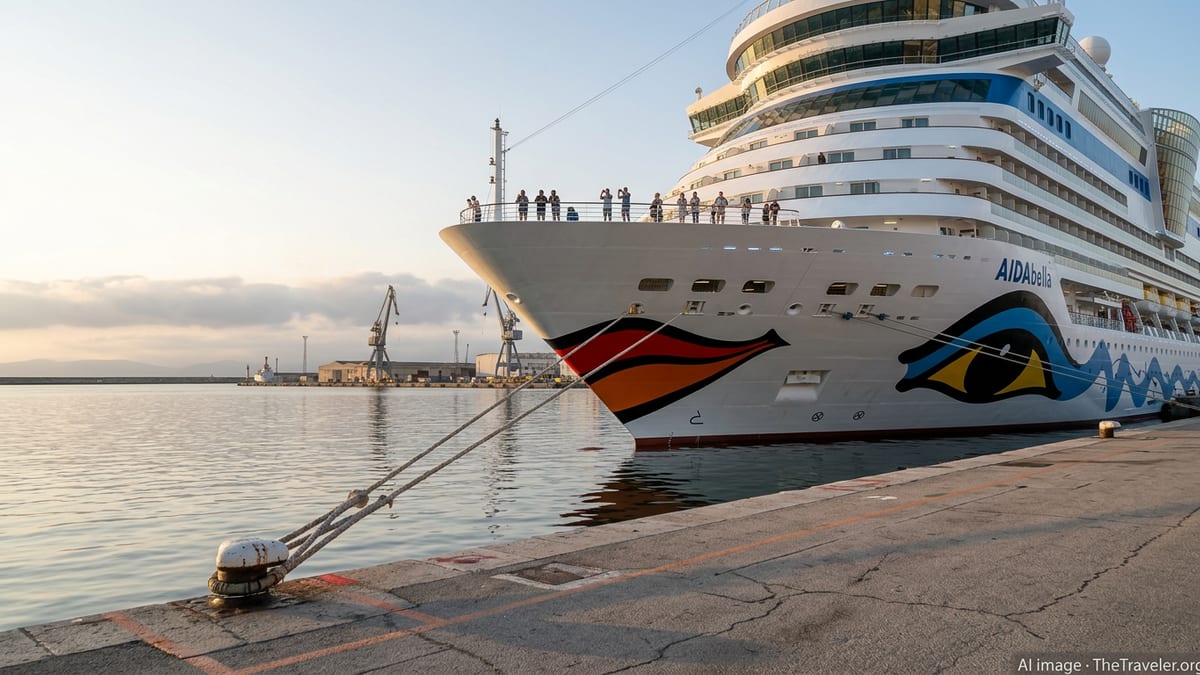
From Life at Sea to Villa Vie: A Dream Unravels
The modern residential cruise boom was sold as a radical lifestyle rethink: sell up on land, move into a cabin or condo at sea, and circle the globe for years at a time. That promise drew global attention in 2023 when Life at Sea Cruises marketed a three-year itinerary visiting 135 countries, with prices widely reported from about 30,000 dollars per person per year for the lowest categories. Prospective residents were told they could live more cheaply at sea than in many major cities, with housing, food, and utilities bundled into a single monthly payment.
By late November 2023, however, publicly available information shows that Life at Sea had canceled its inaugural voyage before departure after failing to secure a suitable ship. The company had initially pointed to the MV Gemini as its platform before shifting plans to another vessel, often referenced as the MV Lara, but the replacement never materialized in time for the advertised Istanbul departure. Reports indicate that some customers had already sold homes and possessions, expecting to board for three uninterrupted years aboard. Instead, they received notices that the voyage was off.
As Life at Sea unraveled, another residential hopeful, Villa Vie Residences, sought to capture the same market with a three-and-a-half-year global itinerary aboard the Villa Vie Odyssey. The ship, acquired and refitted in Belfast, finally began sailing in late September 2024 after months of delays. By late 2026, though, that venture was also in crisis. According to recent reporting, the Odyssey’s extended itinerary was abruptly suspended in Asia in October 2026, with rising fuel costs cited in news coverage as a key factor, and several hundred long-term passengers disembarked ashore.
Accounts in travel and general news media describe a pattern that has become familiar across several of these ventures: ambitious multiyear routes announced well in advance, deposits and multi-year payments collected, then shifting launch dates, operational hurdles, and, in the worst cases, outright cancellations once the financial and logistical demands of continuous world cruising became clear.
Money Upfront, Refunds in Question
The business model behind most residential cruise concepts relies on significant upfront payments. Prospective residents are asked to commit to multi-year leases, fractional ownership stakes, or fully owned residences, often years before a ship actually sails. Life at Sea and similar offerings invited customers to pay in advance for multi-year staterooms, while other brands marketed shipboard apartments priced in the hundreds of thousands to several million dollars, plus ongoing monthly fees.
When projects falter, those financial structures can leave travelers exposed. In the case of Life at Sea, public coverage by travel and consumer outlets in early 2024 detailed passengers still waiting on refunds estimated collectively in the tens of millions of dollars. Some reported that they had been promised repayments in staged installments over several months, only for timelines to slip. Online forums and social media have continued to track refund complaints well into 2024, illustrating how difficult it can be to unwind prepaid multi-year arrangements once a sailing no longer exists.
Other ventures have faced similar scrutiny. Reports on Victoria Cruises Line, a company marketing what it called an affordable adults-only residential ship, describe customers who say they paid substantial deposits for long-term stays on a vessel that did not subsequently enter the rolling residential service they expected. Independent investigations referenced by travel media point to multiple guests who have pursued refunds for months or longer. Publicly available reservation and terms documents for such companies emphasize broad contractual powers to alter routes, delay sailings, or cancel voyages entirely, which can complicate efforts to recover funds when plans change.
Consumer advocates note that traditional cruise protections, such as paying by credit card or using well-established brands, may not fully address the specific risks of residential projects where millions in deposits and long-term contracts are involved. With some companies based in one jurisdiction, ships registered under another, and customers scattered worldwide, legal recourse can quickly become complex and costly relative to individual claims.
Unbuilt Ships and Repeated Delays
Not every residential cruise disappointment has involved an abrupt cancellation on the eve of departure. Several high-profile projects have simply struggled to reach the water at all. Storylines, a Miami-based company, has spent years marketing MV Narrative, a purpose-built residential ship with more than 500 private residences, promoted as a floating community with restaurants, wellness facilities, and co-working spaces. Early materials flagged a launch as early as 2019, later revised to the mid-2020s.
Recent public updates from Storylines and independent ship-tracking and cruise industry sites suggest that the Narrative remains in planning and financing stages. Industry trackers list the vessel as a newbuild residential ship with anticipated entry into service now pushed to around 2027, while specialized residential cruising blogs report that the company is still working to finalize its capital structure and construction agreements. Some coverage notes that Storylines has discussed restructuring and renewed fundraising pushes in 2025 and 2026.
Broader surveys of the residential cruise sector in 2025 and 2026 show a pattern of repeated postponements. While the long-running private residence ship The World continues sailing with a published 2026 itinerary, at least four other announced residential ships, including MV Narrative, Somnio, Njord, and Ulyssia, have not yet been delivered despite multiple target dates. Industry analysts writing for niche travel publications point out that designing, financing, and building custom residential vessels is significantly more capital-intensive and time-consuming than refitting an existing cruise ship, which has contributed to a widening gap between marketing promises and operational reality.
For would-be residents, the consequence of these delays is limbo. Many booked with the expectation of planning entire retirements around specific sailing years. When target in-service dates move from 2023 or 2024 to the latter half of the decade, personal timelines for downsizing, visas, healthcare coverage, and family arrangements may no longer align with the product they originally purchased.
A Niche Filled With Risk Alongside Reward
Despite the setbacks, the underlying appeal of residential cruising has not disappeared. Surveys of passengers already living full-time or most of the year at sea on traditional lines indicate that some find cruise life less expensive than maintaining homes on land, especially when factoring in included meals, entertainment, and utilities. The idea of unpacking once and visiting dozens of countries each year continues to resonate strongly with retirees and digital nomads alike.
However, the recent collapses and suspensions highlight how different residential cruises are from conventional sailings. Where a standard voyage might last a week and be covered by comprehensive consumer protections and clear refund policies, residential projects commit travelers to years of payments and lifestyle changes. If a three-year cruise is canceled a month before departure, passengers who have already divested homes and belongings can find themselves effectively uprooted without an immediate alternative.
Travel writers and cruise specialists covering the sector now stress the importance of detailed due diligence. That includes researching the operator’s ship access or construction contracts, understanding where customer funds are held, confirming what happens financially if launch dates change, and checking whether the company has a track record of running long-duration voyages. Some commentators suggest that, for now, the most reliable way to approximate a life at sea may still be a patchwork of traditional cruises rather than a single multiyear commitment on an untested residential product.
Recent events with Life at Sea, Villa Vie Residences, and other under-delivered projects have reshaped perceptions of what had been marketed as a carefree global lifestyle. As the residential cruise sector pushes toward its next generation of ships and financing models, travelers considering selling up for life on the waves are confronting a more sober calculus: the romance of a permanent address at sea weighed carefully against the financial and personal risks if that ship never truly sails.