


More news on this day
The United Arab Emirates is entering a new phase of tourism confidence as a softened UK travel advisory converges with record aviation expansion, resilient hotel performance and a packed calendar of meetings and events, reinforcing the country’s role as a leading global travel hub.
Get the latest news straight to your inbox!
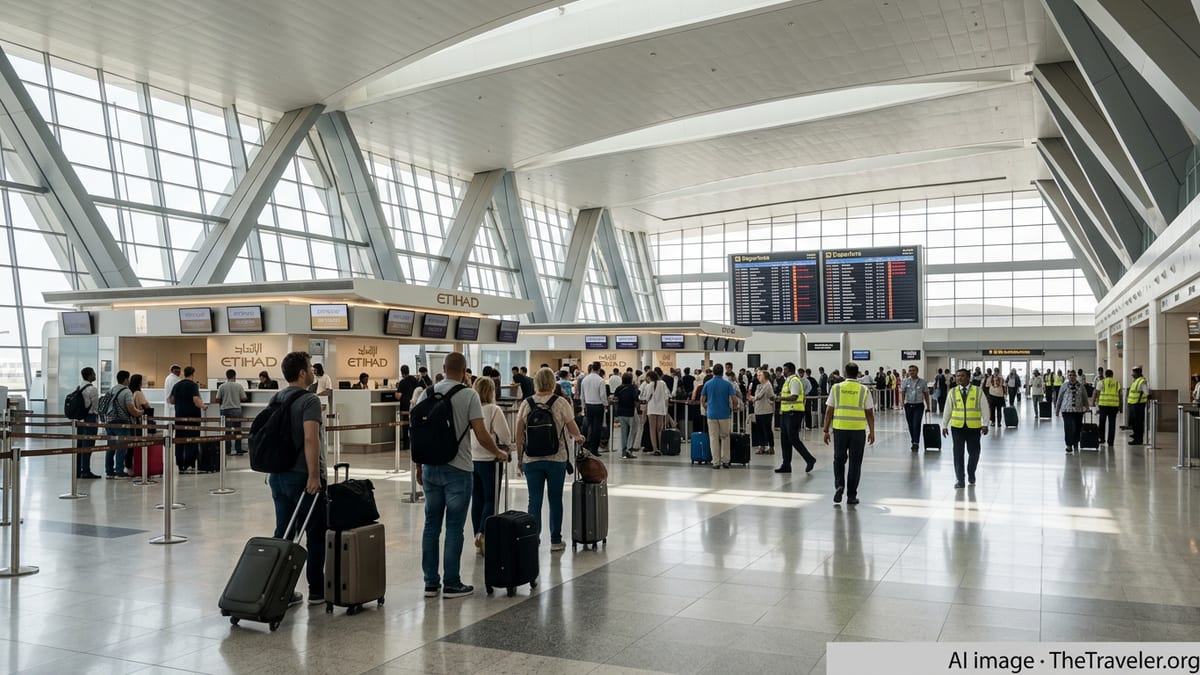
UK Travel Advice Eases, Unlocking a Key Source Market
Recent updates to the United Kingdom’s Foreign, Commonwealth and Development Office travel advice for the United Arab Emirates have shifted from blanket caution toward more targeted, information-led guidance. The change removes the broad, highly restrictive messaging that had weighed on traveler sentiment and replaces it with more nuanced recommendations focused on specific security and regional issues.
Industry analysts note that the UK is one of the UAE’s most valuable long-haul source markets, particularly for Dubai and Abu Dhabi. Pre-pandemic patterns showed British travelers combining city stays with beach and family holidays, and the market proved relatively quick to return once flights were restored. The latest adjustment in travel advice is being interpreted as a signal that routine leisure and business trips can proceed, provided travelers remain informed about developments in the wider region.
Tourism observers expect the friendlier tone of the UK advisory to support forward bookings for the 2026 winter season, when British demand traditionally peaks. Tour operators and online travel agencies are already highlighting the updated stance in their consumer messaging, with early indications of stronger interest for multi-night stays and stopover packages routed through Dubai and Abu Dhabi.
While the change does not remove all risk considerations, it reduces a psychological barrier that had persisted since earlier phases of regional tension. Market-watchers suggest that this more balanced approach is likely to benefit not only leisure tourism but also corporate travel and the meetings and incentives segment, where UK-based firms remain highly active in the Gulf.
Tourism Metrics Show a Broad-Based Recovery
Beyond shifts in advisory language, tourism indicators across the Emirates point to a sector that has moved firmly into growth territory. Data compiled from global tourism bodies and national agencies shows the UAE welcoming around 45 million international arrivals in 2024, with travel and tourism contributing roughly 13 percent of national gross domestic product and supporting close to 900,000 jobs.
Dubai has been at the forefront of this trend, recording about 18.7 million international overnight visitors in 2024, up more than 9 percent from the previous year. Research reports indicate that Dubai International Airport handled more than 92 million passengers in the same period, consolidating its status as one of the world’s busiest international gateways and underscoring the importance of air connectivity to the emirate’s tourism strategy.
Abu Dhabi has also reported robust numbers. Official performance summaries for 2024 highlight hotel guest volumes close to 5.8 million and an average occupancy rate around 79 percent, supported by double-digit growth in average daily rates and room revenues. These figures reflect the capital’s push to diversify its visitor base through culture, sports and business events anchored by venues such as Yas Island and Saadiyat Island.
Regionally, Gulf-focused tourism research shows the GCC surpassing pre-pandemic performance, with international arrivals across member states exceeding 72 million in 2024 and the UAE accounting for a significant share of that traffic. Analysts say the combination of large-scale infrastructure, aviation capacity and coordinated marketing campaigns has allowed the Emirates to outperform many competing sun-and-city destinations.
Aviation Expansion Keeps the Emirates in Global Focus
The recovery and expansion of UAE aviation have been central to sustaining tourism momentum. Publicly available information on route development shows both Emirates and Etihad adding new destinations and frequencies over the past two years, supported by orders for next-generation aircraft and investments in hub facilities at Dubai International and Abu Dhabi’s Zayed International Airport.
Emirates has signaled a renewed focus on Asia and emerging leisure markets, unveiling plans to serve new destinations in China, Vietnam and Cambodia while boosting capacity on high-demand seasonal routes. Reports on the airline’s latest financial year point to record profit and revenue, reflecting strong demand for long-haul travel and the advantages of Dubai’s position between Europe, Asia and Africa.
Etihad, meanwhile, has embarked on what industry coverage describes as one of its most ambitious expansion cycles to date. The Abu Dhabi carrier has launched routes to destinations in North Africa and Asia and has outlined a plan to add more than 30 new destinations by 2025, driving a substantial share of overall aviation growth attributed to the UAE. Analysts say this strategy is designed to reinforce Abu Dhabi’s role as a complementary hub to Dubai, with a mix of point-to-point traffic and transfer passengers.
These aviation gains are not purely about passenger numbers. Sector reports emphasize that expanded airlift has direct implications for tourism, conferences and trade. More nonstop services from secondary European and Asian cities reduce travel friction for high-value segments, including corporate groups, medical travelers and affluent holidaymakers, and also support the UK market by offering additional connection options and schedule flexibility.
Hotels Deliver High Occupancy and New Inventory
Hotel performance data across the UAE underlines the depth of the tourism upturn. Market intelligence aligned with STR benchmarking shows that Dubai’s hotel sector achieved occupancy in the high 70 percent range in 2024, placing it among the best-performing major urban markets globally. Average daily rates rose alongside occupancy, lifting revenue per available room and signaling that demand is not being driven by discounting.
Abu Dhabi’s hotels have followed a similar trajectory. A detailed 2024 performance report from the emirate’s tourism authorities indicates a 22 percent increase in room revenues, supported by higher room rates and improved occupancy. Beach and resort properties on Saadiyat Island, in particular, have benefited from a wave of luxury openings and the appeal of nearby cultural institutions and sports events.
Across the federation, official tourism strategy documents outline an ambition to attract 40 million annual visitors to hotel establishments by the early 2030s, backed by a substantial pipeline of new properties. Dubai alone counted more than 154,000 available rooms across over 830 hotel establishments by the end of 2024, with numerous additional projects under construction or announced in both the luxury and midscale segments.
Consultancy forecasts for the wider Middle East hotel market show Dubai and Abu Dhabi outperforming regional peers on occupancy and pricing, while still adding capacity. Analysts argue that this combination of high performance and continued investment is crucial if the UAE is to maintain its competitive advantage as other destinations in the region expand their own tourism offerings.
MICE and Mega Events Underpin Year-Round Demand
The meetings, incentives, conferences and exhibitions segment, widely known as MICE, has emerged as a core pillar of the UAE’s tourism strategy and a key factor in smoothing out seasonal travel patterns. Dubai and Abu Dhabi have both leveraged purpose-built venues and well-developed hotel districts to capture major international congresses, trade shows and corporate incentive programs.
Trade fair calendars for 2025 and 2026 show a dense roster of technology, finance, healthcare and sustainability events scheduled across both emirates. According to event industry reporting, global associations that had experimented with hybrid or virtual models during the pandemic are increasingly returning to fully in-person formats, with the UAE frequently selected as a neutral, well-connected location that can draw delegates from Europe, Asia and Africa.
Large-scale events held in recent years, including global climate and technology gatherings, have demonstrated the destination’s capacity to host tens of thousands of participants while maintaining service levels in hotels, transport and dining. This track record is now being used in bids for future events, with local convention bureaus emphasizing proven logistics, visa facilitation and a diversified leisure offering that appeals to delegates extending their stays.
Industry observers say that a more favorable UK travel advisory, combined with this robust MICE infrastructure, is likely to stimulate additional corporate and association business from the British market. London-based headquarters for global firms have historically played an outsized role in selecting destinations for regional conferences and incentive trips, and the UAE’s position is strengthened when risk assessments align with the on-the-ground experience of visitors.
Strategic Outlook: Confidence with an Eye on Stability
Looking ahead, forecasts from tourism economists and real estate consultancies suggest that the UAE will continue to post solid growth in visitor numbers, spending and hotel performance, though at a more measured pace as the post-pandemic rebound gives way to steadier expansion. The official UAE Tourism Strategy 2031 sets clear volume and revenue targets, implying ongoing investment in infrastructure, digital services and destination diversification.
Analysts caution that external factors, including regional geopolitical tensions and global economic conditions, remain potential headwinds. However, the easing of UK travel warnings, combined with structural strengths in aviation, hospitality and MICE, is widely viewed as a sign that the UAE has entered a more mature phase of its tourism development.
For now, the convergence of improved advisory language, strong airline networks and high hotel occupancies is keeping the Emirates firmly on the global travel map. As British holidaymakers and business travelers reassess their options for the coming winter and beyond, current data suggests that the UAE will remain near the top of the list.