


In a country overflowing with grand villas and manicured landscapes, Villa d’Este in Tivoli still manages to feel astonishingly special. Just 30 kilometers east of Rome, this 16th century retreat combines theatrical Renaissance architecture, tumbling water, and terraced gardens in a way that feels less like a museum and more like walking through a living stage set. It is an experience that many travelers rank above even some of Italy’s most famous palaces, and one that stays with you long after you leave the hilltop town of Tivoli.
Get the latest updates straight to your inbox!
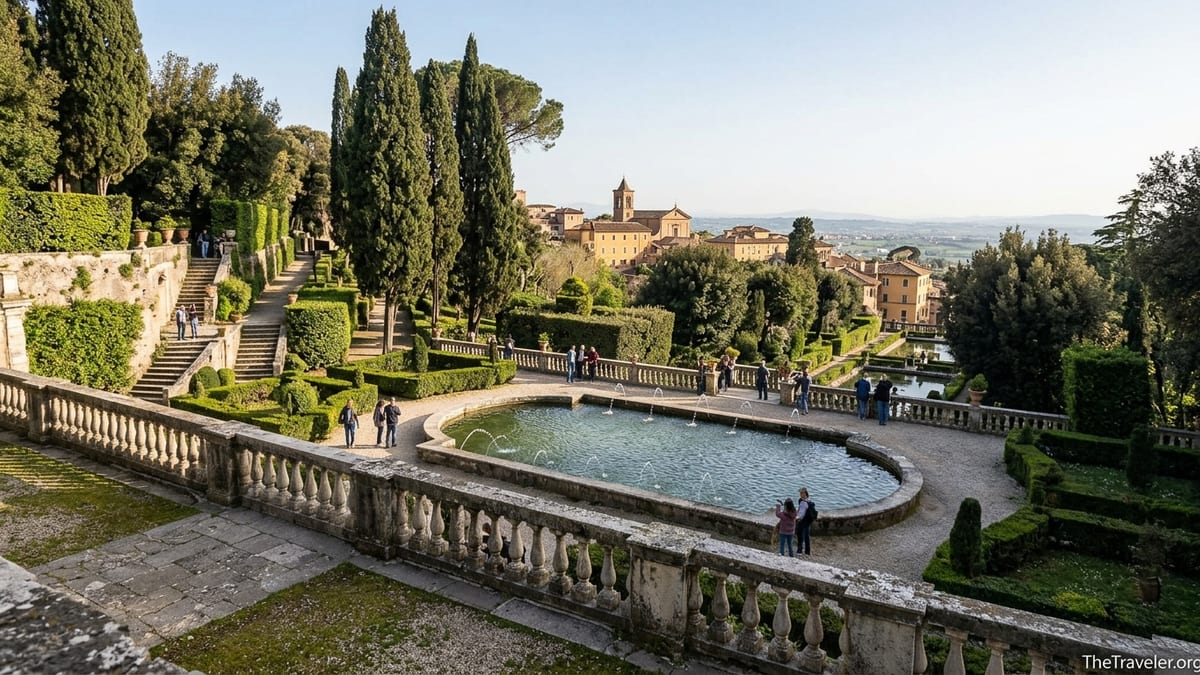
A Renaissance dream carved into a Tivoli hillside
Villa d’Este was commissioned in the mid 1500s by Cardinal Ippolito II d’Este, son of Lucrezia Borgia and a powerful figure in Renaissance Italy. Appointed governor of Tivoli in 1550, he set out to transform a modest Benedictine monastery into a residence that could rival the grandest Roman estates of antiquity. To realize this vision, he turned to architect and antiquarian Pirro Ligorio, who used the steep hillside above the Aniene River to create a dramatic cascade of terraces, stairways, and waterworks.
From the moment you step out from the palace onto the upper terrace, you grasp the scale of his ambition. The villa itself, with its frescoed halls and painted ceilings, acts like a proscenium framing the gardens below. Beyond the balustrade, the landscape seems to fall away in layers of cypress trees, clipped hedges, stone staircases, and glinting pools. Even in a country famous for its villas, the sheer vertical drama of Villa d’Este is unusual; few gardens in Italy combine architecture and topography so completely.
UNESCO recognized this uniqueness when it inscribed Villa d’Este as a World Heritage Site, noting how its design influenced garden making across Europe. For travelers today, this pedigree is not just an abstract label. It translates into a place where every turn of a path seems carefully choreographed, where the garden feels like a sequence of acts in a play rather than a simple park to stroll.
What makes the setting even more striking is its relationship to Tivoli itself. The historic center sits right outside the entrance, so your first glimpse of the villa may be after a coffee in a simple bar on Piazza Trento or a quick stop at a local bakery. Then, within a few steps, you pass through the ticket gate and find yourself lowered centuries back in time, surrounded by whispering cypresses and the sound of rushing water.
Water as spectacle: why the fountains feel unforgettable
If Villa d’Este is famous for one thing, it is water. The cardinals who lived here did not simply want a handsome garden; they wanted a hydraulic marvel. Engineers diverted water from the Aniene river via a complex system of tunnels and channels, using gravity alone to power a vast network of fountains, basins, and cascades. Visitors today still hear that power in the constant roar that drifts up through the garden.
The most iconic feature is the Hundred Fountains, a long, gently descending walkway where a stone wall erupts with dozens of jets, mascarons, and small spouts. Walking here in late spring or early autumn, you can feel a fine mist on your face, welcome relief if you have come out from Rome’s heat. Many travelers pause to take the classic photograph looking back up the alley, framed by plane trees and with the town’s bell tower peeking above the foliage.
Nearby, the grand Fountain of Neptune combines vertical drama with reflective calm. A powerful waterfall crashes down a rocky cliff, while below, still pools mirror the sky and surrounding cypresses. Stand here on a bright afternoon and you will see children watching the spray catch the light, couples leaning on the balustrade for photos, and guides pointing out how this composition inspired later baroque fountains in Rome.
Another highlight is the Oval Fountain, a curved stone basin embraced by a semicircle of niches and jets. Its rhythmic arcs and the soft curtain of water make it one of the most photographed spots in the villa. When the surrounding magnolias and oleanders are in bloom, the scene feels surprisingly intimate despite the crowds, especially if you arrive early in the morning when there are fewer tour groups.
Hidden corners, cool shade, and sensory details that linger
Part of the magic of Villa d’Este lies between the set pieces. Beyond the headline fountains are quieter corners where travelers often unexpectedly fall in love with the place. Take the Cypress Avenue, for example, a long path shaded by towering trees that leads you down toward the lower terraces. The air here is cooler, scented with damp stone and greenery, and the city noise above fades to a distant murmur.
On a typical visit, you might move from the refined geometry of clipped box hedges to a small belvedere over the Tiber Valley, then duck under a vine covered arch where the path suddenly becomes narrow and enclosed. These small shifts in light and sound create a layered experience that photographs alone rarely capture. It is the contrast between open terraces flooded with sun and shaded staircases worn by centuries of footsteps that makes the garden feel so immersive.
Even in busy periods, you can often find spots to sit and absorb the atmosphere. Many independent travelers choose a midweek visit, bringing a simple panino from a Tivoli bakery and enjoying it on a low wall overlooking the fish ponds, taking care to avoid the formal balustrades. Others linger by the water organ fountain, listening for the intermittent notes of the historic hydraulic instrument when it is operating, a reminder that this garden was always meant to surprise and entertain.
Seasonal changes also shape the experience. In April and May, you are likely to see irises, wisteria, and roses softening the stonework. In high summer, pale stone and pale green foliage contrast with the saturated blue of the sky, and the water becomes the main character, offering sound and coolness. In October, humid mornings can shroud the upper terraces in a gentle haze, while late afternoon light slants through the cypresses and turns the fountains’ spray golden.
Art, mythology, and power stories behind the beauty
Villa d’Este is not just a beautiful garden; it is also a carefully coded message about power, culture, and ambition. The cardinal and his designers used statues, grottoes, and painted rooms to tell stories from classical mythology and Christian symbolism. Even if you are not an art historian, you quickly sense that nothing here is accidental.
Inside the villa, rooms are covered with frescoes depicting landscapes, ancient ruins, and allegorical figures. A guided tour or audio guide can help decode scenes that celebrate the Este family’s lineage, humanist learning, and political connections. In practice, many visitors choose to walk through the palace first to get a feel for the cardinal’s world, and then descend into the garden where those ideas spill out into stone, water, and vegetation.
In the garden, you will find statues and reliefs of gods and heroes like Hercules, along with emblems tied to the Este coat of arms. The Rometta fountain, for example, evokes a miniature version of Rome, complete with symbolic elements that would have spoken clearly to 16th century guests. Today, modern travelers may not recognize every reference, but standing here you can still sense how the cardinal used myth to align himself with the grandeur of ancient Rome.
Understanding these layers can deepen your appreciation of the place. Many small group tours from Rome, often capped at around 15 to 20 participants, spend time at key symbolic sites, explaining how water displays reflected contemporary debates about engineering and divine order. Listening to a guide point out how the villa’s hydraulic marvels impressed visiting dignitaries helps you see the fountains not only as pretty features, but as declarations of mastery and sophistication.
Practical ways to experience the gardens at their best
For most travelers, Villa d’Este is an easy day trip from Rome. Frequent regional trains connect Roma Tiburtina or Termini with Tivoli in roughly 40 to 60 minutes, and ticket prices are typically comparable to a modest coffee and pastry in the city. From Tivoli’s station, it is about a 15 to 20 minute uphill walk through the town center to the villa’s entrance, passing small supermarkets, bars, and gelato shops where you can pick up water or a quick snack.
Another option is the Cotral bus from Rome’s Ponte Mammolo metro station to Tivoli, which many visitors find straightforward and inexpensive. Buses tend to drop you closer to the historic center, reducing the uphill walk. Real world traveler reports describe a range of experiences, from nearly empty buses in the shoulder seasons to crowded departures on sunny weekends. If you prefer a more structured day, many agencies in Rome sell combined tours that include transportation to both Hadrian’s Villa and Villa d’Este, often returning to the city by late afternoon.
Once you arrive, you will find that tickets for Villa d’Este are usually sold directly at the entrance booth on Piazza Trento, with combined passes sometimes available if you want to include nearby sites managed as part of the same group of villas. Prices can change, but expect a standard adult ticket cost in line with other major Italian state run monuments, with discounts for EU citizens in certain age ranges and free entry on specific national culture days. Queues can form in late morning from April through October, so independent travelers who arrive within the first hour of opening often enjoy a calmer entrance.
Comfortable shoes are essential. The garden spreads over several steep terraces connected by steps and sloping paths. Travelers with limited mobility can still see some of the main fountains from the upper levels, but exploring the full site involves frequent elevation changes and sometimes damp, uneven stone. In summer, plan for heat by bringing a refillable water bottle, sunhat, and possibly a light scarf for shoulders if you intend to enter local churches in Tivoli before or after your visit.
Pairing Villa d’Este with the wider Tivoli landscape
One reason Villa d’Este feels so special is its setting within the broader landscape of Tivoli. From several viewpoints along the garden’s edges, you can look out toward the Roman Campagna and glimpse the ruins of ancient estates. Many visitors choose to combine Villa d’Este with Hadrian’s Villa, the vast imperial complex built by Emperor Hadrian in the 2nd century, located a short drive or bus ride down the hill.
In practice, attempting both major sites in a single day can feel ambitious, especially if you are relying on public buses within Tivoli. Some travelers report spending four or five hours at Hadrian’s Villa alone, followed by several hours at Villa d’Este, which can make for a long and tiring day. If your priority is the garden experience, you may wish to devote a full afternoon exclusively to Villa d’Este, leaving Hadrian’s Villa for another day or a separate trip.
Tivoli’s compact historic center invites slowing down. After leaving the villa, many travelers wander toward viewpoints over the deep gorge carved by the Aniene River or stop at simple trattorias serving typical Lazio dishes. Ordering a plate of cacio e pepe or saltimbocca alla romana on a shaded terrace, with the memory of fountains still in your ears, is a satisfying way to extend the experience. Evening light over Tivoli’s rooftops can be particularly beautiful if you decide to stay for dinner before taking a later train back to Rome.
Spending the night in Tivoli is another option. Small bed and breakfasts in renovated townhouses often cost less than a midrange hotel in central Rome and allow you to visit the villa early the next morning, when the light is soft and the crowds are thinner. For garden lovers, that quiet first hour, when the sound of water dominates and the town is just waking up, can be the most magical time to explore.
The Takeaway
Villa d’Este’s reputation as one of Italy’s most beautiful garden experiences is not an exaggeration. It offers a rare combination of theatrical design, technical ingenuity, historical depth, and simple sensory pleasure. Walking its terraces, you encounter not only exquisite fountains and vistas, but also the echo of a Renaissance cardinal’s ambitions and the centuries of travelers who have marveled at the same scenes.
What sets it apart is how accessible this richness feels. You do not need specialist knowledge to enjoy the play of water, the cool shade of the cypresses, or the views over the valley. At the same time, the more you learn about its stories and symbolism, the more the garden reveals. Whether you visit as a quick escape from Rome or as the centerpiece of a longer exploration of Lazio, Villa d’Este offers an experience that feels both grand and intimate, historic and surprisingly alive.
For many travelers, the moment that stays in memory is simple: resting on a stone bench by a fountain, the air cool around you even on a hot day, with the sound of water blending into the distant bells of Tivoli. In a world of crowded attractions and hurried sightseeing, Villa d’Este invites you to slow down, listen, and let the garden work its quiet spell.
FAQ
Q1. Where exactly is Villa d’Este located?
Villa d’Este is in the hill town of Tivoli, about 30 kilometers east of central Rome in the Lazio region of Italy, within the historic center.
Q2. How long should I plan to spend at Villa d’Este?
Most visitors find that two to three hours allows enough time to see the main fountains, walk the terraces, and briefly visit the frescoed rooms inside the villa.
Q3. What is the best time of day to visit to avoid crowds?
Arriving within the first hour after opening or in the late afternoon typically offers a calmer experience, especially from spring through early autumn.
Q4. Can I visit Villa d’Este and Hadrian’s Villa on the same day?
It is possible, but doing both thoroughly in one day can feel rushed. Garden enthusiasts often dedicate a full afternoon just to Villa d’Este.
Q5. Are the gardens suitable for travelers with limited mobility?
The site includes many steps and steep paths, but some upper terraces and fountain views are accessible. Those with mobility issues may wish to focus on these flatter areas.
Q6. Is there a dress code for visiting Villa d’Este?
There is no strict dress code for the gardens, but comfortable walking shoes are important, and modest attire is advisable if you plan to enter nearby churches in Tivoli.
Q7. Can I buy food and drinks inside the villa grounds?
Services inside the monument are limited, so most visitors bring water and purchase snacks or meals in Tivoli’s bars, bakeries, or trattorias just outside the entrance.
Q8. Are guided tours worth it, or can I visit on my own?
You can easily visit independently, but a guided tour or audio guide can help explain the symbolism, hydraulic engineering, and history that you might otherwise miss.
Q9. Is Villa d’Este suitable for children?
Many children enjoy the fountains, stairways, and open spaces, but parents should be prepared for lots of walking, steps, and the need to supervise near balustrades and water.
Q10. What should I bring for a comfortable visit?
Comfortable shoes, a refillable water bottle, sun protection in warm months, and a light jacket in cooler seasons will make your time in the gardens more enjoyable.