


More news on this day
Flight disruptions across the Middle East intensified today as Hamad International Airport in Doha and several major Gulf hubs reported mounting delays and schedule changes, compounding an already fragile regional aviation network still operating under conflict-related airspace restrictions.
Get the latest news straight to your inbox!
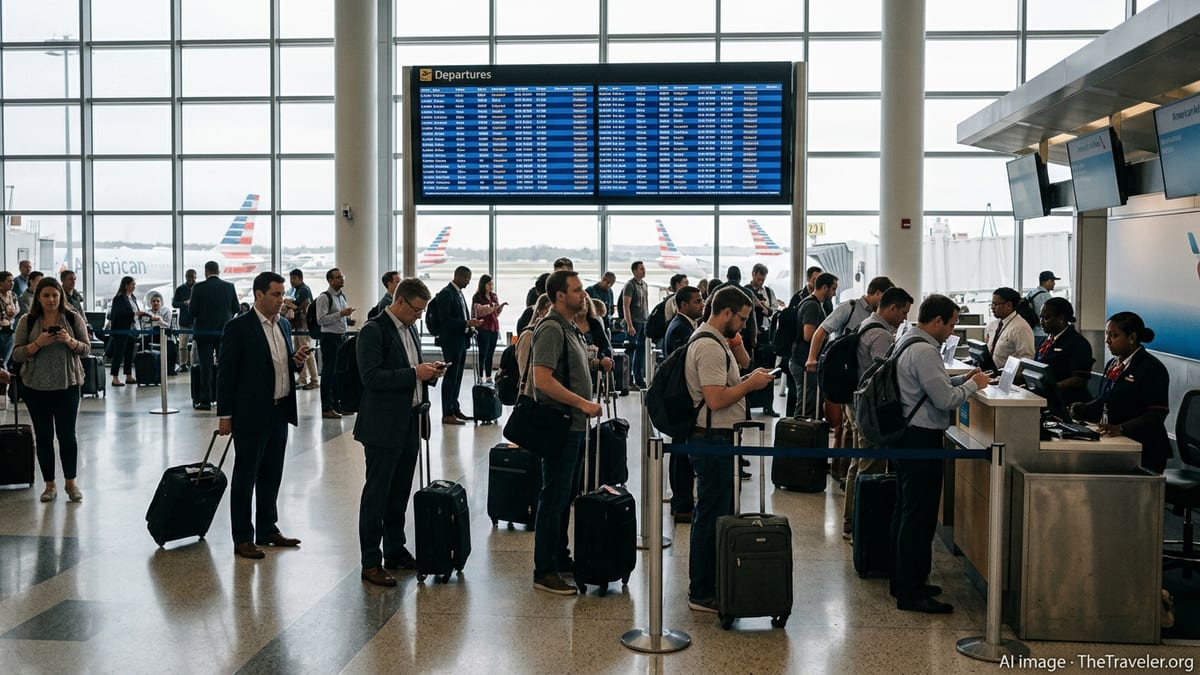
Heightened Delays at Doha Amid Restricted Airspace
Publicly available operational data and industry advisories indicate that flights to and from Doha continue to operate within a tightly managed airspace environment, with services constrained to specific corridors and routing points. Earlier regional guidance highlighted that Qatar’s airspace has been partially closed at times this year, requiring arriving, departing, and overflying services to follow limited, published routes. These controls have remained in place even as traffic levels have gradually recovered, increasing the likelihood of flow restrictions and knock-on delays when demand spikes.
Recent updates from logistics and aviation risk consultancies describe Doha’s airspace as restricted, with operators advised to monitor fast-changing Notices to Airmen and tactical routing instructions. While Hamad International Airport remains open and functioning as a key transfer hub, the combination of constrained corridors and high long-haul connectivity has created a sensitive operating environment where minor disruptions can cascade quickly through the schedule.
Flight tracking boards for Doha show dense evening and overnight waves of departures, particularly on routes linking the Gulf with Europe, Asia, and East Africa. In this banked structure, any upstream congestion, weather rerouting, or air traffic flow management in neighboring flight information regions can rapidly translate into clusters of delayed departures and arrivals at Hamad International, especially during peak connecting banks.
Network data compiled since the onset of the 2026 Gulf conflict underline how central Doha remains to global passenger flows between Europe and Asia. Even after earlier full and partial closures of Qatari airspace, most long-haul services have now been restored through dedicated flight corridors. Today’s rise in delays, however, shows how fragile that recovery remains while overflight options are limited and regional airspace advisories continue to evolve.
Regional Conflict Pushes Middle East Hubs to Capacity Limits
Analysis from schedule and disruption trackers shows that the 2026 Middle East conflict triggered a sharp reduction in scheduled flying across the Gulf earlier this year, removing a significant share of capacity from the market as airlines rerouted or paused services. Although most major airports across Qatar, the United Arab Emirates, and Saudi Arabia have since reopened to regular commercial flights, many continue to operate under varying degrees of restriction that leave little spare runway or airspace capacity during peak hours.
Specialist aviation intelligence platforms describe a system that has “stabilised despite disruption,” with airports such as Doha, Dubai, Abu Dhabi, Riyadh, and Jeddah listed as open but subject to congestion, tactical rerouting, and occasional GPS interference. These conditions, combined with high summer demand, mean that any new constraint, from a temporary flow restriction to a late inbound aircraft, can quickly produce clusters of delayed flights and missed connection risks at multiple hubs on the same day.
Historical data on the conflict’s early weeks illustrates the scale of the shock: tens of thousands of flights across the wider Gulf region were cancelled or heavily delayed as airspace closures forced wholesale changes to routings and frequencies. While today’s disruptions are smaller in scale, the same structural vulnerabilities remain, with a handful of mega-hubs handling a large share of intercontinental transfer traffic between Europe and Asia. When one hub such as Doha slows, the ripple effects are felt across others in the region and along onward routes.
Industry assessments warn that, as long as conflict-related advisories remain in place for parts of the Gulf and surrounding states, airlines and air navigation providers will have limited flexibility to absorb surges in demand or sudden operational shocks. The result is a pattern of intermittent but intense disruption days, like today, where hundreds of flights across multiple airports experience delays even in the absence of a full airspace closure.
Dubai, Jeddah and Other Gulf Airports See Knock-on Disruptions
Operational summaries for the month of August show that major Saudi and Emirati hubs are also facing persistently elevated levels of disruption. At King Abdulaziz International Airport in Jeddah, independent tracking of flight activity has recorded more than one hundred cancellations so far this month, alongside a steady stream of delayed services. While those figures cover a broader period, they point to an operating backdrop in which irregular operations have become more frequent and more severe.
In the United Arab Emirates, recent regional travel updates report ongoing schedule adjustments by international and local carriers serving Dubai and other airports as they navigate evolving airspace guidance and security assessments. Some airlines have suspended or reduced flights to selected Gulf destinations in recent days, while others continue to operate but caution passengers that services remain subject to last-minute changes. This environment is feeding into today’s pattern of widespread delays, particularly on routes that rely on tight connections between multiple Middle East hubs.
Coordination bodies that manage airport slot allocation for carriers in Europe and the Middle East note that operations across the region have “stabilised” compared with the earliest weeks of the conflict, yet still face “reduced capacity” at some hubs for the remainder of the current scheduling season. Such reduced capacity can manifest as longer turnaround times, tighter constraints on arrival and departure waves, and a higher baseline level of delay on busy travel days.
Taken together, these trends suggest that today’s surge in delays at Doha is closely intertwined with conditions at other key Gulf airports. Aircraft and crews rotate through multiple hubs across a single duty day, so disruptions at Jeddah, Dubai, Abu Dhabi, Riyadh, or Kuwait City can easily translate into late inbound flights arriving into Doha and other hubs, creating queues on the ramp and in surrounding airspace.
Safety Advisories and Airspace Warnings Add Complexity
Another factor contributing to today’s disruptions is the continued presence of international safety advisories covering parts of the Persian Gulf and Gulf of Oman. Guidance issued by European regulators and reflected on specialist airspace-risk platforms urges operators to avoid or limit flights through the airspace of Bahrain, Kuwait, Qatar, and the United Arab Emirates, as well as certain sections of the Gulf of Oman. While these advisories do not mandate full closures, they restrict the number of available routes and flight levels, creating bottlenecks at choke points where traffic converges.
Dedicated risk briefings for Qatar note that the Doha flight information region was closed and reopened several times between February and July as the conflict escalated, before returning to more regular operations through defined corridors. Even in the current phase, however, some national regulators continue to discourage or prohibit certain carriers from entering Qatari airspace, pushing them to find alternative routings around the restricted area. This diverts traffic onto a smaller set of neighboring corridors and increases pressure on the remaining available routes.
For airlines still serving Doha and other Gulf hubs, these constraints mean longer flight times on some sectors, reduced flexibility to step around weather systems, and greater complexity when building schedules with multiple daily rotations. The result is thinner margins for error: if a single sector is delayed due to congestion in a crowded corridor, the delay can multiply through subsequent legs, particularly for aircraft operating hub-to-hub patterns between Doha, Dubai, Abu Dhabi, and Jeddah.
Publicly available route maps and schedule filings show that, despite the constraints, Gulf hubs remain heavily trafficked, with carriers maintaining extensive networks to Europe, Asia, and Africa. The challenge highlighted by today’s disruption spike is that this traffic now flows through a more fragile, less flexible airspace structure than before the conflict, making significant delay days more frequent.
Passengers Advised to Monitor Flights as Network Stays Fragile
Travel advisories published in recent days by regional media and airline information portals consistently urge passengers to check their flight status before leaving for the airport, particularly for services touching the Gulf. With airlines continuing to adjust schedules in response to conflict-related assessments and airspace restrictions, even flights that appear confirmed can experience last-minute changes to departure times, routings, or equipment.
Major carriers operating in and out of Doha state in publicly available notices that schedules remain subject to operational, regulatory, and safety considerations, and that flights may be adjusted at short notice. Travel management companies and freight forwarders serving the region similarly warn clients to anticipate tactical rerouting, possible diversions, and extended transit times across Middle East gateways as long as current advisories remain in effect.
For passengers transiting through Doha and other Gulf hubs today, the immediate impact is visible in departure boards crowded with delayed flights, longer queues at transfer desks, and tighter connection windows. For airlines, the operational challenge extends beyond a single day, as today’s delays can leave aircraft and crews out of position for tomorrow’s schedules, perpetuating a cycle of irregular operations.
Industry analysis suggests that the overall Gulf hub system will remain vulnerable to bursts of disruption until conflict-related restrictions ease and more routings reopen. For now, travellers planning journeys through Doha, Dubai, Abu Dhabi, Riyadh, or Jeddah are being encouraged by publicly available guidance to build additional buffer time into itineraries and to remain flexible in case of further schedule changes.
Middle East Operational Update – Expeditors
Impacts to Middle East Hub Airports and Airlines – Cirium
Qatar Airspace Risk Assessment – SafeAirspace