


More news on this day
Commuters across parts of the United Kingdom are reporting smoother, more predictable journeys as pay-as-you-go contactless ticketing and new fare caps spread across the rail network, reshaping how regular passengers are charged for daily travel.
Get the latest news straight to your inbox!
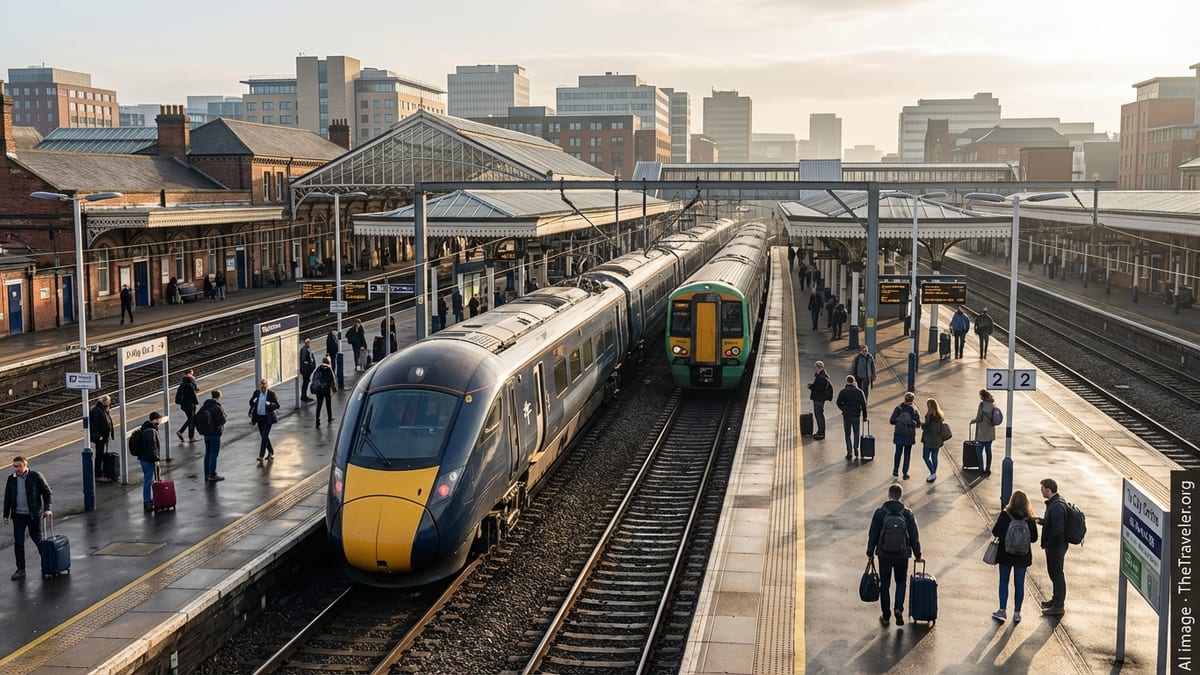
Contactless caps make costs easier to understand
Pay-as-you-go capping, already familiar to London Underground users, is increasingly available on National Rail services, allowing passengers to tap in and out with a bank card or device and be charged the best available fare for the journeys they complete in a day. Publicly available information from National Rail describes how these caps apply across defined zones, removing the need for many commuters to choose in advance between single, return or Travelcard-style products.
On routes in the South East, reports indicate that caps and harmonised peak times aligned with Transport for London rules are reducing the risk of accidentally paying more than necessary. For many office workers whose patterns vary through the week, the ability to pay per journey while retaining a clear maximum spend is being highlighted in consumer coverage as a key reason for switching away from traditional season tickets.
Industry briefings shared online show that additional stations are being added in phases, with staff guidance emphasising that customers who consistently tap in and out will normally pay no more than the capped daily rate for their zone combination. Travel commentators note that this is particularly attractive to part-time commuters, who can avoid the upfront cost of a weekly or monthly ticket while still accessing a predictable ceiling on charges.
Fare freezes and targeted reductions support regular travellers
At the same time as contactless technology spreads, broader changes to how fares are set are influencing commuter sentiment. Government factsheets on the proposed Railways Bill outline plans for Great British Railways to take on a single, strategic role in managing fares, with an objective of providing more consistent and understandable pricing across England and Wales. Recent policy announcements have included a freeze on regulated fares such as many season tickets, which are commonly used by long-distance commuters.
Regional initiatives are also shaping perceptions of value. In Greater Manchester, a move to a unified rail fare across all operators within the city region, combined with a published forecast reduction in average fares, has been presented as part of a wider effort to build an integrated Bee Network. Passengers travelling within the area benefit from a single structure that no longer requires comparing multiple operator-specific tickets, which local business organisations describe as a practical improvement for everyday commuting.
Commentary from transport analysts suggests that these freezes and targeted reductions, even where modest in cash terms, help counter concerns about rising living costs. For commuters who endured several years of inflation-linked increases, the combination of a more stable headline fare regime and technology that automatically calculates the cheapest available option is being portrayed as a rare piece of good news.
Balancing convenience with concerns over local price changes
Not all feedback is positive, and reactions differ sharply between routes. When contactless pay-as-you-go was introduced at additional stations served by operators such as Govia Thameslink Railway, specialist media and broadcast outlets reported instances where some passengers saw higher prices for specific journeys, particularly when long-standing paper-based return fares were withdrawn or restructured to fit the new system.
However, the same coverage notes that many travellers on those routes now benefit from lower or similar prices, especially those making complex or multi-leg journeys that previously required several tickets. In practice, whether commuters are happy often depends on their exact travel pattern: those who previously relied on niche ticket types may feel worse off, while others appreciate the transparency of a single, capped contactless fare that works across both National Rail and Transport for London services.
Consumer groups and online travel communities continue to advise passengers to compare payment methods, but there is growing recognition that the alignment of peak and off-peak definitions between rail operators and urban transport authorities reduces confusion. For regular commuters who value time and simplicity, the ability to tap through a station gate with the same card used on the bus or tram is frequently cited as a meaningful improvement, even where individual fares have risen by a small amount.
Integrated “tap and go” travel reshapes the commuter experience
Recent government transport strategy announcements setting out an ambition for wider “tap and go” integration across buses, trams and trains in English cities are reinforcing this shift toward account-based travel. The strategy describes a future in which a passenger could complete a multi-mode journey using a single contactless card or device, with the back-end system calculating the appropriate combined cap for the day or week.
Trials and pilots over the last two years, including experiments with off-peak all-day pricing on certain days and simplified single-leg fares on intercity services, have been used to test how commuters respond when fare rules become more intuitive. Early findings reported in publicly released documents indicate that when passengers can easily anticipate what they will be charged, they are more likely to choose rail over driving for marginal journeys.
For operators and policymakers, commuter satisfaction is increasingly linked not only to absolute price but also to perceived fairness and predictability. As more of the UK rail network adopts pay-as-you-go charging with clear caps, many everyday travellers appear willing to accept modest adjustments to specific ticket types in return for the broader convenience of tapping in and trusting that the system will work out the rest.
Outlook as Great British Railways takes shape
The creation of Great British Railways, envisaged in current legislation as a guiding body for passenger rail in Great Britain, is expected to accelerate these trends if it proceeds as planned. Policy documents describe a future framework in which fares are overseen centrally but implemented through local partnerships, with scope for city regions and devolved administrations to tailor discounts and caps to their own priorities.
Observers note that this model could help spread the benefits of contactless caps and integrated pricing beyond London and the South East, where such systems are currently most advanced. Regions that have already introduced unified fare zones or multimodal tickets are seen as natural candidates for early adoption of expanded pay-as-you-go charging.
While challenges remain over legacy products, railcard integration and ensuring that occasional long-distance travellers do not lose access to good-value options, the overall direction of travel on the UK network is toward simpler, card-based charging. For many commuters, the ability to board a train without pre-booking, confident that a clear daily limit applies, is emerging as one of the most tangible improvements to everyday rail travel in recent years.