


More news on this day
Thales has brought seven Egyptian train stations into service with upgraded signalling and control systems, marking a fresh milestone in Egypt’s long running programme to modernise one of the region’s busiest rail networks.
Get the latest news straight to your inbox!
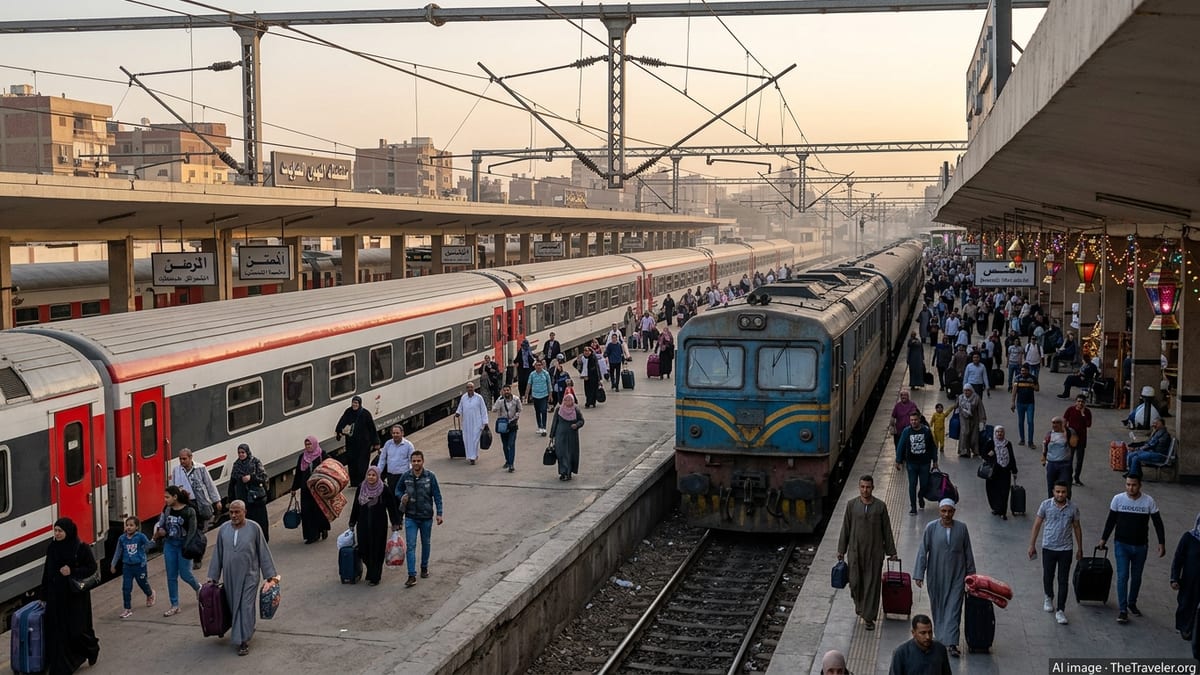
Seven stations enter service on three strategic corridors
According to publicly available information from the company and sector publications, Thales has recently completed the commissioning of seven stations across three of Egypt’s most heavily used railway corridors. The work forms part of multi year contracts with Egyptian National Railways to replace legacy mechanical signalling on key main lines linking Cairo with Alexandria in the north and Upper Egypt in the south.
Sector coverage indicates that the latest stations to be switched over are located on the Cairo Alexandria and Cairo Asyut routes, where traffic includes long distance passenger services and heavy freight flows. The programme has been structured so that sections can enter service in stages, limiting disruption on lines that remain in daily operation.
The newly commissioned locations build on earlier phases that brought large hubs such as Tanta, Al Ousayrat and Sedfa into operation under the same framework. With each additional group of stations, a longer continuous stretch of line migrates to the new digital platform, closing the remaining gaps where traditional equipment is still in use.
Industry analyses highlight that Egypt’s conventional rail network is the second oldest in the world after Britain’s, which has long made signalling renewal a priority for safety and capacity. The seven station package is one more step in a broader national effort to bring the historic infrastructure up to contemporary standards.
Electronic interlocking replaces mechanical systems
Technical documentation on the project shows that the upgrades centre on replacing older mechanical and electromechanical installations with Thales’s electronic interlocking system, often referred to as EIS. This technology uses computer based logic to control track switches, signals and route setting, providing a higher level of automation than the equipment it replaces.
By moving to electronic interlocking, Egyptian National Railways is able to reduce its reliance on manual procedures in signal boxes and along the line. Route commands are processed digitally, and the system will not permit conflicting movements, which in turn supports higher levels of operational safety compared with purely mechanical layouts.
The new architecture is designed to integrate with existing automatic train protection equipment on the network, ensuring that signal commands and onboard systems work together. Publicly available material notes that the solution also supports centralised traffic control, allowing controllers to oversee wider sections of line from regional centres instead of dispersing staff across multiple towers.
Engineering sources add that electronic interlocking enables more flexible timetabling and shorter headways between trains, since the system can reset routes more quickly than manual levers and trackside staff. Over time, that capability is expected to translate into more frequent services on some of Egypt’s busiest intercity routes.
Part of a wider national rail modernisation drive
The seven station signalling package is one element in a much larger modernisation campaign underway on Egypt’s railways. Government statements and local media reports describe a comprehensive programme focused on upgrading tracks, level crossings, signalling and rolling stock across hundreds of kilometres of main lines.
On corridors such as Cairo Beni Suef and Asyut Nagaa Hammadi, projects led by various international suppliers are replacing life expired systems with digital interlockings, modern power supplies and remote monitoring. In parallel, other contracts are introducing European Train Control System technology on selected routes to standardise safety systems and prepare the network for future growth in traffic.
National coverage has linked these investments to wider economic objectives, including improving freight logistics between industrial zones and ports, and supporting commuter flows into major cities. Enhancing signalling is seen as central to these aims, since it allows more trains to run safely on existing tracks rather than relying solely on new construction.
Travel sector observers point out that the conventional network upgrades sit alongside new build projects such as high speed lines and metro extensions in Cairo and other urban centres. Together, these initiatives are reshaping how passengers and goods move around the country, with signalling and train control forming a critical digital backbone.
Expected benefits for safety, reliability and passenger experience
Publicly available information from Egypt and international rail publications suggests that safety is the primary driver behind signalling modernisation, and the seven station upgrade is no exception. Electronic interlocking and centralised control help reduce the risk of human error, particularly on busy stretches where trains run at higher speeds and at closer intervals.
Greater reliability is another anticipated outcome. Digital systems can be monitored in real time, allowing maintenance teams to identify faults earlier and intervene before they disrupt operations. As more stations migrate to the new platform, the number of failure prone legacy components on each route gradually declines.
For passengers, the changes are expected to support more punctual timetables and smoother journeys on intercity routes linking Cairo with Alexandria, Beni Suef and Upper Egypt. While many of the improvements are not visible from the platform, they underpin a broader effort to present a more modern, predictable service to both domestic travellers and international visitors.
Tourism analysts note that rail remains an important mode of travel between major cities and heritage destinations in Egypt. As signalling and control systems are renewed at stations across the network, the country is positioning its railway as a safer and more attractive option for long distance trips, complementing ongoing upgrades to stations, rolling stock and metro lines.