


More news on this day
British families travelling to Europe at the height of the school holidays are being urged to brace for significantly longer queues at borders, as early problems with the European Union’s new biometric Entry/Exit System continue to ripple across airports, ports and rail terminals.
Get the latest news straight to your inbox!
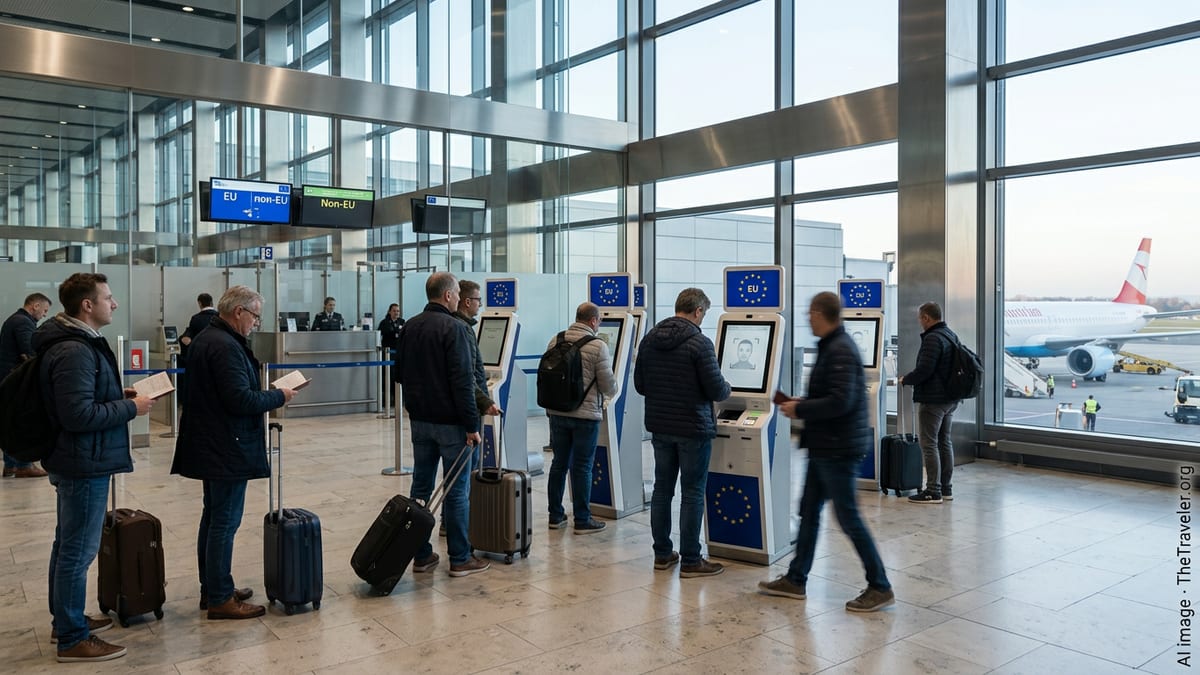
Biometric border checks bite as summer getaway begins
The EU’s long-planned Entry/Exit System, fully activated for most non EU nationals this year, is designed to replace passport stamping with a digital record of each traveller’s movements. In practice, reports indicate that the new requirement for first time biometric registration is adding substantial minutes, and in some cases hours, to processing times for UK citizens entering or leaving the Schengen area.
Under the scheme, travellers who are not EU or Schengen citizens must, on their first trip after implementation, have their passport scanned and provide facial images and fingerprints at a kiosk or staffed desk. Publicly available guidance from European and UK authorities notes that these checks are carried out at the external border, which for many British holidaymakers means airports on the continent, ferry terminals and juxtaposed controls at the Port of Dover, Folkestone and London St Pancras.
Industry groups say the cumulative effect is now being felt. A joint warning from airline and airport associations earlier this year highlighted “persistent excessive waiting times” at passport control as EES is rolled out, with queues of up to two hours reported at some major hubs. Travel media and social channels have since carried multiple accounts of families missing flights after being held up in unexpectedly long lines to register their details.
Despite calls from aviation bodies for a pause or slowdown, coverage from European outlets indicates that Brussels is pressing ahead, arguing that the system is essential for security and that problems are concentrated at a limited number of “difficult” hotspots where infrastructure and staffing have lagged behind demand.
UK families at the sharp end of ‘first trip’ delays
The impact is being felt particularly sharply by British families, many of whom are encountering EES registration for the first time during the busy school holiday period. Because every non EU family member needs to be enrolled individually, a single family group can occupy a kiosk or staffed booth for far longer than a solo traveller, compounding congestion at peak times.
Travel reports from major Mediterranean gateways describe snaking queues forming around banks of self service kiosks as families attempt to navigate on screen instructions, juggle luggage and keep children together in crowded halls. Some airports appear to be coping better than others, but several carriers serving popular Spanish, Greek and Italian resorts have advised passengers from the UK to arrive earlier than usual, warning that border checks may be significantly slower on busy departure days.
Longer queues are also being recorded in the opposite direction, particularly where outbound EES checks are in place before boarding services to the UK. Travel coverage from European broadcasters and specialist outlets has highlighted instances of holidaymakers waiting well over an hour at departure passport control while biometric kiosks malfunctioned or struggled to cope with passenger surges.
For many families, the disruption has financial as well as emotional consequences. Consumer organisations in the UK and mainland Europe report growing numbers of complaints from travellers who say they missed flights or ferries due to EES related queues and then faced additional costs for rebooking seats, overnight accommodation or alternative journeys home.
Pressure mounts on ports, Eurotunnel and Eurostar
The UK’s unique “juxtaposed” border controls, where outbound passport checks for the Schengen area are carried out on British soil at Dover, Folkestone and St Pancras, have emerged as particular flashpoints. Government briefings and parliamentary papers in London have repeatedly flagged concerns that EES processing at these sites could create gridlock on key summer getaway days, especially for coach parties and car traffic heading for France.
Operators at the Port of Dover and on cross Channel rail and tunnel services say they have invested in extra staff, new kiosks and redesigned queuing areas to cope with the additional procedures. Nonetheless, news coverage and eyewitness accounts from early phases of the rollout describe vehicles being held in lengthy tailbacks while passengers are brought into terminal buildings for registration, as well as coaches missing booked crossings after being delayed at border booths.
French border authorities have responded by deploying more officers to their posts in the UK, according to recent reporting by British broadcasters. Additional staff are intended to speed up processing and handle technical issues at the kiosks, but industry bodies caution that, during peak summer weekends, the sheer volume of family groups needing first time registration will still test capacity at the ports.
In Parliament, members of all parties have raised questions about the resilience of these crossings, warning of the potential for queues stretching back onto local road networks and motorways if throughput drops. Ministers have pointed to ongoing talks with European counterparts and operators, but travel industry representatives argue that the system’s fundamental design leaves little room for error when large numbers of UK holidaymakers are funnelling through a small number of border points at similar times of day.
Airlines and airports urge families to arrive much earlier
Across Europe’s airports, airlines are increasingly shifting responsibility onto passengers to mitigate the risk of missed flights. Coverage from travel focused outlets reports that several carriers now advise UK travellers to arrive at the terminal at least three hours before scheduled departure, even for short haul routes that once required far less buffer time.
Low cost airline executives have publicly warned that the impact of EES remains uneven, with some airports handling the new procedures efficiently while others experience sporadic surges that overwhelm staffing. Their message to families has been blunt: assume the worst case scenario on busy days and build in extra time for the border, particularly if travelling with young children or older relatives who may need more assistance at the kiosks.
Airport operators, for their part, are racing to adapt. Industry publications describe terminals carving out new space for EES equipment, deploying additional wayfinding staff, and trialling separate lanes for families and vulnerable travellers in an effort to smooth the flow. Some have installed banks of self service machines in landside areas so that passengers can complete part of the process before joining the main passport control line, though this solution is far from universal.
Travel advisers and consumer groups are echoing the message to leave extra time. Guidance directed at British holidaymakers stresses the importance of checking individual airport advice, ensuring passports meet validity rules, and keeping family groups together to avoid further delays once they reach the border zone.
Calls grow for system review as ETIAS looms
As the chaotic early months of EES continue, pressure is building on European institutions to refine or at least review the system before the next major shift in border rules. Aviation and airport associations have already issued joint statements calling for changes to registration thresholds and greater flexibility to suspend biometric checks when queues become unmanageable.
European media reports indicate that the European Commission has so far resisted demands for a wholesale suspension, although it has acknowledged a number of problem locations where infrastructure has not kept pace with the new requirements. Under the current regulations, temporary opt outs for overwhelmed border points are expected to expire later this year, raising fears among operators that there will be even less room to alleviate congestion in 2027 and beyond.
The concerns are sharpened by the planned introduction of the European Travel Information and Authorisation System, an additional pre travel requirement for visa exempt visitors that is scheduled to begin in the latter part of 2026. While ETIAS is expected to be completed online before departure, travel analysts warn that confusion over paperwork, payment and exemptions could further complicate the experience for UK families who are already grappling with EES at the border itself.
For now, publicly available guidance from both UK and EU authorities continues to emphasise preparation. Families are being advised to confirm carrier recommendations, allow generous time at ports and airports, and familiarise themselves with new procedures before setting off. With the peak summer travel season underway and no sign of an immediate policy shift in Brussels, British travellers heading for European beaches and city breaks are likely to find that patience in the queue is as essential as passports and boarding passes.