


More news on this day
The United States has issued a fresh security warning for travelers heading to Ecuador, after the government in Quito ordered a night-time curfew in several coastal provinces that include the major tourist and air hub of Guayaquil.
Get the latest news straight to your inbox!
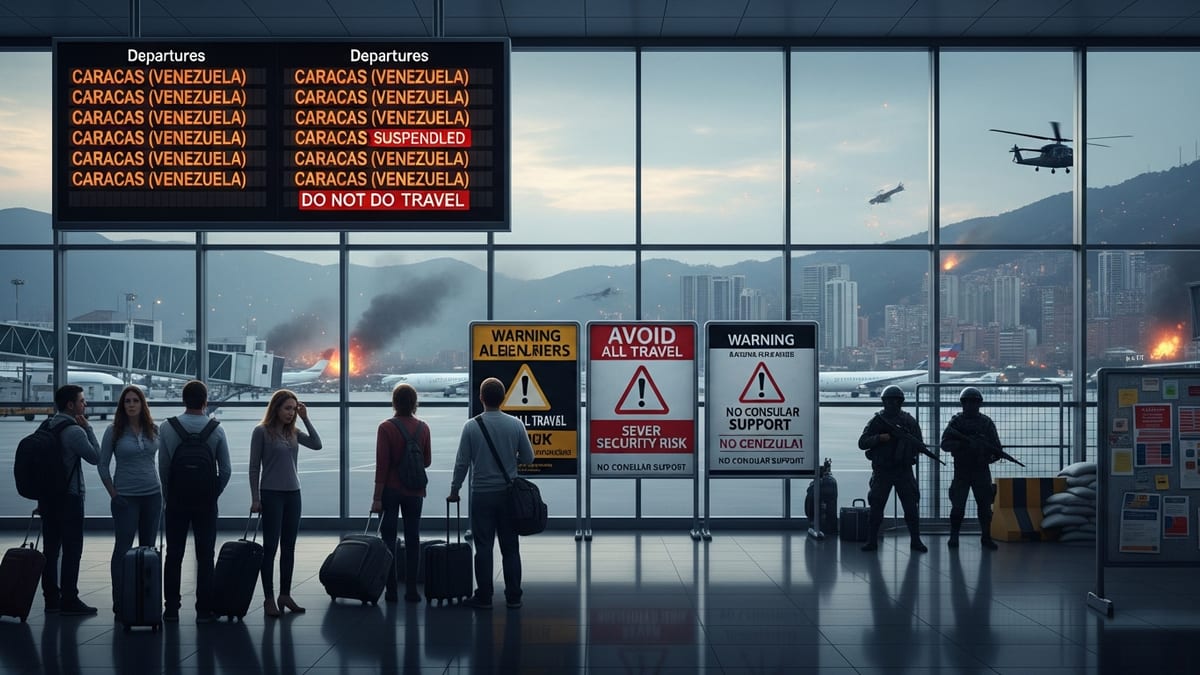
Night curfew targets Ecuador’s Pacific corridor
Publicly available notices from Ecuador and foreign governments indicate that a mandatory curfew is in place across parts of the country’s Pacific lowlands following a sustained surge in criminal violence. Under the current decree, movement is restricted daily from midnight to 5 a.m. in the provinces of Guayas, Manabí, Los Ríos, El Oro and Esmeraldas, a corridor that includes busy ports, beach towns and key transport routes.
Reports from local media describe the curfew as part of a broader security strategy aimed at limiting overnight circulation in areas where gangs and organized crime networks have expanded their presence. The measures apply to residents and visitors alike, although exemptions are typically listed for essential workers and travelers connecting to scheduled flights, who may move during restricted hours with appropriate documentation.
International travel advisories note that enforcement focuses on road traffic, checkpoints and public spaces during the curfew window. While daytime activity in major tourist zones has largely continued, the restrictions have reshaped how visitors plan evening movements, late arrivals and overland transfers along the coast.
The new decree follows earlier emergency measures adopted in 2024 and 2025, when Guayaquil and other coastal cities experienced repeated security incidents, including targeted killings, small explosions and armed robberies. Those episodes prompted several foreign governments to update their guidance, already urging travelers to exercise heightened caution in affected provinces.
US travel advisory highlights Guayaquil risk areas
The US Department of State continues to classify Ecuador overall at a level that calls for increased caution, but its detailed guidance singles out specific neighborhoods in Guayaquil for stricter warnings. The Nueva Prosperina and Pascuales districts carry a “do not travel” designation because of persistent violent crime and terrorism risk, while large portions of the city north of Portete de Tarquí Avenue are listed under a “reconsider travel” category.
Recent US communications referencing the new curfew reiterate those neighborhood-level distinctions and advise citizens to avoid nonessential trips during the restricted hours in Guayas and the other affected provinces. Publicly available information stresses that indiscriminate attacks and armed robberies have occurred in public places in and around Guayaquil, although most incidents have taken place in areas that are not part of the main tourist circuit.
Other governments, including the United Kingdom and several European states, also caution against all but essential travel to much of Guayas province due to the security situation. Their advisories point to a pattern of gang-related violence since 2023, noting that Guayaquil has become a focal point of clashes between the state and criminal groups linked to drug trafficking routes.
Despite the warnings, international flights are continuing to operate into José Joaquín de Olmedo International Airport, which serves Guayaquil, and aviation authorities in Ecuador state that airport operations have been maintained under reinforced security protocols. Travelers are being urged, however, to coordinate closely with airlines and accommodation providers so that transfers between the airport and hotels take place outside curfew hours whenever possible.
Impact on tourists bound for beaches and Galápagos
Guayaquil functions as a primary gateway for both the Galápagos Islands and Ecuador’s popular central and southern Pacific beaches, meaning the curfew reverberates well beyond the city itself. Many itineraries route visitors through Guayaquil for overnight stays or same-day connections to coastal resorts, surf towns and the Galápagos hub of Baltra.
Travel industry briefings and government advice suggest that most flights to the Galápagos continue to operate on normal daytime schedules from Guayaquil and Quito. However, the midnight-to-5 a.m. curfew can complicate late-night arrivals from North America or Europe, particularly for travelers who had planned to continue by road to destinations in Santa Elena, Manabí or southern beach areas immediately after landing.
Several foreign travel advisories recommend that visitors arriving during or near the curfew window arrange to stay overnight in hotels close to the airport, rather than transiting across the city or along interprovincial highways after dark. Travelers are also encouraged to confirm that pre-booked transfers or taxis remain authorized to operate and to carry printed or digital copies of flight confirmations and passports if movement during restricted hours is unavoidable.
Public information from Ecuador’s tourism and transport authorities indicates that bus routes and domestic flights are still running during the day, although schedules may be adjusted at short notice when security operations intensify. As a result, visitors heading for the coast or returning from it are being advised to maintain flexible plans and to monitor announcements from carriers and local officials.
Planning around checkpoints, curfew and local conditions
Travel advice from multiple governments emphasizes that the curfew is only one element of a fluid security environment that can affect visitors in Guayaquil and the wider coastal region. Checkpoints, temporary road closures and police or military patrols have become more visible features of travel in these provinces, particularly at night and around known crime hotspots.
Publicly available guidance underscores the importance of avoiding peripheral neighborhoods of Guayaquil, limiting unnecessary movement after dark, and relying on registered taxis, hotel-arranged transport or app-based services where these remain authorized. Travelers are also encouraged to keep valuables concealed, remain alert in crowded areas and avoid displaying phones or cameras on the street, especially near bus terminals and busy commercial zones.
Foreign ministries in several countries advise that overland night buses along the coastal corridor may carry elevated risks while emergency measures remain in place. In response, some tourists are choosing to travel between Guayaquil, Cuenca and beach destinations during morning or early afternoon hours, when curfew restrictions are not in effect and highway traffic is more closely monitored.
Given the pace of developments, governments are urging travelers to consult the latest official travel advisories shortly before departure and throughout their stay. Security levels for specific districts of Guayaquil and for coastal provinces have been updated repeatedly over the past two years, and curfew hours or covered areas may change with little advance notice.
What the warning means for upcoming trips
For travelers with imminent plans to transit Guayaquil or stay along Ecuador’s coast, the renewed focus from the United States and other countries does not automatically translate into flight cancellations or blanket bans on tourism. Instead, it signals a need for more careful planning, greater situational awareness and a willingness to adjust routes or schedules in line with local conditions.
Travel insurance providers typically advise policyholders to check whether existing coverage includes security-related disruptions, such as missed connections caused by checkpoints or curfew enforcement. Some policies may allow changes if official advisories reach a certain risk threshold in a traveler’s primary destination, but terms vary and must be confirmed directly with insurers.
Industry observers note that many visitors continue to travel to Ecuador’s interior highlands, the Galápagos and parts of the Amazon region with relatively few incidents, provided they heed local advice and stay informed. For those whose itineraries depend on Guayaquil’s airport or coastal highways, however, the latest warnings underline the importance of building in extra time, arranging secure transfers and avoiding nonessential night travel until the situation stabilizes.