


More news on this day
Flight schedules at major UK airports are gradually stabilising after a major air traffic control outage earlier in the week, even as growing political and industry pressure focuses on National Air Traffic Services chief executive Martin Rolfe, who faces calls to resign over the disruption.
Get the latest news straight to your inbox!
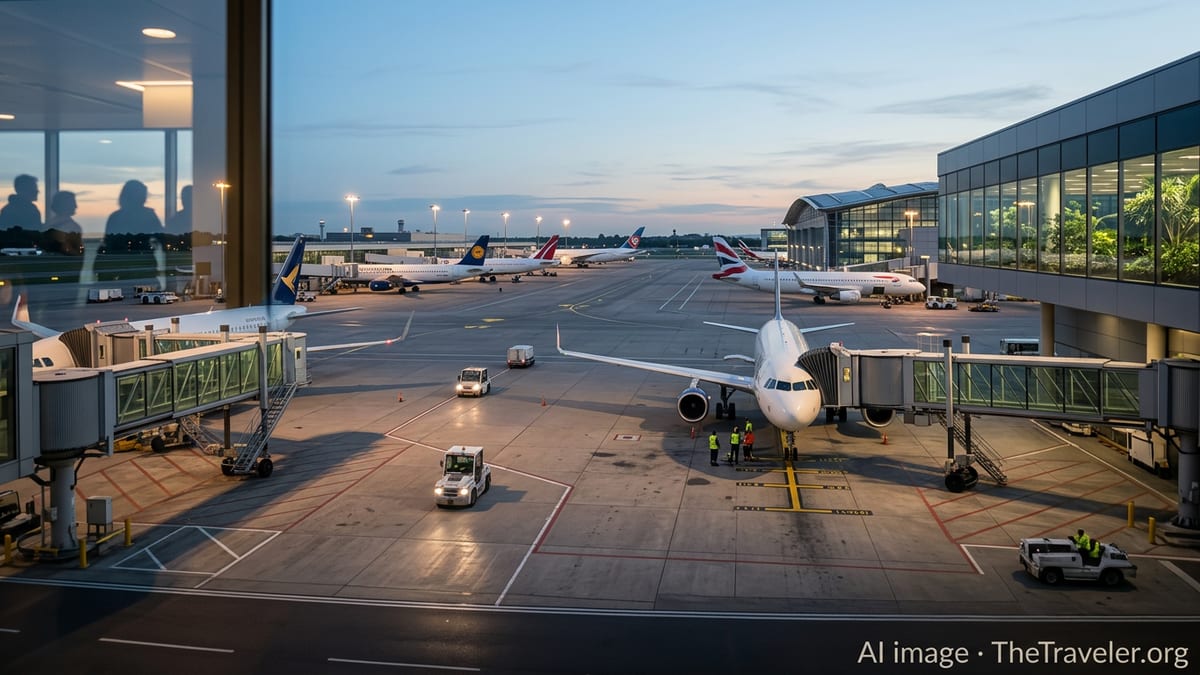
Operations recovering after days of cancellations
Published coverage indicates that the worst of the disruption is now easing at key hubs including London Heathrow and Gatwick after a four hour air traffic control systems outage earlier in the week led to widespread cancellations and delays. Hundreds of thousands of passengers were affected as airlines struggled to re-route aircraft and crew, with backlogs stretching into several days.
Reports from UK media describe a more orderly picture emerging, with schedules increasingly resembling normal operations even though a smaller number of services continue to be trimmed while airlines reposition aircraft and clear stranded customers. Some airports have warned that residual knock on delays remain possible, particularly at peak times, but the mass cancellations seen immediately after the outage have subsided.
According to information shared by several carriers, many passengers whose flights were cancelled have now been rebooked, although some are still facing extended waits and overnight stays near airports. Travel forums and social media posts continue to highlight crowded terminals, long queues at airline service desks and difficulty reaching call centres.
Analysts quoted in recent financial and aviation coverage suggest that the scale of disruption underlines how tightly scheduled UK airspace has become, with little slack in the system once a significant outage occurs. Even a relatively short period without full air traffic capability can cascade into several days of operational challenges as aircraft and crews fall out of position.
Scrutiny intensifies on NATS leadership
As airport operations improve, attention has shifted toward accountability for the failure and the leadership of NATS, the company that manages much of the UK’s air traffic control. Multiple outlets report that Martin Rolfe, the organisation’s chief executive, has come under sustained pressure to step down following the incident, which is the latest in a series of high profile technical problems affecting UK airspace in recent years.
Coverage from British newspapers and broadcasters notes that leading airline figures, including executives from low cost carriers, have publicly questioned Rolfe’s position and called for his removal. They argue that repeated disruptions indicate systemic weaknesses and insufficient investment in resilience, while pointing to the financial and reputational damage suffered by airlines and airports.
Government communications reported in the press show that the transport secretary has summoned the NATS chief for urgent discussions and has requested a detailed explanation of the latest failure within a tight timeframe. Downing Street briefings cited in several reports indicate that the government has, for now, expressed confidence in NATS as an organisation, even while acknowledging the seriousness of the breakdown.
Publicly available information also highlights debate over NATS executive pay and bonuses in light of the outages, with some commentators and passenger advocacy voices questioning whether remuneration has kept pace with performance and reliability. The calls for Rolfe’s resignation have become a focal point for broader concerns about the robustness of UK air traffic infrastructure.
What is known about the technical failure
NATS has stated in public updates, as reported by national media, that the problem originated in its flight processing system rather than from a cyber attack or external interference. Early assessments suggest a technical issue in handling flight plan data triggered a shutdown of automated tools, forcing a reduction in the number of flights that could be safely managed in UK airspace.
Reports indicate that the outage lasted around four hours, but the controlled reduction in traffic flow created a backlog that took much longer to unwind. Aviation specialists quoted in recent analysis note that in such circumstances controllers must work with conservative capacity limits, which can rapidly lead to cancellations when airports are already operating close to their maximum throughput.
Comparisons have been drawn with previous UK air traffic incidents, including a major technical glitch in 2023 that also stemmed from problems processing flight plans. NATS has said in statements covered by the press that the latest issue is not believed to be a repeat of the same fault, although a full independent investigation is expected to examine any potential links between the events.
Industry observers say the recurrence of large scale air traffic control failures, even if caused by different technical triggers, will likely intensify questions about system design, contingency planning and the speed at which upgrades have been implemented. Several commentators argue that the latest outage strengthens the case for accelerated investment in both hardware and software resilience.
Impact on airlines and passengers
For airlines, the financial cost of the disruption is still being assessed, but early estimates reported in business media suggest losses running into tens of millions of pounds across the sector. Carriers have absorbed expenses related to crew accommodation, aircraft repositioning, fuel and customer care, alongside lost revenue from cancelled flights.
Low cost airlines have been particularly vocal in their criticism of the air traffic control failure, with some executives arguing in interviews and public statements that NATS should compensate carriers for the disruption. At the same time, passenger groups and consumer commentators have highlighted the complex interaction between air traffic failures and airline obligations under existing compensation rules.
Many travellers whose flights were cancelled or heavily delayed have reported difficulties obtaining hotel rooms near major airports once the outage became apparent, with local accommodation quickly booked out. Travel commentary describes scenes of passengers sleeping in terminals or waiting overnight for rebooked flights, underscoring how quickly a technical issue in the air can create knock on effects on the ground.
Consumer advocates cited in recent coverage are encouraging passengers to keep detailed records of their disruption, including boarding passes and receipts for food or alternative transport, to support any future claims with airlines. However, legal experts quoted by the media caution that compensation rules can be complex when delays stem from air traffic control failures rather than airline operations alone.
Next steps for UK airspace resilience
Attention is now turning to how the UK can reduce the risk of similar events in the future. Parliamentary scrutiny is expected, with legislators signalling interest in how NATS maintains and modernises critical systems, how contingency plans are tested, and whether current regulatory oversight is sufficient for such an essential piece of national infrastructure.
Aviation analysts suggest that the investigation ordered by the transport secretary is likely to focus not only on the immediate technical trigger but also on broader questions, including staffing levels, backup systems, and the organisation’s approach to software changes and testing. Comparative studies of other European air navigation service providers are already being referenced in media commentary as potential benchmarks.
For international travellers and the tourism sector, the incident has revived concerns about the vulnerability of global travel networks to single point failures. Routes into London remain among the busiest in the world, meaning any prolonged restrictions in UK airspace can have ripple effects across airline networks stretching into Europe, North America and beyond.
While operations are now largely recovering, the episode has reinforced a central message for travellers planning trips to and through the UK: even as systems grow more sophisticated, the reliability of underlying infrastructure remains critical. How NATS, airlines and the government respond in the coming weeks will shape confidence in the resilience of UK airspace ahead of future peak travel seasons.