


More news on this day
A new technical failure in the United Kingdom’s air traffic control systems has triggered widespread disruption across the country’s airports, grounding or delaying thousands of flights and reviving questions about the resilience of the UK’s aviation infrastructure after earlier outages in 2023.
Get the latest news straight to your inbox!
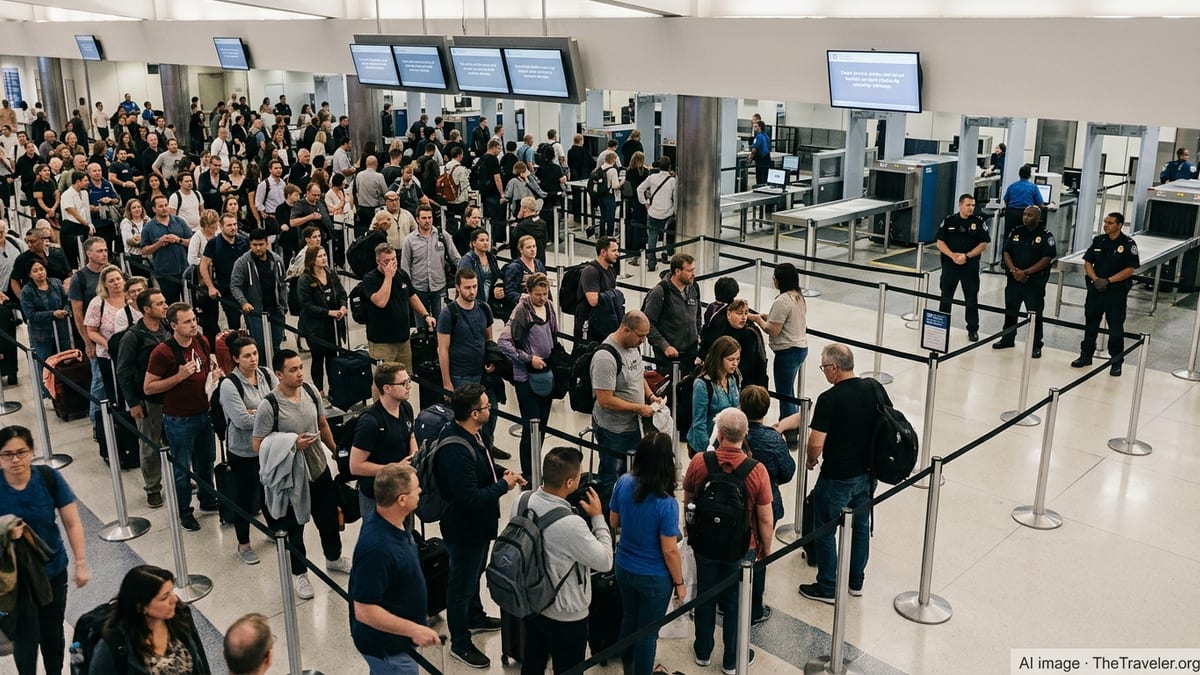
Scope of the latest disruption across UK airports
Publicly available coverage indicates that a major technical incident affecting the National Air Traffic Services (NATS) network on 8 September 2026 led to a ground stop at key hubs including London Heathrow and London Gatwick, as well as knock-on delays at Manchester, Stansted and other UK airports. Reports describe hundreds of thousands of passengers facing cancellations, diversions and long delays as flight schedules were rapidly curtailed to maintain safe separation of aircraft.
News reports and aviation tracking data suggest that more than 2,000 flights were cancelled in the first 48 hours of the incident, with further delays as aircraft and crews were repositioned. Heathrow and Gatwick, which together handle a large share of the UK’s long-haul and short-haul traffic, were particularly affected as arriving aircraft were held on the ground at overseas airports or diverted to alternative European and UK destinations.
Accounts from passengers and airlines indicate that even flights able to depart often did so hours behind schedule, as traffic flow restrictions reduced capacity in UK airspace. Some long-haul services arriving from North America and Asia diverted to airports such as Edinburgh or continental European hubs, where passengers were rebooked onward once UK airspace capacity began to recover.
Despite the restoration of core systems within hours, the loss of throughput during one of the busier late-summer travel periods created a multi-day backlog. Airlines moved to consolidate services, cancel off-peak rotations and operate larger aircraft on trunk routes into Heathrow and Gatwick to work through stranded passengers.
Operational impact at Heathrow, Gatwick and regional hubs
Heathrow, the UK’s primary long-haul gateway, experienced a sharp reduction in movements as flow restrictions were imposed. Flight data referenced in published analyses show waves of cancellations across European short-haul routes and significant disruption on transatlantic services, with some flights diverted or returning to origin airports when slot prospects deteriorated.
Gatwick, which relies heavily on high-frequency short-haul and leisure operations, saw a similarly intense shock. Low-cost and leisure carriers reported extensive cancellations and crew-disruption across their networks, as aircraft and staff were left out of position. Public coverage highlights that airlines scheduled repatriation services and substitute widebody aircraft on key routes into Gatwick to bring passengers back to the UK once restrictions eased.
Regional airports such as Manchester, Birmingham, Edinburgh and Glasgow were affected in more uneven patterns. According to tracking and schedule data cited in industry reporting, some regional departures operated with long delays while others were cancelled outright, depending on time of day and available airspace capacity. Inbound flights from holiday destinations were particularly vulnerable, with aircraft held at origin or rerouted to airports outside UK airspace when capacity was constrained.
The disruption also rippled beyond the UK’s borders. European air navigation and airport reports show elevated delays on flights crossing UK airspace or bound for British airports, as neighbouring air traffic control centres coordinated flow restrictions and rerouting. Ireland’s air navigation service provider and Eurocontrol previously flagged similar cross-border effects during the 2023 outage, and observers note a comparable pattern in 2026 as airlines sought alternative routings.
Lessons from the August 2023 air traffic control failure
The latest incident comes three years after a high-profile flight data processing system failure on 28 August 2023, which UK government and regulator documents describe as one of the most disruptive air traffic control events in recent decades. That failure forced controllers to process flight plans manually for several hours, leading to the cancellation of more than 1,200 flights on the day and over 2,000 across the wider disruption period, according to independent reviews.
During the 2023 event, airports such as Heathrow and Gatwick were again at the centre of the disruption, with peak-summer passengers stranded and aircraft scattered across European and long-haul destinations. Eurocontrol analysis of 2023 performance data attributes a spike in air traffic flow management delays that August to the UK system outage, underscoring how a single technical point of failure can reverberate across the European network.
Subsequent reviews commissioned by the UK Civil Aviation Authority examined both the root technical causes and the passenger experience. The technical findings highlighted the vulnerability of legacy systems when confronted with unexpected or malformed flight data, while passenger-focused reports documented inconsistent information at airports, long waits before cancellations were confirmed and variability in how airlines provided care and re-routing.
Industry commentary around the 2026 disruption repeatedly references those 2023 lessons, noting that while core safety outcomes were maintained in both cases, questions remain over system redundancy, incident response planning and the speed at which normal traffic levels can be restored after a major outage.
Aviation market effects and airline performance
Beyond immediate travel disruption, repeated air traffic control failures have implications for airline financial performance and the wider UK aviation market. Carriers face additional costs from aircraft diversions, extended crew duty times, overnight accommodation, passenger care and repositioning of aircraft and staff. While UK and EU regulations typically classify such technical failures as extraordinary circumstances that limit statutory compensation, airlines still absorb substantial operational expenses.
For network carriers at Heathrow, the incident adds pressure at a time of strong demand and constrained slot capacity. Where long-haul flights were cancelled or heavily delayed, premium and connecting traffic may shift temporarily to rival hubs in continental Europe or the Middle East. Low-cost and leisure airlines at Gatwick and regional airports also report elevated disruption costs when aircraft and crew are displaced, leading some to reduce late-evening rotations or build greater schedule buffers.
Regulator punctuality statistics for recent years already point to a challenging operating environment, with congested airspace, weather events and staffing constraints combining to push up average delay minutes per flight. Analysts suggest that high-impact but infrequent ATC outages, such as those in 2023 and 2026, can distort annual punctuality profiles and complicate airlines’ efforts to improve on-time performance, particularly at capacity-constrained hubs.
Insurance and risk-modelling specialists are now factoring these episodes into assessments of operational resilience and business continuity planning. Some industry analysis notes a growing focus by investors on how air navigation service providers and airlines manage cyber, software and systems risks, and whether governance structures and funding models are aligned with the need for accelerated modernisation of critical infrastructure.
Infrastructure resilience and the outlook for UK air traffic control
Attention is now centring on what the latest disruption means for the future of the UK’s air traffic management systems. Recent NATS annual reports and regulatory reviews outline multi-year programmes to upgrade software, strengthen redundancy and improve coordination with European partners. However, the recurrence of a large-scale disruption in 2026 is prompting debate over the pace and prioritisation of these investments.
Policy-oriented analyses published in the wake of the outage point to the complexity of renewing systems while maintaining continuous operations in one of Europe’s busiest airspaces. They also highlight a tension between cost-control expectations and the level of resilience that passengers, airlines and policymakers increasingly demand, particularly as traffic volumes recover and climate-related weather volatility adds further pressure.
Market observers suggest that the episode may accelerate scrutiny of regulatory oversight and performance incentives. The Civil Aviation Authority has historically monitored service quality, safety and investment by the air navigation service provider through periodic price-control and performance reviews. Following back-to-back high-impact incidents within three years, analysts expect closer examination of contingency planning, scenario testing and the transparency of incident reporting.
For airports, the focus is likely to remain on improving incident playbooks, communication channels and passenger welfare arrangements. Operators at Heathrow, Gatwick and regional hubs have already expanded real-time information tools and staffing plans since 2023, but published passenger feedback from both events indicates that expectations for clear, consistent updates and timely rebooking remain high. How airports and airlines respond in the weeks after the 2026 outage will shape perceptions of the UK’s aviation reliability as the sector looks toward the next peak travel seasons.
UK Department for Transport: 2023 air traffic control disruption statement
UK Civil Aviation Authority: Independent review of 28 August 2023 NATS failure
The Guardian: 2026 UK flight cancellations and NATS investigation
British Resilience Index: UK air traffic control failures and resilience analysis