


More news on this day
Passengers flying in and out of the UAE this weekend face a mixed picture, with Emirates, Etihad, Air Arabia and flydubai largely operating their schedules but reporting scattered delays, isolated cancellations and late-notice timetable changes across key routes.
Get the latest news straight to your inbox!
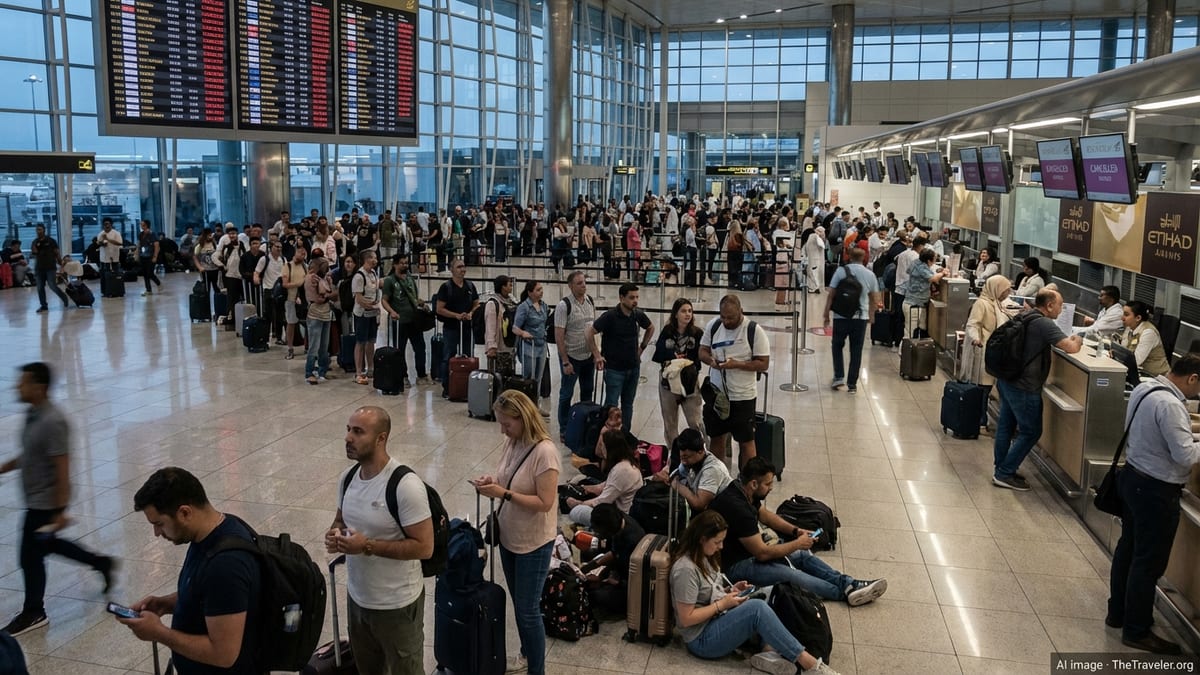
Mixed operations across Emirates, Etihad, Air Arabia and flydubai
Published coverage from UAE outlets indicates that, despite regional tensions and operational challenges, the country’s main carriers are maintaining near-full schedules through Dubai, Abu Dhabi and Sharjah. Emirates and Etihad continue to operate extensive long-haul and regional networks, while flydubai and Air Arabia are keeping most short- and medium-haul routes in service.
Recent reports for Sunday, September 6 and Thursday, September 10 show that disruptions have been concentrated in specific time bands and destinations rather than representing a full-scale shutdown of UAE airspace. Flights have generally been departing, but some have done so behind schedule or with revised routings, particularly on services touching parts of the Middle East and South and Southeast Asia.
Several international airlines have also been adjusting their UAE operations. Coverage highlights that some foreign carriers remain suspended on Dubai or Abu Dhabi routes, while others are in the process of restoring capacity with phased increases in weekly frequencies. This uneven rebound means that, even as UAE airlines operate most of their programs, overall capacity in and out of the country is still stabilising.
Against this backdrop, passengers flying over the weekend should expect the system to be functional but not friction-free. The picture is one of normal-looking schedules on airline and airport websites that can still shift by the hour due to operational, security or weather-related considerations.
Where delays and cancellations are hitting hardest
Flight-status snapshots and local reporting point to a pattern of delays and cancellations concentrated on a handful of geography and route types. Services between the UAE and parts of South and Southeast Asia have faced particular strain, including routes to Indonesia where volcanic activity has intermittently affected Jakarta’s Soekarno-Hatta International Airport and triggered knock-on timetable changes for flights to and from Dubai and Abu Dhabi.
On one recent Sunday, tracking data and published summaries show Emirates delaying a Paris to Dubai service by more than five hours, while a Dubai to Bali rotation departed around an hour behind schedule. Etihad recorded late arrivals from Doha, North American gateways and select European cities, with some onward departures out of Abu Dhabi also running late. In at least one case to Jakarta, the outbound flight was cancelled altogether after being scheduled late in the evening.
For the low-cost sector, reports indicate that flydubai has cancelled or retimed individual flights on routes such as Bahrain, Almaty, Addis Ababa and Minsk. Air Arabia has similarly withdrawn or adjusted a small number of departures between Sharjah and destinations including Bahrain and Kuwait. While most of each carrier’s network continues to operate, passengers booked on these shorter regional hops are among those most likely to encounter last-minute changes.
In parallel, travel advisories from foreign governments continue to highlight a heightened risk environment in the wider Gulf, citing recent hostilities and the possibility of drone or missile activity affecting airspace. Although everyday airport operations in the UAE remain largely normal, these advisories underscore why airlines may sometimes reroute or delay flights at short notice if circumstances change.
What UAE weekend travellers should do before leaving for the airport
Publicly available information from the major UAE airlines shows that each carrier is leaning heavily on digital tools to keep passengers informed. Emirates directs travellers to use its online flight-status search and mobile app, while Etihad, flydubai and Air Arabia all maintain real-time departure and arrival boards on their websites. These pages generally reflect gate changes, delays and cancellations within a short window of operational decisions.
Given the current pattern of scattered disruption, travellers are being urged in published guidance to monitor their flights closely from 24 hours before departure and again in the hours leading up to leaving home. Some disruption rounds have involved passengers receiving email or app notifications of a cancellation or significant delay, only for the flight to be retimed and operate later than planned. Checking status directly with the airline just before heading to the airport can help reduce unnecessary early arrivals for flights that have slipped by several hours.
Airlines and airport operators also continue to recommend building in more time at departure. For busy weekend peaks at Dubai and Abu Dhabi, arriving three hours ahead of departure remains a sensible minimum for most economy passengers, with even earlier check-in advisable for long-haul flights or those departing at traditionally congested times of day. Travellers connecting through the UAE onto onward services should factor in the possibility that even small inbound delays can jeopardise tight connections.
Where trip plans are flexible, passengers may benefit from exploring alternative routings or travel dates on the same ticket. Many carriers have, at various points this year, allowed limited fee-free changes when disruptions stem from security or operational factors, although fare differences can still apply. Reviewing the fare rules on the booking confirmation and the latest rebooking policies on airline websites is essential before making changes.
Routes and airlines seeing the most schedule adjustments
Recent weekend disruption reports suggest that certain destination clusters are more exposed than others. Flights linking the UAE with Pakistan, India and Saudi Arabia have seen intermittent delays and cancellations, as have selected services to Kuwait and Bahrain. Regional media coverage notes that Emirates, flydubai and several South Asian and Gulf carriers have each reported timetable changes on these high-frequency corridors.
Links to Indonesia have been particularly affected during episodes of volcanic ash around Jakarta. At times when Soekarno-Hatta International Airport has been partially closed, Dubai and Abu Dhabi departures to the Indonesian capital have been delayed, diverted or cancelled, with corresponding disruption on return legs. This, in turn, has had knock-on effects for connecting passengers using the UAE as a transit hub for onward travel to Australia and other Asia-Pacific destinations.
Beyond UAE-based airlines, several foreign carriers continue to fine-tune their UAE schedules. Some European and Asian airlines have extended temporary suspensions on Dubai or Abu Dhabi flights, while others have announced phased resumptions with gradually increasing weekly frequencies toward the end of 2026. For travellers, this means that even if a preferred UAE airline flight is operating normally, alternative options on other carriers may be more limited than in previous years.
Travellers should therefore treat timetable displays as indicative rather than fixed, particularly for bookings several weeks or months out. It is prudent to re-check flight numbers and timings periodically, as airlines may retime or swap equipment without triggering prominent alerts if the change is within a modest time window.
Key planning tips for flying in or out of the UAE this weekend
For those scheduled to travel over the coming weekend, a few practical steps can help reduce stress. First, ensure that the airline has up-to-date contact details, including a working mobile number and email, so that any automated disruption alerts are received promptly. This is especially important for tickets booked through third-party agents, where the agent’s contact information may otherwise be listed instead of the traveller’s own.
Second, consider travel insurance that explicitly covers delay and cancellation costs in the current security environment. Some policies exclude disruption connected to armed conflict or government advisories, so it is important to read the fine print. With official travel advisories for the UAE referencing terrorism and conflict risks, passengers should confirm whether hotel, meal and rebooking expenses caused by schedule changes would be reimbursable.
Third, pack essentials and medications in cabin baggage in case an unexpected overnight stay becomes necessary. With scattered cancellations still occurring, especially on regional routes, a conservative approach to carry-on packing can make flight misalignments less disruptive. Having digital copies of passports, visas and key documents stored securely on a mobile device can also speed up rebooking or immigration processes if plans change.
Finally, travellers should regularly review airline travel-update pages and official government advisories in the days before departure. These sources provide the clearest overview of any new entry restrictions, security-related airspace changes or health measures that might indirectly affect flight operations over a busy UAE travel weekend.