


More news on this day
Travellers flying in and out of the UAE this weekend are being urged to monitor their flight status closely, as Emirates, Etihad, flydubai and Air Arabia continue to adjust schedules in response to regional tensions, overseas air traffic issues and knock-on disruption from Indonesia’s recent volcanic activity.
Get the latest news straight to your inbox!
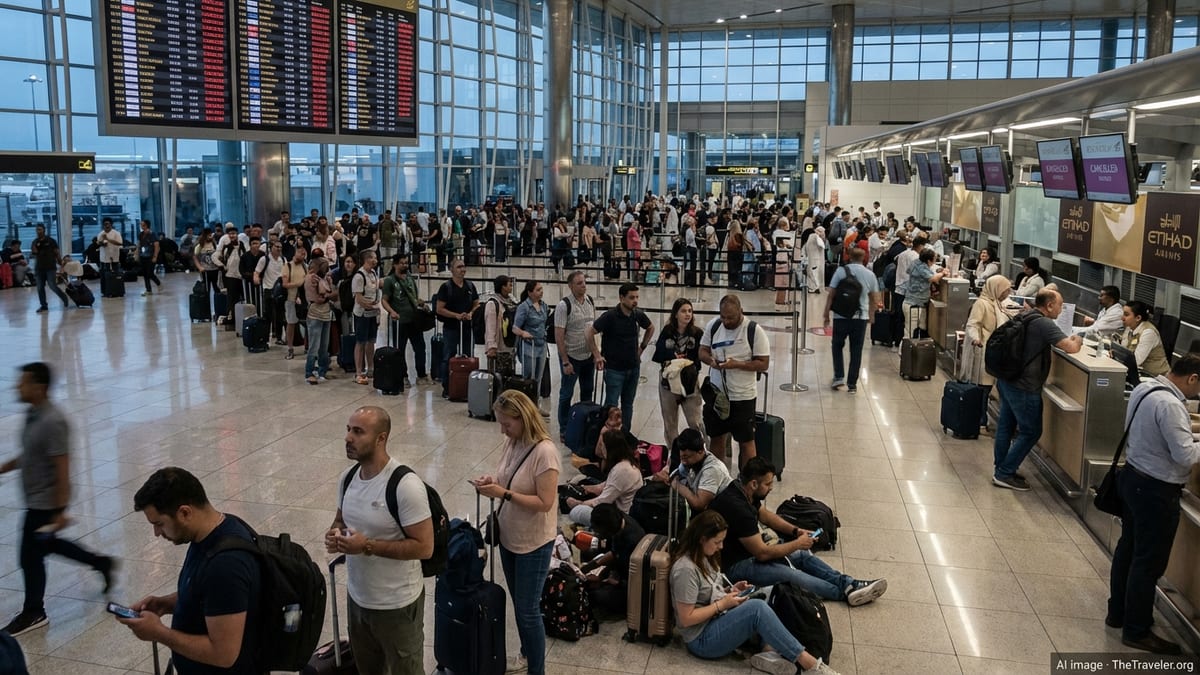
Mixed operating picture at UAE hubs this weekend
Publicly available flight data and local media reports show that Dubai International Airport and Abu Dhabi’s Zayed International Airport are operating but continue to experience rolling delays and selective cancellations across regional and long haul routes. While core schedules for Emirates, Etihad, flydubai and Air Arabia remain largely intact, airlines are revising departure and arrival times at short notice, particularly on services touching affected regions such as the UK and Indonesia.
Recent coverage indicates that flights between the UAE and Jakarta have been among the most affected after ash from the eruption of Indonesia’s Anak Krakatau volcano led to temporary airport closures and airspace restrictions, forcing both Emirates and Etihad to delay or cancel Jakarta rotations earlier in the week.
At the same time, a technical outage at the UK’s air traffic control provider, combined with renewed security concerns over parts of Gulf airspace, has triggered cancellations and diversions on some routes to and from London and other European gateways. Emirates and Etihad have both seen select UK services delayed or canceled in recent days, with schedule adjustments still filtering through into the weekend.
Despite these challenges, coverage from regional outlets describes a “mixed picture” rather than a full-scale shutdown, with many flights operating on or close to schedule. The main message for travellers is that conditions are fluid, and weekend operations can differ by route, airline and even time of day.
How Emirates, Etihad, flydubai and Air Arabia are adjusting
Emirates has continued to operate key Gulf and regional routes from Dubai, including frequent services to Bahrain and Kuwait, but has proactively cancelled or retimed certain long haul flights where upstream disruption is significant. Reports earlier in the week highlighted delays of several hours on some European arrivals, alongside cancellations on select London Heathrow and Auckland services linked to wider network constraints and overseas airspace issues.
Etihad, operating from Zayed International Airport, has followed a similar pattern. Local flight-tracking roundups show that the carrier has maintained most of its scheduled network while recording delays on flights arriving from European and Asian cities, as well as at least one cancellation on the Jakarta route related to the Indonesian volcanic ash cloud. Some long haul services have been diverted or rescheduled when destination airports faced weather or capacity constraints.
Flydubai and Air Arabia, which serve a dense network of regional destinations from Dubai, Sharjah and Abu Dhabi, have reported a mix of normal operations and targeted cancellations. Recent updates list delayed or cancelled flights on routes to and from Bahrain, Kuwait and selected CIS and Middle Eastern cities, even as other frequencies on the same city pairs continue to run. Both carriers have emphasized that schedules can change at short notice and that passengers should verify flight status before departing for the airport.
For travellers, the key takeaway is that all four UAE-based airlines remain operational but are dynamically managing capacity and timings. Weekend flyers are likely to encounter a patchwork of on-time departures, moderate delays and isolated cancellations, depending on their specific route and connection.
What is driving the latest wave of delays and cancellations
The current phase of disruption is the result of several overlapping factors rather than a single cause confined to the UAE. One major trigger has been the temporary closure and capacity reduction at Indonesian airports after the eruption of Mount Anak Krakatau, which scattered volcanic ash across part of the region’s airspace. This has affected Jakarta services operated by Middle East carriers, including those based in the UAE, creating knock-on delays as aircraft and crews rotate through global networks.
Another driver is a recent technical failure at the UK’s National Air Traffic Services system, which led to widespread delays and cancellations on flights into and out of the UK. Services between London and UAE hubs have been among those impacted, with both Emirates and Etihad adjusting their schedules and, in some cases, cancelling individual rotations as capacity at UK airports was temporarily constrained.
In parallel, renewed regional security concerns and updated conflict zone advisories have prompted a number of international airlines to suspend or trim operations to Gulf destinations, including the UAE, through mid September. Coverage of these moves notes that selected European carriers have extended suspensions of Dubai services into next week, while other airlines are rerouting away from certain airspace corridors as a precaution.
Operational and weather related issues at individual destinations add another layer of complexity. Recent reports highlight diversions caused by adverse weather in cities such as Barcelona, as well as technical delays on isolated long haul flights. Taken together, these factors mean that weekend operations for UAE airlines are being shaped as much by events overseas as by local conditions at Dubai, Abu Dhabi and Sharjah.
Practical steps for UAE weekend travellers
Given the evolving situation, industry and airport updates consistently recommend that passengers rely on real time information from official channels rather than assume their flight will operate as originally scheduled. Dubai Airports, Abu Dhabi’s Zayed International Airport and Sharjah Airport all provide online flight status tools that allow travellers to search by airline, route or flight number on the day of travel.
Emirates, Etihad, flydubai and Air Arabia maintain dedicated travel updates or flight status sections on their websites and mobile apps, which are being refreshed as schedules change. Emirates’ travel advisory pages, for example, currently highlight disruption on UK routes and instruct customers to review their booking details, ensure contact information is current and monitor email or SMS notifications for any schedule changes before heading to the airport.
Passengers with weekend departures from the UAE are generally advised to arrive at the airport earlier than usual, especially for busy morning and late evening banks. Allowing additional time for check in, security and possible gate changes can provide a buffer if there are queues or rebookings underway. Where online check in is available, completing this step before leaving home can help streamline the process.
For those holding onward connections beyond the first point of arrival, it is prudent to review minimum connection times and, where possible, build in extra margin or flexible ticketing options. Some airlines are waiving change fees or offering rebooking assistance on affected routes, but conditions vary by carrier and fare type, so travellers should consult the detailed policy attached to their booking.
Key considerations before you fly this weekend
Before travelling to the airport, passengers should confirm their flight’s latest status directly through their airline’s official channels or airport websites on the same day of departure. This is especially important for flights touching regions currently facing airspace constraints, volcanic ash advisories or air traffic control issues.
Travellers should also be prepared for gate changes, aircraft swaps and revised boarding times, even when a flight is still showing as operating. Monitoring the airline’s app or airport screens up to the point of boarding can help avoid missed announcements, particularly at busy UAE hubs where multiple departures may board simultaneously.
Those with flexible travel plans may wish to consider alternative dates or routing if their journey is not time critical, as shifting to less heavily impacted days or choosing itineraries that avoid current hotspots could reduce the risk of extended delays. For essential travel, holding contingency plans for accommodation and transfers at both origin and destination can help mitigate the impact of any unexpected disruption.
Overall, the latest data suggests that UAE carriers are maintaining the bulk of their weekend schedules while navigating a complex international operating environment. For passengers, staying informed, building in extra time and remaining flexible where possible are the most effective strategies to manage the current wave of delays and cancellations.
Gulf News – UAE flights status: Emirates, Etihad, Air Arabia, flydubai
The National – Dubai and Abu Dhabi flight cancellations and delays
Khaleej Times – UAE travel advisory: flight delays and cancellations
Condé Nast Traveller Middle East – Dubai and Middle East flight disruption