


More news on this day
The Middle East, once the standout global tourism recovery story, is losing momentum again as the latest readings from the Skift Travel Health Index point to a renewed slowdown in regional travel demand.
Get the latest news straight to your inbox!
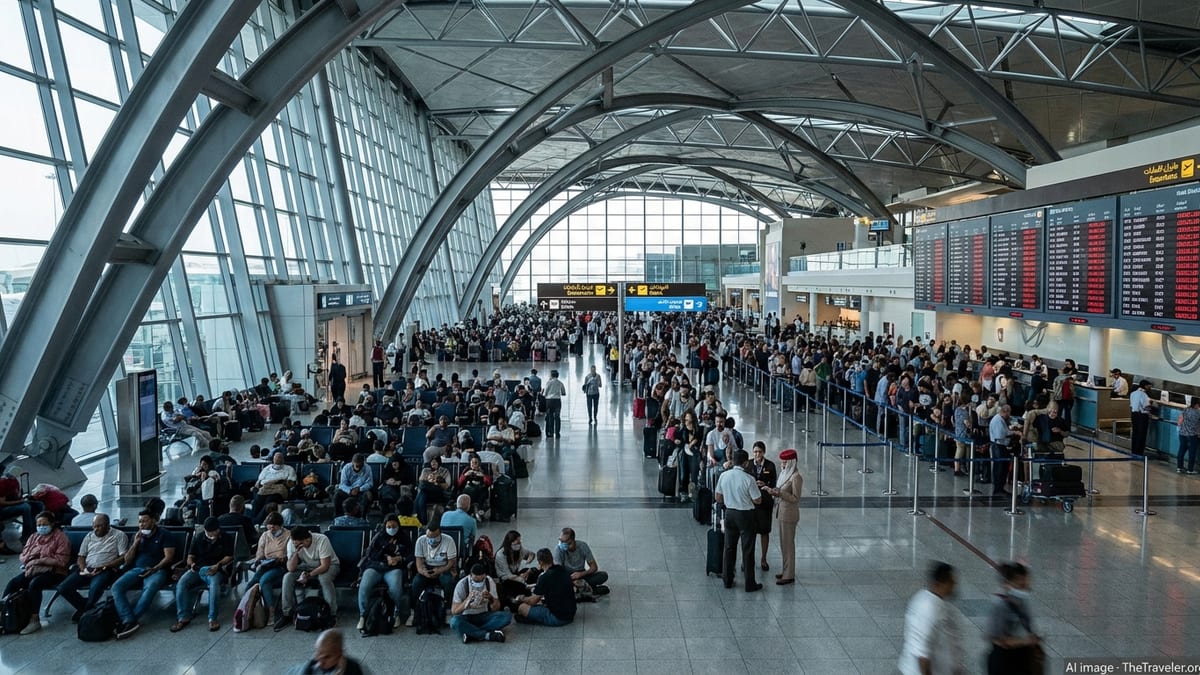
Index Signals Fresh Weakness After Earlier Highs
Recent readings compiled in the Skift Travel Health Index show a clear divergence between the Middle East and the rest of the world. While the global index hovered just below its benchmark with a score of 99 in July, the regional picture across the Middle East and North Africa deteriorated more sharply, according to a regional summary citing Skift data. That source notes that the Middle East and North Africa index fell six points in July after touching the reference level of 100 in June, indicating that activity slipped back below last year’s performance even as other regions broadly held steady.
The setback follows several years in which Middle East destinations, particularly in the Gulf, had been among the fastest to exceed pre-crisis benchmarks on Skift’s travel barometer. Earlier Skift research on global travel performance highlighted Middle East and Africa as one of the strongest regions on multiple indicators, including aviation capacity and hotel metrics, during the 2022 and 2023 rebound phases. That earlier outperformance provides a stark contrast with the current softening captured in the most recent monthly readings.
The Skift Travel Health Index tracks 66 indicators across major markets, comparing each month’s performance with the same month of the previous year from 2024 onward. A score of 100 signals parity with the prior year, while readings below that level show contraction. As the benchmark year has rolled forward, regions that initially benefited from reopening tailwinds are now facing tougher comparisons, which helps explain why even a modest six-point decline for the Middle East is significant in a context of relatively flat global demand.
By aggregating aviation, hotel, vacation rental and destination indicators, the index functions as a composite health check on travel. For Middle East markets relying heavily on long-haul connectivity and high-yield segments, small changes in air bookings or room rates can translate quickly into a noticeable shift in the regional score.
War Risk and Perception Weigh on Gulf Hubs
The slowing Middle East index is closely tied to an abrupt deterioration in Gulf tourism performance since conflict escalated in early 2026. A Skift feature on Gulf tourism trends reports that the war involving Iran has triggered a sharp collapse in hospitality metrics across key hubs, with the United Arab Emirates singled out as experiencing some of the steepest falls in recent months. According to that coverage, hotel occupancy in the UAE was down by about 16 percent year over year in July, with average daily rates in some markets slashed by as much as half compared with their recent peaks.
This shock has undone part of the region’s earlier gains. Gulf destinations that had benefited from their role as aviation super-connectors and stopover hubs are now confronting traveler reluctance linked to security perceptions and higher operating costs. Skift’s newsletter analysis on the conflict notes that airlines such as Emirates saw departures in the region drop dramatically at the height of the fighting, and that travelers wary of transiting through the Gulf reduced bookings not only to Middle Eastern cities but also to onward destinations traditionally reached via Dubai and other hubs.
The latest confidence surveys on corporate and incentive travel echo the same theme. Research highlighted by Skift’s meetings-focused coverage shows that sentiment toward traveling to the Middle East has turned strongly negative among incentive planners, with respondents from North America reporting some of the lowest comfort levels. These shifts are particularly relevant for Gulf markets that had targeted meetings, incentives, conferences and exhibitions as a priority growth segment and are now seeing that pipeline rerouted toward destinations perceived as more stable.
As long-haul travelers and group buyers adjust their risk calculations, the effects cascade across the Skift index indicators. Fewer long-haul bookings reduce aviation scores, while weaker high-end demand weighs on hotel rates and on-the-ground spending, resulting in a lower overall regional travel health reading.
Domestic and Pilgrimage Demand Cushion Saudi Arabia
The broader Middle East figures mask important differences between markets. Skift’s analysis of Gulf performance underscores that Saudi Arabia, although affected by regional tensions, has been partially insulated by robust domestic travel and religious pilgrimage flows. The same feature notes that while the UAE has seen a sharper drop in occupancy, Saudi hotels have generally managed to keep occupancy around the mid-50 percent range, supported by ongoing domestic tourism initiatives and steady pilgrimage demand.
This divergence highlights how the Skift Travel Health Index, while presented at a regional aggregate level, is assembled from country-level indicators that may move in opposite directions. Pilgrimage seasons and large-scale domestic events underpin hotel and aviation metrics in Saudi Arabia even when international travelers hesitate, which can prevent a steeper fall in the country’s contribution to the regional score.
Nevertheless, the net effect for the regional index remains negative. Weaker performance in major international hubs such as Dubai and Abu Dhabi more than offsets relative resilience in markets with stronger domestic cushions. For regional planners and investors, the current readings suggest that portfolio diversification within the Middle East has become more important, as reliance on a single gateway or segment exposes businesses to sharper swings in the composite index.
In practical terms, the latest data implies that while some Middle East destinations can still count on stable religious or domestic travel, the international discretionary segment that powered the post-pandemic upswing is now on pause. That shift is central to understanding why the Middle East index has slipped back even as global demand appears roughly flat.
Methodology Shift Sharpens View of Regional Divergence
The way the Skift Travel Health Index is constructed is also shaping the interpretation of the Middle East slowdown. Skift’s methodology update shows that from 2024 onward the benchmark year for all indicators is the immediate prior year rather than 2019. In practice this means that a reading of 100 now indicates that travel activity is in line with last year’s level, while any score below 100 reveals outright contraction rather than simply a lag versus pre-pandemic norms.
This methodological change is particularly relevant for a region that had already surpassed pre-crisis levels. When the baseline shifted to the prior year, Middle East markets that had enjoyed remarkable growth in 2023 suddenly faced a higher comparison bar. The six-point drop in the regional index from June to July therefore reflects not only geopolitical disruption but also the difficulty of sustaining exceptional growth over multiple consecutive years.
The index’s design, which weights aviation and hotels more heavily than other sectors, further accentuates the impact of Gulf volatility on the regional score. Skift’s methodology description assigns 35 percent weight each to aviation and hotels, 15 percent to vacation rentals and 15 percent to destinations, with sub-indicators within each vertical drawn from multiple data partners. The sensitivity of the composite score to flight bookings, load factors, and hotel key performance indicators means that sudden declines in those metrics will quickly pull the regional index lower, even if vacation rentals or alternative accommodations show more stability.
For analysts, the updated methodology offers a clearer, more current picture of how shocks propagate through different parts of the travel value chain. In the Middle East context, it reveals that aviation and hotel performance have borne the brunt of the latest downturn, while destination intent and forward bookings will be key indicators to watch for signs of stabilization.
Shifting Global Demand Leaves Middle East Lagging Rivals
While the Middle East index has turned down, other regions highlighted in Skift’s coverage are showing relative strength. A recent Skift analysis of where travel demand is heading points to rising momentum in Mediterranean and selected Asian destinations, including Spain, Italy, Morocco, Japan and Thailand. These markets are benefiting from a combination of diversified source markets, favorable pricing, and a perception of relative safety, which helps them capture demand that might otherwise have flowed to Middle Eastern sun and city destinations.
The comparative performance is important because the Skift Travel Health Index is ultimately a cross-regional indicator, and investors and travel companies often look at where capacity and marketing resources are likely to generate the best returns. With the global index marginally above last year’s levels and the Middle East slipping back, airlines and hotel groups have greater incentive to redeploy capacity toward regions where demand is strengthening rather than weakening.
At the same time, the current readings do not imply a structural decline in the Middle East’s longer-term tourism prospects. Skift’s past State of Travel analysis has emphasized the region’s strong pipeline of infrastructure projects and its historical outperformance on several travel metrics. Instead, the latest data describes a cyclical setback exacerbated by geopolitical risk and demand rebalancing. Future monthly releases of the Skift Travel Health Index will show whether confidence returns quickly once security conditions stabilize, or whether travelers’ preference shifts toward other regions become more entrenched.
For now, however, the Middle East’s stalled recovery offers a cautionary snapshot of how quickly regional fortunes can change in a travel landscape defined by heightened volatility and rapidly shifting sentiment.
Skift Travel Health Index methodology
Where Travel Demand Is Heading: Middle East Down, Mediterranean Up
Middle East: Travel Recovery Stalls Again (Romanian analysis based on Skift data)