


More news on this day
Passengers across the United Kingdom are facing renewed travel turmoil as a fresh round of cancellations by Emirates, KLM, British Airways, Ryanair, Vueling and other major carriers disrupts key routes from Heathrow, Gatwick and Manchester to major hubs including Amsterdam, Brussels, Florence and Dubai.
Get the latest news straight to your inbox!
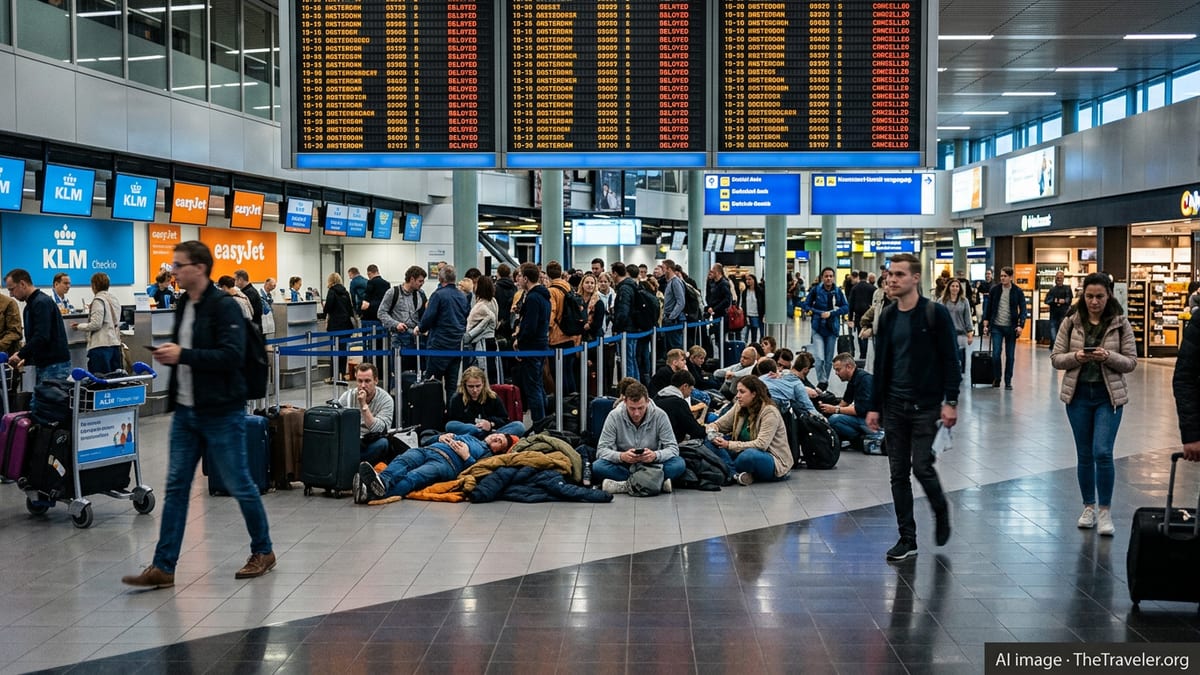
Fresh Cancellations Hit Europe and Middle East Networks
Recent operational disruptions across Europe and the Middle East have triggered another cluster of UK flight cancellations, affecting links from London Heathrow, London Gatwick and Manchester to some of the region’s busiest hubs. Publicly available disruption data for early spring 2026 shows hundreds of delays and dozens of cancellations on single days, with Heathrow and Gatwick frequently among the worst affected airports in Europe.
Reports on European operations in April 2026 indicate that more than 1,600 flights were delayed in a single 24 hour period, with knock on effects rippling through Amsterdam, Brussels, Rome and other key hubs served from the UK. These pressure points have made high frequency city pairs such as London to Amsterdam and London to Brussels especially vulnerable when schedules tighten or airspace constraints appear.
Separate disruption linked to Middle East airspace restrictions in March 2026 further complicated schedules, prompting almost 200 cancellations and hundreds of delays across European carriers serving Dubai and other regional gateways. Airlines including British Airways, KLM and Ryanair feature among the affected operators on those days, narrowing options for UK based travellers trying to reach or connect through the Gulf.
Against this backdrop, passengers flying from Heathrow, Gatwick and Manchester are continuing to report last minute cancellations on individual services to Amsterdam, Florence, Dubai and other destinations, often with limited same day alternatives because of already congested timetables.
Heathrow and Gatwick Links to Amsterdam and Brussels Under Strain
London Heathrow and Amsterdam Schiphol remain one of Europe’s busiest city pairs, with published schedules showing around 79 weekly services operated by British Airways and KLM as of May 2026. In normal conditions that density provides ample choice, but it also means that disruptions at either end can cascade quickly across multiple departures in a single day.
Historic disruption reports from Schiphol in February 2026, which logged more than 200 delayed departures and a double digit tally of cancellations in one day, illustrate the vulnerability of hub operations that handle large volumes of short haul and long haul connections. When that sort of pressure combines with slot constraints at Heathrow, even a modest reduction in flights can leave passengers facing long waits for rebooking.
Brussels connections are also under pressure, with Belgium’s main airport repeatedly appearing in region wide delay tallies this year. Travel forums and passenger rights platforms describe cases where outbound services from the UK to Brussels remain nominally scheduled while local advisories warn of widespread disruption, adding to confusion for travellers waiting for formal confirmation that a flight will not operate.
For business travellers and government commuters who depend on early morning and late evening shuttles between London and continental capitals, each cancellation removes an important timing option. When paired with air traffic control restrictions or poor weather elsewhere in Europe, this can effectively sever same day return possibilities that many itineraries are built around.
Italian Routes to Florence and Beyond Face Operational Disruption
The Italian network has emerged as another weak spot this week. Data compiled by passenger assistance services for 12 May 2026 records 66 cancellations and more than 70 major delays across several Italian airports, including Florence, Rome, Milan Linate, Naples, Palermo and Catania. Airlines listed in that disruption snapshot range from legacy carriers such as Lufthansa, Air France and KLM to low cost operators like Ryanair.
Florence, a key cultural and leisure destination for UK holidaymakers, has been among the airports experiencing knock on effects. Gatwick based services operated by Vueling are part of the wider flow of UK Italy capacity, and passengers tracking individual flights between London and Florence have noted schedule changes and day of travel uncertainty even where specific departures remain technically scheduled.
Ryanair, which maintains a substantial footprint at Italian airports and at Manchester, has also featured in recent cancellation tallies and social media reports. Some travellers recount experiences of being left in the departure area when operational cut offs were reached, highlighting how tight connection windows and busy border control zones in Italy can contribute to last minute no go decisions even when the aircraft is on the ground.
For UK based tourists planning multi city itineraries that link Florence with other Italian or European stops, a cancellation in or out of Tuscany can unravel hotel bookings and rail connections in several countries. The clustering of disruptions on specific days increases the difficulty of finding quick alternatives that preserve the original route.
Dubai Services and Middle East Airspace Issues Weigh on Schedules
Dubai remains one of the most important long haul destinations from the UK, with Emirates operating high frequency services from Heathrow, Gatwick, Manchester and other regional airports. Manchester traffic statistics show Dubai as the single busiest international route from that airport in 2025, with well over a million passengers carried and Emirates identified as the primary operator on the sector.
However, the same Middle East airspace restrictions that caused the March 2026 wave of cancellations and delays across Europe have also complicated the planning of services linking UK airports with Dubai. Publicly available summaries of that episode describe airlines across the continent canceling or rerouting flights after airspace closures forced longer, less direct routings and tightened crew duty constraints.
In parallel, separate commentary on airline schedules into Dubai this year notes periods when non Gulf carriers such as British Airways, Lufthansa group airlines and KLM have curtailed or temporarily suspended flights on some routes to the United Arab Emirates. During those windows, UK travellers to Dubai have been more heavily reliant on Emirates and its regional peers, concentrating demand on the remaining services from Heathrow, Gatwick and Manchester.
Passengers describing their experiences on long haul routes into Dubai in recent weeks refer to sudden cancellations at European origin points, extensive rebookings via alternative hubs and overnight waits in transit. Those patterns reflect how fragile long haul networks can become when both airspace access and local airport capacity are under strain.
What the Latest Wave Means for UK Passengers
For travellers, the immediate impact of the latest cancellations across Heathrow, Gatwick and Manchester is a sense of isolation when plans unravel with little warning. Reports from March and April 2026 show that on peak disruption days, only a small fraction of affected passengers are able to secure same day rebooking on direct alternatives, particularly on routes like Amsterdam, Brussels, Florence and Dubai that depend on coordinated hub operations.
Consumer rights organisations emphasise that, under European and UK air passenger rules, travellers may be entitled to meals, hotel accommodation and financial compensation when cancellations stem from factors considered within an airline’s control. However, when airlines attribute the disruption to extraordinary circumstances such as widespread airspace closures or severe weather, the scope for compensation is narrower even if the personal cost to passengers is similar.
Advisers specialising in flight disruption recommend that passengers monitor both airline channels and independent flight tracking or passenger rights platforms on the day of travel. Recent cases show that airport or third party data sometimes reflects mass cancellations or terminal wide disruption before individual airline systems formally mark a given flight as cancelled.
With operational pressures likely to continue into the busy summer season, the experience of passengers stranded in recent weeks suggests that UK flyers on key European and Middle Eastern routes may need to allow greater schedule flexibility, build in longer connection times and understand their rights in the event that another round of cancellations hits Heathrow, Gatwick or Manchester.