


More news on this day
The United Kingdom is maintaining its strongest foreign travel warning against all trips to Iran, as updated government advisories in late October 2026 highlight escalating regional tensions, security risks and a continued threat of arbitrary detention for British nationals.
Get the latest news straight to your inbox!
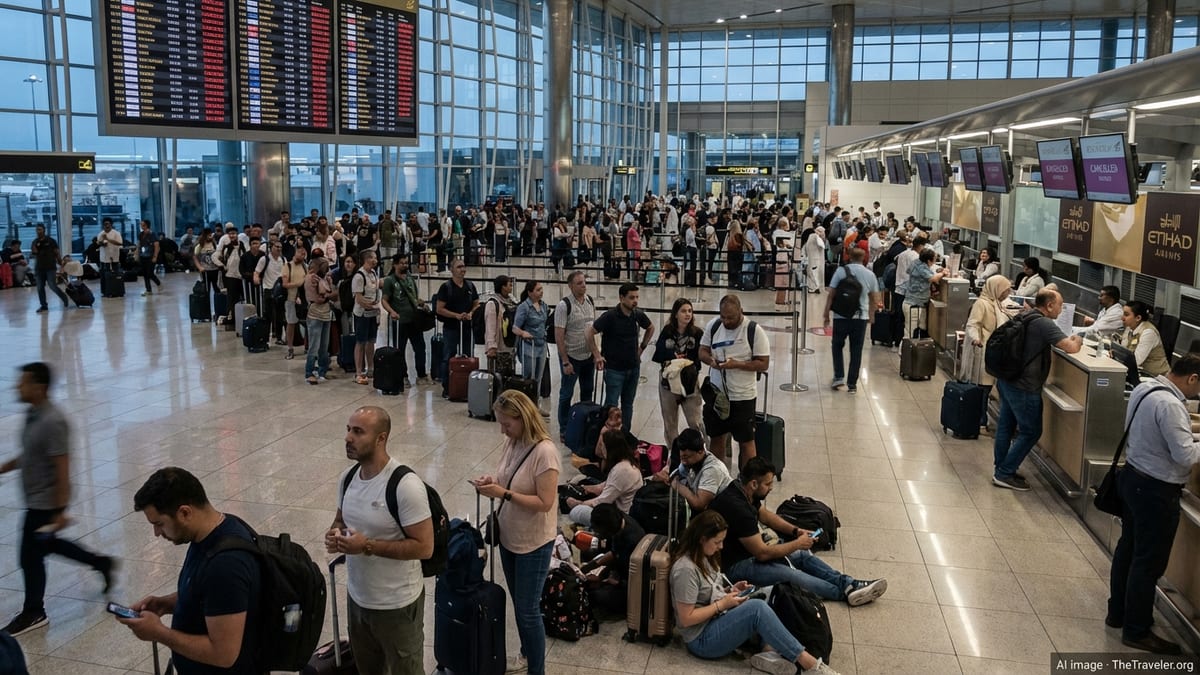
Advisory Remains at ‘Do Not Travel’ Level
According to the latest Iran travel advice published on the UK government’s foreign travel portal on 27 October 2026, the Foreign, Commonwealth and Development Office (FCDO) continues to advise against all travel to Iran. Publicly available information indicates that this position, first adopted several years ago in response to security concerns and the treatment of dual nationals, has now been reaffirmed in light of the wider regional crisis and Iran’s internal situation.
The FCDO notice frames the warning in unambiguous terms, placing Iran in the highest risk category used by the UK for overseas trips. Separate summaries produced for the travel industry in 2026 also list Iran among a small group of destinations where advice is explicitly against all travel, underlining the severity of the assessment.
Earlier UK parliamentary documents and government responses show that the posture has hardened over time, moving from caution against non-essential travel to a broad recommendation that British nationals do not go to Iran at all. Current advisory language makes clear that this stance remains in force and that there is no indication of an imminent easing.
Security Risks, Regional Conflict and Terror Threat
The FCDO’s safety and security section for Iran cites a combination of factors behind the highest-level warning, including the potential for terrorism, regional conflict spillover and internal unrest. Publicly available updates refer to major incidents such as the January 2024 suicide bombings in the southern city of Kerman, where dozens of people were killed and hundreds wounded, underscoring the risk of further mass-casualty attacks in public places.
Regional tensions also play a central role. International travel advisories from several governments point to the broader Middle East security environment, including clashes involving Iranian-aligned groups and increased missile and drone activity, as raising the likelihood of sudden escalation that could affect foreign visitors. Assessments from other countries, such as Canada and Australia, currently mirror the UK stance with their own recommendations to avoid all travel to Iran, reinforcing the perception of a high-risk environment.
Beyond large-scale attacks, the UK guidance emphasises that demonstrations and security operations can flare with little warning, leading to roadblocks, communications disruptions and heavy security force presence. Travellers are warned that local authorities may restrict movement, limit access to certain areas and detain individuals in connection with protests or perceived security incidents.
Arbitrary Detention and Dual National Vulnerability
Concerns about arbitrary detention are a core element of the UK’s travel warning. Government responses to parliamentary committees and published travel advice highlight a pattern of British and British-Iranian dual nationals facing arrest, questioning and prolonged detention in cases linked to national security or political charges. These risks are described as particularly acute for individuals with any connection to foreign organisations or media, or those engaged in activism.
The guidance stresses that Iran does not recognise dual nationality in practice. This means that dual nationals who enter the country on an Iranian passport, or who are regarded by Iran as Iranian citizens, may be denied access to consular support from the UK if they are detained or encounter legal problems. Public documents indicate that the UK has repeatedly warned that dual nationals could be used in politically motivated cases or become entangled in diplomatic disputes.
For other foreign visitors, the risk profile is also considered elevated. International advisories reference past instances in which travellers, academics, aid workers and business visitors have been detained on broadly defined security grounds. The UK guidance notes that charges may not meet international fair-trial standards and that legal processes can be lengthy and opaque.
Severely Limited UK Consular Assistance
Published UK government material makes clear that consular assistance inside Iran is heavily constrained. A formal response from the government to a parliamentary intelligence committee report states that, if there is serious violence, unrest or a sharp deterioration in the security situation, the UK would not be able to provide face-to-face help to nationals in difficulty or guarantee evacuation from Iran.
The same material explains that, in an emergency, options to reach British nationals may be restricted by the absence of direct commercial flights, disruption to local infrastructure or decisions by Iranian authorities. Travellers are advised that communications may be cut, that movements of diplomatic staff can be limited and that consular teams may have to operate from outside the country.
Alongside this, the FCDO advice notes that British nationals intending to cross certain land borders, such as into Turkey, are expected to contact the FCDO in advance to request facilitation via the British Embassy in Ankara. This requirement reflects the possibility of sudden closures or heightened checks at crossings, and the need for additional scrutiny before attempting to leave Iran overland.
Impact on Flights, Insurance and Travel Planning
The decision to keep Iran at the highest warning level is shaping how airlines, tour operators and insurers handle the destination. Travel industry bulletins tracking Middle East risks in 2026 list Iran among the countries where UK government advice against all travel triggers broad exclusions in standard travel insurance policies, particularly for security-related claims.
Consumer-focused commentary in the UK notes that when FCDO guidance is set at “against all travel,” many underwriters treat trips as undertaking a known, high-level risk. As a result, policies may not pay out if travellers proceed in defiance of official advice and experience losses connected to unrest, terrorism or government action. Some specialist insurers may still offer limited cover, but often at increased premiums and with strict conditions.
On the transport side, international reporting and traveller discussions indicate that route availability has already been affected by sanctions and regional tensions, with some non-Iranian carriers reducing or suspending services to Iranian airports. Where flights are still operating, schedules can be subject to abrupt changes in response to airspace restrictions, airport security alerts or new government measures.
Published travel advice across several countries now urges anyone who nevertheless chooses to travel to Iran to maintain flexible plans, avoid areas close to military or security facilities and monitor updates from their own foreign ministry. The UK government, however, continues to frame its message in stark terms: British nationals are urged not to travel to Iran at all and, for those already in the country, publicly available guidance encourages careful consideration of whether their presence is essential in the current climate.