


More news on this day
A new UK rail passenger scheme starting this weekend aims to cut the confusion and extra costs that can follow a cancellation, giving more travelers an automatic right to board another operator’s train without buying a new ticket.
Get the latest news straight to your inbox!
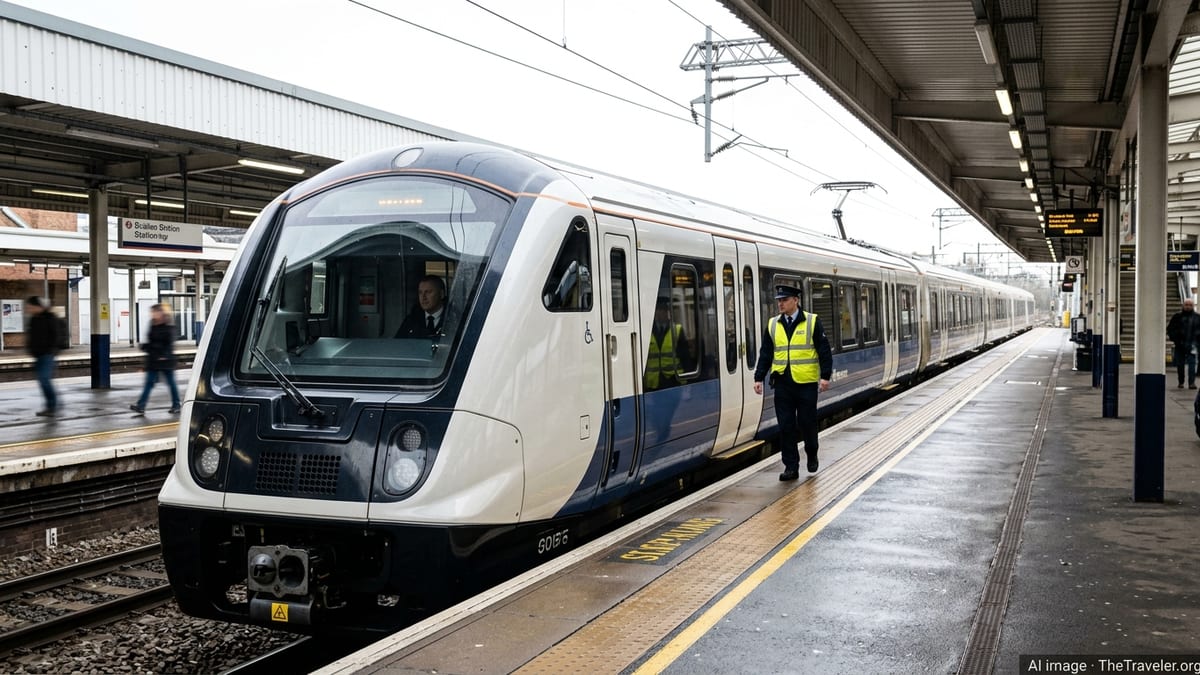
What changes on Sunday, September 20
Published coverage and official government information show the new measure begins on Sunday, September 20, 2026. When a passenger’s booked train is cancelled, they can take an alternative service run by a different participating train operator to complete their journey at no additional cost, rather than waiting for ad hoc ticket-acceptance agreements or purchasing a replacement fare.
The rule is designed for immediate recovery after a cancellation. Under the published terms, passengers can use a direct or “reasonable alternative” route on a participating operator’s service that departs within a two-hour window either side of the originally cancelled train. Travelers are expected to show their original ticket to staff on the alternative service as proof of purchase, and the scheme is presented as not requiring a newly issued ticket to be downloaded or rebooked.
While cross-operator acceptance has already existed across publicly owned operators, the notable change this weekend is the expansion to several major intercity players. This increases the odds that a stranded passenger can find another departure without being limited to the operator that cancelled.
Which operators are included, and who is still to join
Official information indicates the expanded scheme brings in Avanti West Coast, Great Western Railway, CrossCountry, and Chiltern Railways from September 20. These operators run key long-distance corridors linking London, the Midlands, the North West, the South West, and other major cities, where disruptions can strand large numbers of passengers at interchange stations.
The participating list also includes a wide set of operators serving commuter and regional markets, including c2c, Gatwick Express, Greater Anglia, Great Northern, LNER, London Northwestern Railway, Northern, Southeastern, Southern, Thameslink, South Western Railway, TransPennine Express, West Midlands Railway, and others named in the scheme’s published coverage. For many travelers, that breadth matters most at hubs where multiple operators share platforms and routes.
East Midlands Railway is listed as joining at a later date, rather than at launch this weekend. For passengers on routes anchored by London St Pancras, Nottingham, Sheffield, Leicester, and surrounding areas, that detail could shape the practical value of the scheme in the early weeks, depending on where the cancellation occurs and which alternative operators are available.
How the two-hour window and route rules may work in practice
The two-hour window is a key operational detail that may help passengers make faster decisions during disruption. If a cancellation occurs, the scheme is intended to let travelers move to a nearby departure without waiting for a separate “ticket acceptance” notice to appear, provided the alternative service is within the time window and follows a direct or reasonable alternative route.
For example, a passenger disrupted on an intercity itinerary might be able to take the next suitable departure on another participating operator that reaches the same destination via a comparable main line, or via a sensible connection at a major interchange. The “reasonable alternative route” language suggests flexibility, but it still implies there are boundaries, particularly where the alternative route would be significantly longer, require multiple changes, or create crowding and capacity constraints.
Travelers should also expect the usual conditions around capacity and operational safety to continue to apply. National Rail’s disruption pages continue to show how quickly the network can shift due to incidents and engineering work, and those live updates may remain essential for deciding which alternative route is actually running and whether additional changes are needed.
What the scheme does not replace: refunds, Delay Repay, and assistance obligations
The new arrangement is framed as a way to keep journeys moving after a cancellation, but it does not remove passengers’ existing rights around refunds and compensation. Public guidance from the rail regulator and other official sources continues to outline that travelers who choose not to travel due to disruption can seek a refund from the retailer, and those who travel but arrive late can claim compensation through their operator’s arrangements.
Separate from fare reimbursement or Delay Repay-style payments, published government guidance on rail passenger rights also describes obligations around assistance during significant delays, including information updates and, in some circumstances, meals, accommodation, and alternative transport when disruptions become severe enough. The exact availability can depend on what can be “reasonably supplied” and what is physically possible at the time.
In practical terms, that means the new scheme is best seen as an additional tool rather than a full replacement for existing processes. Passengers may still need to keep receipts, document the cancellation and their arrival time, and follow the standard compensation and complaint pathways where appropriate.
Why it is arriving now, and what to watch next
The scheme is presented as part of a wider set of reforms tied to the government’s rail overhaul agenda, including the longer-term push toward a Great British Railways structure. Published coverage also points to parallel initiatives around ticketing modernization and simplifying how passengers navigate disruption, alongside measures intended to reduce fare evasion and improve the integrity of the ticketing system.
For travelers, the immediate question will be consistency. The value of cross-operator travel during disruption depends on staff and systems applying the rules predictably at the moment a cancellation hits. That includes clear station announcements, alignment between information screens and apps, and front-line understanding of what qualifies as a reasonable alternative route within the two-hour window.
Another watch point is how quickly remaining operators are brought into the scheme and whether the policy expands beyond cancellations into other disruption scenarios. For now, the published terms focus on cancellations and on enabling passengers to keep moving without a new payment, starting this Sunday.