


More news on this day
The United Arab Emirates has abruptly shifted from near no‑go territory for British tourists to a cautiously accessible destination, as the United Kingdom’s Foreign, Commonwealth & Development Office recalibrates its UAE travel advisory in a move that aligns, yet conspicuously diverges, from parallel warnings issued by the United States, Iran and Israel on the wider Gulf region.
Get the latest news straight to your inbox!
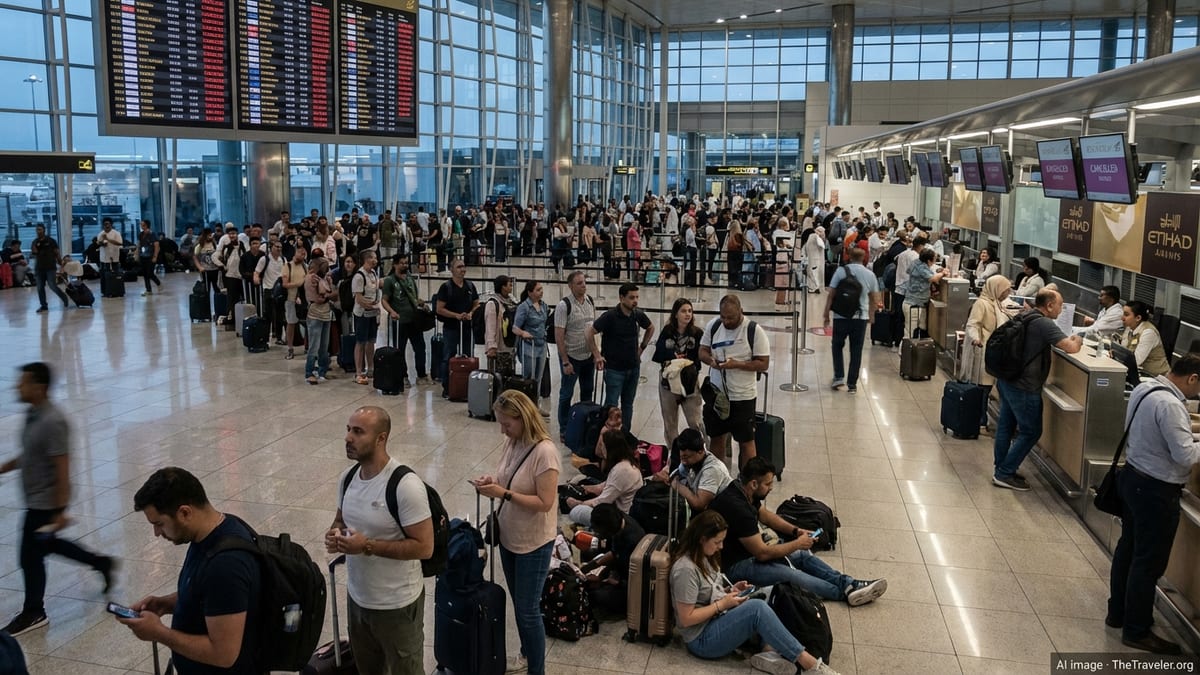
FCDO Steps Back From Hardline Stance On UAE
The United Kingdom’s latest adjustment to its United Arab Emirates travel advice marks a notable departure from the hardline approach that had dominated recent months, when the UAE sat in the same risk category as several active conflict theatres across the Middle East. For much of spring 2026, FCDO guidance and widely relayed summaries indicated that British nationals should avoid all but essential travel to the Emirates amid fears of spillover from Iranian strikes and regional escalation.
Updated signals emerging in mid June point to a more nuanced posture. Commentary on the change highlights that the blanket warning against almost all travel has been withdrawn, with the emphasis shifting toward heightened vigilance, close monitoring of regional developments and careful route planning rather than outright avoidance. This recalibration follows a wider pattern in which governments have begun to differentiate more clearly between the direct conflict zones surrounding Iran and the comparatively insulated but still exposed Gulf hubs such as Dubai and Abu Dhabi.
Travel insurers and tour operators are already responding. Several UK based agencies note in their public guidance that cover is heavily dependent on the precise wording of FCDO advice, and the softening of language for the UAE is being interpreted as a green light to restart or expand scheduled departures later in the summer season, albeit with prominent caveats about security volatility and airspace disruption.
United States Keeps Region At Elevated Risk Level
While the UK has moderated its stance toward the Emirates, the United States continues to frame the wider region as a high risk environment. Recent State Department updates group the UAE alongside Saudi Arabia, Qatar, Bahrain, Kuwait, Jordan and Israel in a tier of destinations where travelers are urged to reconsider non essential trips due to the possibility of further strikes, unrest and rapidly changing operational conditions.
Publicly available summaries of US guidance stress that the advisory is not a travel ban but an acknowledgement that the security picture in and around the Gulf remains fragile. A notable example was the earlier decision in March for non essential US government staff and family members to depart the UAE as a precaution, a move that underscored how quickly evacuation and contingency planning can be activated when assessments worsen.
For leisure travelers, the split between a softening UK view and a still elevated US position creates a complex risk calculus. Multinational firms with staff rotating through Dubai and Abu Dhabi are increasingly advised in corporate security briefings to benchmark their internal policies against several national advisories, rather than relying solely on one country’s assessment. This approach reflects an acknowledgment that Washington’s more conservative posture, London’s recent shift, and the views of other partners often diverge in their tolerances for residual risk.
Iran, Israel And The Airspace At The Heart Of The Tension
The recalibration of advice on the Emirates cannot be separated from the far grimmer risk language directed at Iran and parts of Israel. Iran remains under some of the strictest guidance globally, with foreign ministries widely classifying the country as a destination where all travel should be avoided in light of ongoing conflict, internal crackdowns and the potential for further external strikes.
Israel, too, continues to be treated as a high volatility environment following successive rounds of cross border attacks, missile interceptions and disruptions to civil aviation. Flight paths threading between Israeli and Iranian aligned territories have become emblematic of the broader insecurity, with aviation authorities and carriers routinely adjusting routings to reduce exposure to contested airspace over the Gulf and the Strait of Hormuz.
The UAE’s decision to pursue what local reporting describes as reduced reliance on Hormuz as a shipping and transit artery illustrates how the Emirates is trying to hedge against these geopolitical shocks. Investments in alternative ports and overland logistics corridors are intended to ensure that energy exports, cargo and eventually passenger flows can be sustained even if the narrow waterway again becomes a flashpoint. For travelers, this medium term strategy underpins a key message embedded in the new advisories: the UAE is not the epicenter of the conflict, but it sits in a neighborhood where miscalculation between Iran, Israel and Western powers can rapidly alter risk levels.
Regional Advisories Converge On Cautious Reopening
Beyond the UK and US, a range of governments have been recalibrating their positions on Gulf travel in recent days. Updated Australian guidance, for example, now frames the United Arab Emirates and several neighboring states in terms that encourage travelers to carefully reconsider their need to visit rather than flatly prohibiting trips. This language mirrors a wider shift toward partial reopening after months in which many capitals effectively wrote off the region for non essential travel.
Specialist risk consultancies and travel management firms note in their latest bulletins that while missile and drone attacks on Gulf infrastructure have decreased compared with the peak of the crisis earlier in the year, the underlying dispute that triggered those strikes remains unresolved. They emphasize that airspace closures, rerouted flights and sudden schedule changes are still possible, particularly on routes transiting near Iranian territory or within range of proxy groups.
Carriers based in the UAE have publicly highlighted new entry restrictions linked to unrelated health concerns as well as the lingering impact of the security situation. Airline updates refer to stricter screening for passengers with recent travel histories to certain African states affected by Ebola, and to a reduced but stabilizing flight program that reflects both demand fluctuations and the need to navigate constrained regional corridors safely.
What The New Advisory Means For Travelers Headed To The UAE
For would be visitors from the United Kingdom, the latest advisory shift effectively moves the UAE back into a category where travel is possible, but only with a heightened degree of situational awareness. Holidaymakers booking Dubai beach breaks or Abu Dhabi city stays are being encouraged by tour companies to build flexibility into their itineraries, from refundable hotel rates to flights that can be rebooked without severe penalties in the event of renewed turbulence.
Travel planners are recommending that passengers allow extra time for connections, monitor airline notifications closely, and review the fine print of their insurance to ensure coverage remains valid if the security picture deteriorates again. Industry guidance repeatedly urges travelers to register with consular services where available, keep copies of important documents in digital form and stay informed through multiple news outlets rather than relying on social media rumors.
Perhaps the clearest message emerging from the FCDO’s pivot and its counterparts in Washington, Tehran and Jerusalem is that the era of binary travel decisions for the Gulf is over. Instead of categorizing the UAE as either fully safe or effectively off limits, governments now describe a spectrum of risk in which travelers are expected to shoulder more responsibility for their choices. For TheTraveler.org’s audience, that translates to a new travel reality in which a Dubai skyline sunset and a recalibrated advisory can coexist, but only against a backdrop of careful planning and an acceptance that the geopolitical ground beneath the Gulf remains in motion.