


More news on this day
Britain has tightened travel advice across parts of the Middle East as regional tensions linked to the conflicts involving Israel, Hezbollah and Iran raise the risk of sudden escalation, prompting closer scrutiny of tourism, business trips and religious travel from the UK.
Get the latest news straight to your inbox!
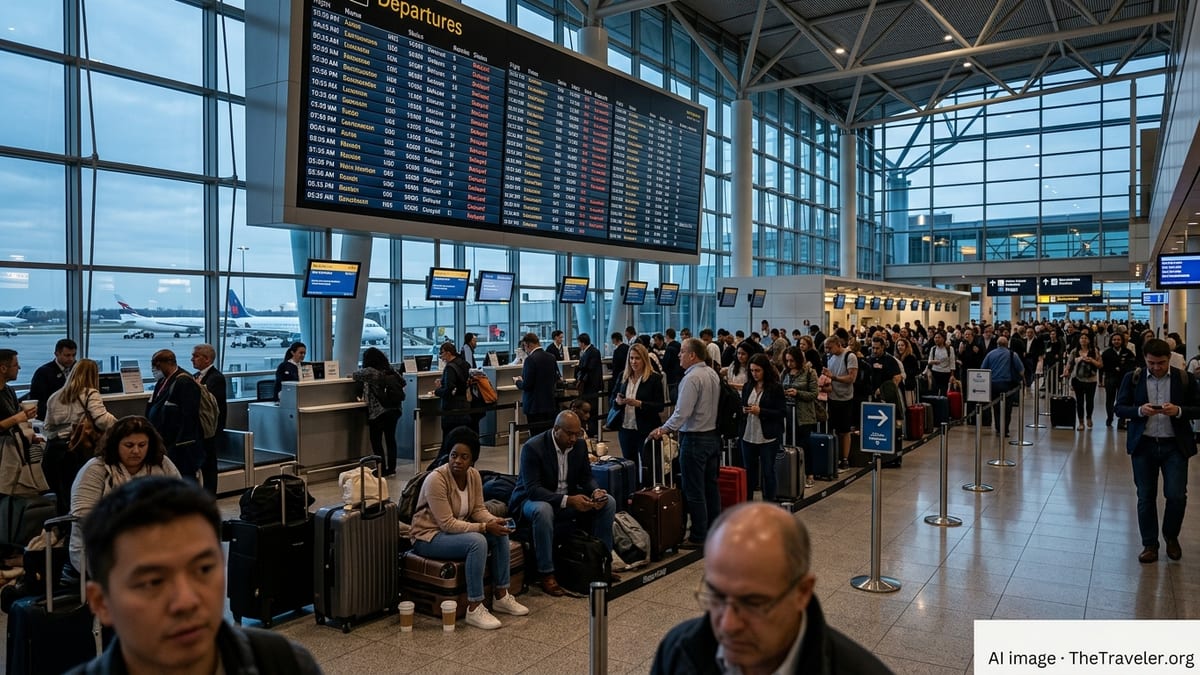
Heightened regional risk shapes new Foreign Office guidance
Publicly available Foreign, Commonwealth and Development Office (FCDO) advisories now emphasise that the security context across the Middle East is deeply unpredictable, stressing the possibility of rapid escalation and disruption to air travel and consular support. The language around “regional tensions” and “sudden escalation” has been strengthened in updates covering Israel, the Occupied Palestinian Territories and neighbouring states.
In its Israel travel advice, the FCDO notes that tensions have been amplified by strikes and retaliatory attacks linked to the wider confrontation with Iran and aligned groups in the region. The guidance underlines that knock-on effects can extend beyond active front lines, including temporary airspace restrictions, changes to airline routings and short-notice security measures at airports.
The updated wording places particular emphasis on the need for travellers to monitor official advice up to and during their trips. The FCDO highlights that standard travel insurance may be affected if people visit areas where the UK officially advises against travel, and that support from British consular teams may be limited in those locations.
While the core warning framework of “against all travel” and “against all but essential travel” remains unchanged, the geographic scope and reasoning have shifted as front lines move and ceasefire arrangements in Lebanon and Gaza remain fragile.
Lebanon and border areas: shifting front lines and severe limits on support
Lebanon is among the clearest examples of the UK’s tougher approach. The FCDO’s Lebanon page, updated in August 2026 and still current as of late October, records that advice against all travel and all but essential travel has been redrawn to reflect changing conflict dynamics, even as airstrikes and rocket attacks linked to the confrontation between Israel and Hezbollah continue. The advisory stresses that travel to or within Lebanon is at an individual’s own risk.
Public information on the Lebanon page notes that Israeli airstrikes have hit southern Lebanon, Nabatieh, parts of the Beqaa Valley and areas of Beirut’s southern suburbs, with incidents also reported outside those zones. Although a cessation of hostilities was announced in June 2026, the notice records that clashes and strikes have persisted, particularly in the south, where an Israeli military presence remains.
The FCDO warns that consular support in areas where it advises against travel is “severely limited,” and that travellers who choose to remain should have robust personal contingency plans that do not rely on an assisted evacuation. The guidance encourages people to keep departure options under regular review, ensure passports and any onward visas are current and retain access to essential medicines and emergency supplies.
These Lebanon warnings intersect with a wider pattern of advice on border areas with Israel, Syria and the Occupied Palestinian Territories, where overlapping military operations, displacement and shifting ceasefire lines have reshaped the risk environment for visitors, aid workers and diaspora travellers alike.
Saudi Arabia, Gulf routes and the ripple effect on air travel
Beyond direct conflict zones, tightening UK advice is also affecting perceptions of travel to Saudi Arabia and parts of the Gulf. While official FCDO pages provide the definitive position, public discussion on UK-focused forums in October has highlighted reports that guidance for Saudi Arabia has moved toward “essential travel only” amid concern that the war between Israel and regional armed groups could spill over or trigger missile and drone incidents in the wider Gulf.
Travel advisories and summaries circulated by UK-based agencies in recent months refer to disruption across several Middle Eastern hubs following large-scale military events earlier in 2026. These briefings point to delays, diversions and cancellations affecting routes through Saudi Arabia, Jordan, Lebanon and Egypt at various points, with knock-on impacts for British travellers using those airports as transit points.
Separate notices from the UK Civil Aviation Authority in March 2026 advised passengers to check the latest FCDO country advisories and to stay in close contact with airlines when flying through the region. Industry updates compiled for corporate travel managers describe a patchwork recovery, with capacity on some Gulf routes only gradually returning toward pre-crisis schedules by late 2026, while contingency routings via southern Europe and alternative hubs remain in use.
For travellers, the tightening UK stance on certain Middle Eastern destinations means that apparently routine connections for business, family visits or pilgrimage can rapidly become subject to enhanced security checks, re-routing or short-notice schedule changes, even in countries not directly experiencing large-scale fighting.
Insurance, liability and what “essential travel” really means
The sharper tone in UK government advice is having direct consequences for travel insurance and employer liability. Insurers active in the UK market are circulating customer notices explaining that coverage is often restricted or excluded in locations where the FCDO advises against all or all but essential travel, especially for claims linked to war, terrorism or civil unrest.
Advisories aimed at corporate and leisure clients in early March 2026 stress that travelling in defiance of UK government warnings can invalidate policies, leaving individuals and companies exposed to the full cost of medical evacuation, trip disruption and property loss. Some UK-based travel risk specialists have issued bulletins summarising the status of countries including Iran, Iraq, Syria and Lebanon as effectively off limits for leisure trips under most standard policies.
At the same time, public discussion in Britain in October 2026, including on employment and legal forums, reflects uncertainty over what qualifies as “essential” travel when FCDO advice tightens. Commenters have shared examples of employers expecting staff to undertake assignments in Saudi Arabia or other higher-risk locations while official guidance advises against all but essential travel, raising questions about duty of care and the need for specific contractual terms.
This debate underscores that “essential” is not automatically defined by the government for private travellers. Instead, it is a risk judgement made by individuals, insurers and organisations in light of the published advice, local security assessments and alternative options for conducting business or fulfilling religious obligations.
Practical steps for UK travellers navigating a volatile region
The latest UK stance on the Middle East encourages travellers to take a more structured approach to risk management before departure. Official advice pages highlight the importance of registering contact details where that service is offered, monitoring local and international news closely for signs of escalation and planning how to leave a country at short notice if security deteriorates.
Travel risk briefings produced for corporate clients recommend checking that itineraries avoid areas highlighted as “no travel” or “essential travel only,” even when passing through by road on the way to airports or religious sites. Travellers are advised to confirm that their insurance explicitly covers war and terrorism-related disruptions if they intend to visit locations near active front lines or within range of cross-border missile and drone fire.
Publicly available travel industry analyses note that capacity across the region remains uneven: while some key hubs have restored much of their pre-crisis schedules, others still operate with constrained frequencies, longer routings and occasional overnight rerouting to alternative airports. This can add cost and complexity to trips from the UK, particularly during peak holiday and pilgrimage seasons.
For now, the tightening of UK advice underlines that the Middle East’s role as a major tourism, transit and pilgrimage destination for British nationals sits uneasily alongside an elevated risk of rapid escalation. Travellers planning journeys into or through the region face a landscape where official guidance, airline schedules and insurance terms can change quickly, requiring close attention to updates right up to the day of travel.