


More news on this day
A residential cruise ship marketed as an “endless” world voyage has abruptly suspended operations in Cambodia, with soaring fuel prices cited as the reason, leaving hundreds of long-term passengers suddenly searching for housing and a way home.
Get the latest news straight to your inbox!
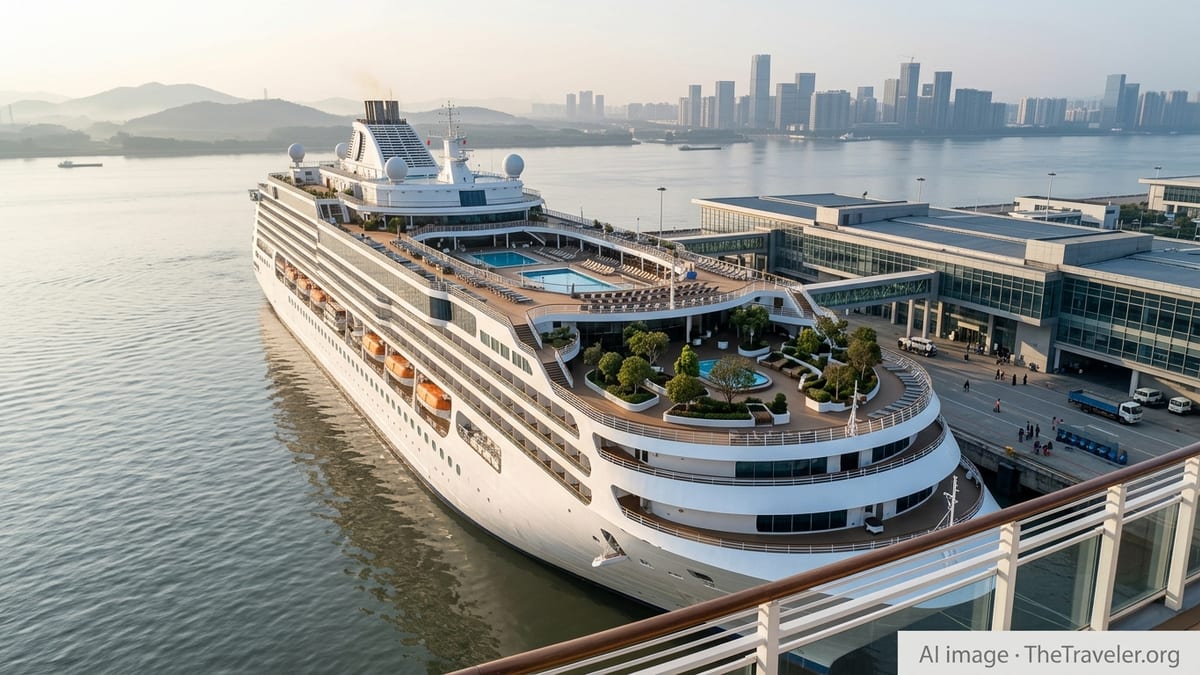
Residential world cruise comes to an abrupt halt
Publicly available information identifies the vessel as Villa Vie Odyssey, a 196 meter Bahamas flagged residential cruise ship operated by U.S. based company Villa Vie Residences. The ship, which offers long term ownership style cabins and an open ended global itinerary, had been sailing a continuous route for more than two years before the shutdown.
According to company statements and published coverage, operations were suspended on October 27 2026 after what the operator described as extraordinary increases in fuel costs. Reports indicate that passengers were informed via an early morning notice on board, telling them the cruise could not continue and instructing residents to disembark with their belongings in Cambodia.
The vessel is currently laid up in Sihanoukville on Cambodia’s southern coast, after sailing from Thailand earlier in October. Industry trackers and marine traffic data show the ship arrived at the Old Sihanoukville Port around October 23, where it has remained while the company evaluates options for restructuring and recapitalization.
Travel and cruise industry outlets report that Villa Vie had been promoting Odyssey as an affordable way to live at sea indefinitely, with residents able to purchase cabins and pay ongoing fees in lieu of traditional housing costs on land. The sudden interruption of the voyage has therefore had an impact more comparable to a housing crisis than a conventional interrupted holiday.
Soaring fuel prices pressure niche cruise model
Villa Vie Residences' decision is closely linked to a global spike in fuel costs following recent geopolitical instability and disruptions to oil supplies. Cruise trade publications note that marine fuel prices in parts of Asia have risen sharply since early 2026, with the company publicly stating that its monthly fuel expense per occupied cabin in some regions had climbed from under 2,000 dollars to between 6,000 and 8,000 dollars.
In earlier communications this year, which are now being scrutinized by passengers and analysts, the company had already introduced additional fuel surcharges and sought extra cash calls from residents to cover rising operating costs. Reports suggest that despite itinerary changes intended to save fuel, such as slower cruising speeds and longer stays in port, the line could not contain the impact of higher bunker prices on its highly specialized business model.
Cruise industry analysts have long highlighted fuel as one of the sector’s most volatile costs, with large operators often using financial hedging strategies or fleet wide efficiencies to manage price swings. A smaller, single ship residential operator has far less room to spread risk. The combination of a long haul global itinerary and a relatively small passenger base appears to have left Villa Vie particularly exposed once fuel markets tightened.
Documents filed by major cruise companies in recent years have repeatedly warned that rapid increases in oil prices can force changes to itineraries, raise ticket prices or reduce profitability. The current situation in Cambodia illustrates how, for experimental products such as permanent life at sea, those same forces can threaten the viability of an entire concept rather than just a single season.
Passengers facing housing and travel uncertainty
Unlike guests on conventional cruises, many Villa Vie Odyssey passengers had sold or rented out their homes on land to move aboard, treating the ship as their primary residence. Published accounts from residents and coverage in international media describe individuals who now need to source housing, storage and flights with limited notice from a port that was never expected to be their final stop.
Reports from travel news outlets and passenger blogs indicate that some residents were given only hours to pack their cabins and organize onward plans after being told that the company could not secure the fuel necessary to continue operations. Those who were away on excursions when the notice was posted have described difficulties returning to the ship in time to collect belongings before services were scaled back.
The company has said through public statements that it is working with residents to coordinate disembarkation in Sihanoukville and arrange temporary accommodation while it assesses financial options. However, there is currently no clear timeline for when, or if, operations might resume, leaving many former residents treating the situation as an unplanned and permanent relocation rather than a short delay.
Travel forums and social media discussions show passengers comparing options such as short term rentals in Cambodia, relocating quickly to nearby hubs like Bangkok or Singapore, or returning to their countries of origin. Because many had structured their finances around multi year life at sea, including long term purchases of cabin rights, some are also now seeking legal and financial advice regarding potential claims if the ship does not sail again.
What the shutdown means for Cambodia and cruise tourism
The layup of Villa Vie Odyssey in Sihanoukville has drawn new attention to Cambodia’s role in the regional cruise network. The deep water port, which typically handles a mix of container traffic and seasonal cruise calls, is now hosting a vessel that is functioning more as a stranded residential community than a traditional visiting ship.
Local tourism businesses had been benefiting from the vessel’s planned calls in Southeast Asia, with passengers booking shore excursions, hotel stays and domestic flights. The sudden end of the cruise could produce a short burst of demand for accommodation and onward travel from disembarking residents, followed by a potential lull in cruise driven spending if the ship remains inactive for an extended period.
Cambodia has been seeking to expand its appeal as a stop on regional cruise itineraries to complement visits to Angkor Archaeological Park and other inland attractions accessible by domestic flights. Analysts note that while the Villa Vie case is unusual, it highlights the broader sensitivity of cruise tourism to global fuel costs. If higher prices persist, operators may favor shorter regional itineraries over long haul world cruises, which could in turn influence how often ships call at ports such as Sihanoukville.
For now, the Odyssey’s presence in port serves as a visible reminder of the risks involved in highly specialized travel products. Observers say other companies exploring similar residential or multi year cruises are likely to revisit their financial models, itinerary planning and fuel risk strategies in light of the Cambodia experience.
Future of residential cruising under scrutiny
The suspension of Villa Vie Odyssey’s voyage has prompted questions about the long term prospects of residential cruise concepts, which have attracted global attention in recent years as an alternative form of retirement, remote work or nomadic living. Several projects have marketed multi year or permanent at sea lifestyles, often relying on the assumption that shared operating costs across a large group of residents can compare favorably with land based living.
Industry commentators now point to fuel volatility, access to financing and regulatory compliance as key challenges that any such project must be able to withstand. The fact that rising bunker prices alone appear to have forced Odyssey into layup in Cambodia is being cited as evidence that contingency planning for worst case cost scenarios needs to be significantly more conservative.
Prospective residents on similar ventures are also paying closer attention to contract terms, refund policies and the financial transparency of operators. Public discussion in the wake of the Cambodia shutdown frequently references the importance of audited accounts, clear disclosure of running costs and realistic forecasts for variable expenses such as fuel, port fees and onboard services.
While some analysts still see potential for residential cruising in more limited or regionally focused formats, the abrupt end of an “endless” world cruise in Sihanoukville has introduced a new level of caution. Until Villa Vie clarifies whether Odyssey will sail again or be repurposed, the ship’s unexpected stop in Cambodia is likely to stand as a case study in how quickly external shocks can transform a novel travel dream into a complex logistical and financial challenge.