


More news on this day
A United Airlines Boeing 737 MAX 8 operating as Flight UAL1731 from Las Vegas to the New York area diverted to Philadelphia International Airport on August 6, after weather and operational constraints in the Northeast disrupted evening traffic flows.
Get the latest news straight to your inbox!
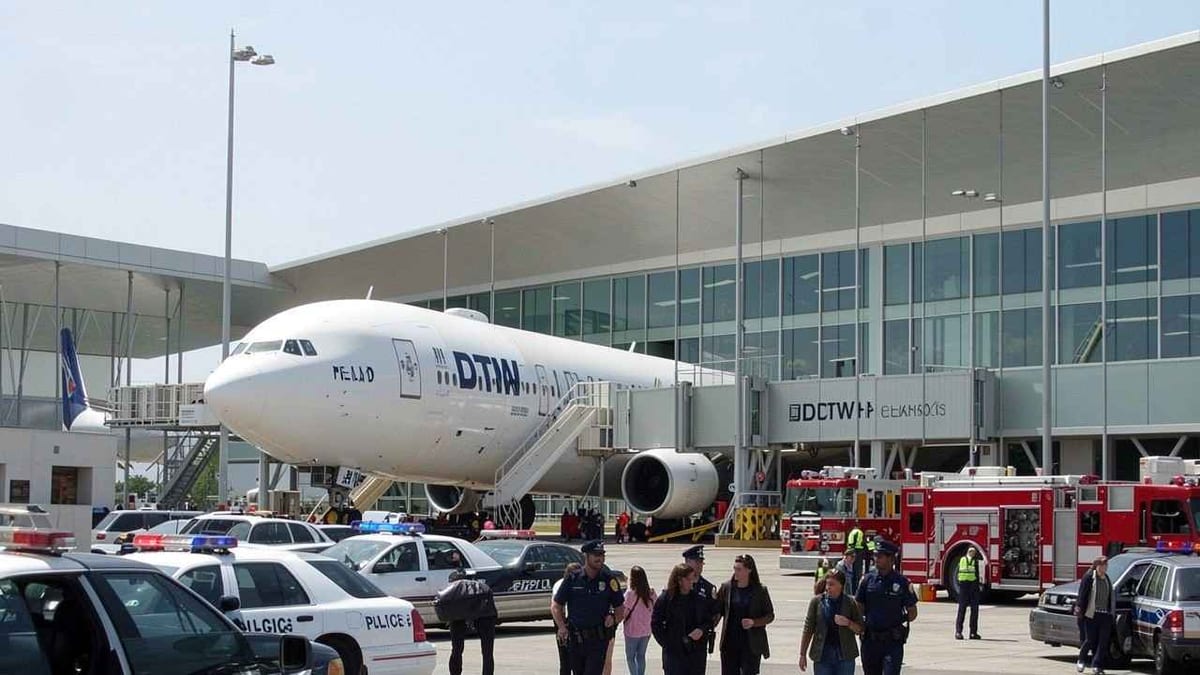
Las Vegas–New York Service Interrupted En Route
Publicly available flight-tracking information shows that UAL1731 departed Harry Reid International Airport in Las Vegas on August 6 on a scheduled evening transcontinental service toward the New York area. The flight was operated by a Boeing 737 MAX 8, a narrowbody aircraft commonly used by United on high-demand domestic routes.
Instead of continuing to its planned destination in the New York region, the aircraft altered course partway through the journey and ultimately landed at Philadelphia International Airport. Data for the flight path indicates that the diversion occurred after the aircraft had already crossed much of the continental United States, suggesting that the initial portion of the trip proceeded as planned before conditions deteriorated closer to the East Coast.
The diversion placed an additional mainline narrowbody jet into Philadelphia, an airport that regularly appears on United-related travel waivers connected to New York weather events. In early August, a series of thunderstorms and convective weather systems affected the New York airspace, with Philadelphia often used as an alternate or relief airport for rerouted traffic when arrival rates into the New York hubs are reduced.
UAL1731’s operational change added to a broader pattern of disruptions in the region, as multiple carriers adjusted routings, delayed departures, and reshuffled aircraft assignments to keep schedules moving through one of the busiest air corridors in the United States.
Weather and Airspace Constraints in the Northeast Corridor
Reports on airline operations for the first week of August highlight repeated thunderstorm activity across the Mid-Atlantic and New York metropolitan area, a combination that frequently leads to ground delay programs, holding patterns, and airborne diversions. During such events, air traffic managers typically reduce the number of arrivals accepted per hour into key airports, including Newark, John F. Kennedy, and LaGuardia, which can prompt flights already in the air to seek alternates.
Travel-waiver summaries circulated in early August referenced thunderstorms affecting New York area airports and Philadelphia, allowing passengers some flexibility to adjust plans across several days. These waivers indicate that operators anticipated ongoing convective weather and potential disruption, making diversions like that of UAL1731 more likely when actual storm cells materialized along approach routes.
When arrival rates are constrained, flights nearing the region may be placed into extended holding patterns, rerouted around storm lines, or instructed to divert if fuel margins no longer support prolonged delays. In this context, sending a Las Vegas to New York flight to Philadelphia, which lies within the same general airspace but may have more manageable traffic at a given moment, becomes a standard safety and efficiency measure.
The broader operational picture for early August shows multiple instances of United flights diverting or refueling at intermediate airports due to a mix of high temperatures, weather-related reroutes, and airspace congestion. UAL1731’s diversion therefore fits into an established pattern of tactical adjustments airlines make to keep passengers and crews safe while protecting the integrity of the network as much as possible.
Boeing 737 MAX 8 Performance and Diversion Decisions
The Boeing 737 MAX 8 has sufficient range to comfortably cover the distance between Las Vegas and the New York area under normal conditions. However, flight-planning assumptions are built around expected routings, cruise altitudes, and typical levels of airborne delay. When weather or traffic constraints force lower cruising altitudes or longer routes, fuel burn can increase and the margin available for extended holding near the destination can shrink.
Operational accounts from recent United diversions on other routes show that seemingly minor technical or routing issues, such as a reduced cruise altitude or circuitous weather-avoidance track, can significantly affect fuel planning. When combined with ground delays near busy hubs, these conditions often prompt crews to divert to an alternate airport with better weather or available landing slots, even when the aircraft is otherwise performing normally.
Diversions are a regular part of airline operations, and carriers plan alternates for each flight before departure. For a transcontinental leg like Las Vegas to New York, alternates may include airports such as Cleveland, Pittsburgh, Washington, or Philadelphia, depending on forecast weather and traffic. The selection of Philadelphia for UAL1731 suggests that, at the time of decision, it provided a combination of favorable weather, runway availability, and ground handling capacity compared with more constrained New York-area fields.
Once on the ground at a diversion airport, airlines typically evaluate whether the same aircraft can continue to the original destination once conditions improve or whether passengers are better served by being rebooked through the airline’s hub network. That decision can depend on crew duty limits, maintenance requirements, and gate availability, factors that often shift rapidly during widespread weather disruptions.
Impact on Passengers and Subsequent Travel Options
For travelers on UAL1731, the diversion to Philadelphia would likely have meant an unplanned arrival at an airport different from the ticketed destination, with onward travel arranged after landing. Publicly visible rebooking patterns across recent disruptions show that passengers in similar situations are often moved onto later flights into Newark or other New York airports once capacity becomes available, or guided toward ground transportation options when feasible.
Published passenger accounts from comparable United diversions in early August describe a range of experiences, from relatively smooth connections after a short delay to lengthy overnight stays while waiting for new routings. Factors such as the time of day, crew availability, and the scale of the regional disruption influence how quickly an airline can restore itineraries for everyone affected.
Travel-advisory posts focused on United’s operations in the first week of August highlight that the airline’s mobile app and website played a central role in informing customers about changes, offering same-day switches where permitted by active waivers, and displaying gate and flight-status updates. Passengers on UAL1731 would have relied on similar digital tools, along with airport displays and announcements, to track the status of any onward segments.
While diversions invariably cause inconvenience, they are widely regarded in the industry as a necessary tool to manage safety margins during volatile weather and heavy traffic. For airlines serving the New York corridor, which is particularly vulnerable to convective storms in summer, rerouting a Las Vegas to New York flight into Philadelphia on August 6 appears consistent with the operational strategies deployed throughout the period.
What the Diversion Signals for Late-Summer Travel
The case of UAL1731 underscores how quickly conditions in the Northeast corridor can change during the late-summer storm season. Even flights that depart on time and operate normally for most of their journey can face abrupt adjustments in the final phase as weather cells develop near their destination.
Industry analyses of delay and diversion data from United States domestic operations emphasize that the combination of high traffic density and convective weather tends to amplify disruptions during July and August. Airlines such as United respond by issuing targeted travel waivers, preemptively adjusting schedules, and identifying alternates like Philadelphia that can absorb diverted arrivals when New York airports reach saturation.
For travelers planning late-summer trips into or out of the New York region, the experience of UAL1731 highlights the value of monitoring forecast conditions and allowing additional time for connections. It also illustrates how a diversion to a nearby major airport, while disruptive in the moment, can help keep overall journeys moving in a complex and weather-sensitive airspace system.