


More news on this day
Travel through Singapore Changi Airport has been hit by fresh disruption after separate cancellations on United’s Singapore to San Francisco service and TNU-operated flights to Bali left passengers facing overnight delays, missed connections, and uncertainty across both regional and long-haul networks.
Get the latest news straight to your inbox!
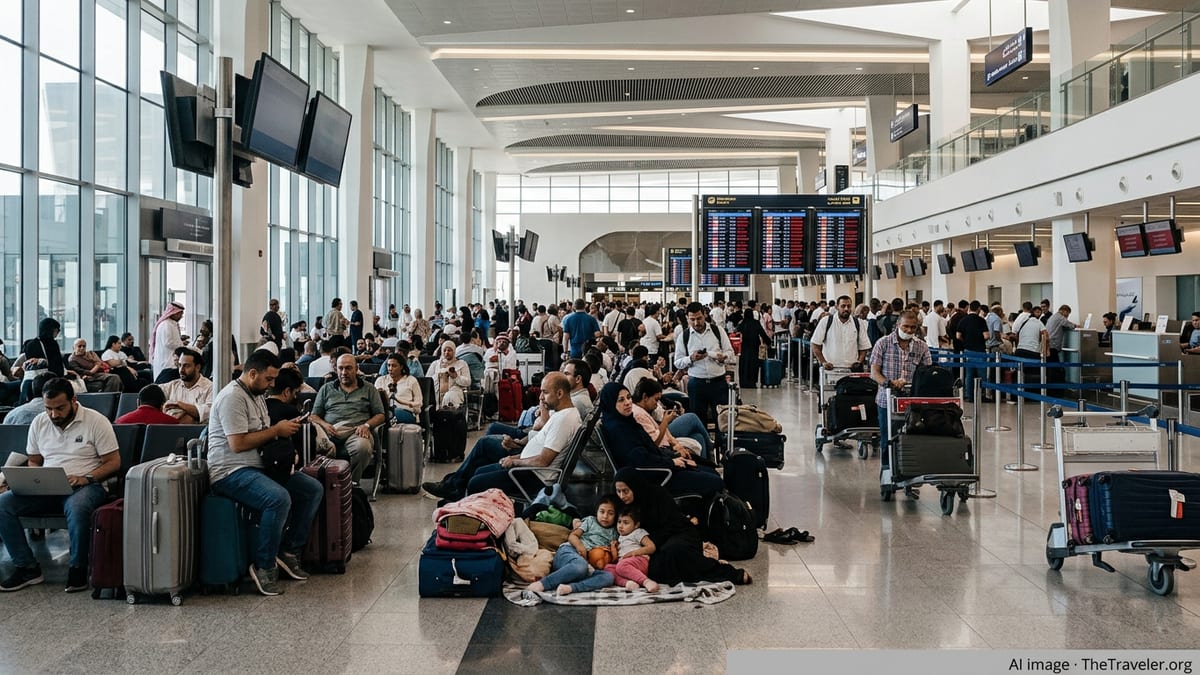
What Happened at Changi on the San Francisco and Bali Routes
Publicly available flight-tracking data and published coverage indicate that at least two key departures from Singapore Changi were scrubbed within a short window, affecting United’s nonstop link to San Francisco and a TNU-operated service to Bali. The cancellations involved heavily booked departures on traditionally strong leisure and corporate travel days, amplifying the impact on transit traffic moving through the hub.
On the long-haul side, United’s Singapore–San Francisco operation has been running with a dense schedule across flight numbers such as UA2 and UA28, using Boeing 787-9 aircraft on the approximately 15-hour transpacific leg. Schedule information shows this route operating multiple times per week through the northern summer, underscoring its importance as a bridge between Southeast Asia and the US West Coast. The latest disruption removed one of the limited nonstop options between the two cities on the affected day, tightening capacity for onward US and Europe connections via San Francisco.
Regionally, services between Singapore and Bali continue to see high demand, buoyed by Indonesia’s strong tourism recovery and the island’s popularity with regional travelers. TNU, drawing on the TransNusa brand identity indicated by its TNU designator in aviation references, has been part of that competitive Singapore–Bali market alongside larger regional and low-cost carriers. The cancellation of a peak-time departure on this short-haul route left holidaymakers and regional business passengers scrambling for same-day alternatives.
Reports from passengers and independent travel coverage describe crowded customer service desks, long waits for rebooking, and pressure on already busy later departures as travelers attempted to salvage itineraries built around guaranteed connections at Changi.
Knock-on Effects for Transit Passengers and Tight Connections
The immediate consequence of canceling a long-haul flight from Singapore to San Francisco is a cascade of missed onward connections. San Francisco International Airport serves as a major hub in United’s network, with onward services to key domestic and transatlantic destinations. When a single nonstop Singapore–San Francisco flight drops out of the timetable at short notice, travelers who planned legal connections onward to US cities or Europe are suddenly left with overnight gaps or multi-stop reroutes.
Travel-planning tools and recent network disclosures highlight how heavily United leans on San Francisco for Asia–North America connectivity, particularly in premium and corporate segments. With summer schedules already tightened by strong demand, the removal of one wide-body departure in a given 24-hour window reduces both seat availability and cabin choice. Passengers on affected itineraries may find that rebooking onto later services from Singapore involves trading nonstop flights for connections via other Asian hubs or being shifted onto partner carriers where space can be found.
On the regional side, the cancellation of a TNU Singapore–Bali leg has a more concentrated but still significant effect. Bali-bound travelers may see remaining same-day flights sold out or heavily waitlisted, especially on weekends and holiday periods. Those connecting into Bali from longer-haul arrivals into Changi risk losing prepaid hotel nights and ground arrangements, while outbound passengers returning from Bali to Singapore and beyond can face broken ticket sequences if their original trip was structured around a tight turn in either direction.
Because Changi functions as a dense regional hub, disruptions on both a long-haul trunk route and a short regional sector on the same day have a compounding effect, straining lounge capacity, immigration areas, and city hotels as stranded travelers compete for limited overnight options.
How United and TNU Are Handling Rebooking and Care
According to general policy information and consumer-facing guidance, airlines typically respond to day-of-operation cancellations with a combination of rebooking, refunds, and in some cases accommodation and meal support, especially when passengers are stranded overnight away from their home base. United publishes that customers whose flights are canceled can usually be rebooked on the next available departure on the same route or on reasonably comparable routing, subject to seat availability.
Travel industry commentary notes that long-haul disruptions originating in Asia often prompt rerouting via alternate hubs, including Tokyo, Seoul, or other Southeast Asian gateways, when the next nonstop option is not available for 24 hours or more. For Singapore–San Francisco travelers affected by the latest cancellation, this can mean substantial changes in total journey time, aircraft type, and even arrival airport if rebooking requires using a different West Coast gateway before a domestic connection back to San Francisco.
For TNU’s Singapore–Bali passengers, industry practice suggests that same-day re-accommodation is attempted first, either onto later TNU-operated services or onto other carriers if interline agreements allow. Where no same-day seats are available, travelers may be offered next-day flights along with vouchers or hotel arrangements, although the precise level of support varies by ticket type, point of sale, and the local regulatory framework covering consumer protection.
Travel forums and social media posts around similar events at Changi show that responses can be uneven in practice, with some passengers reporting swift rebookings and others describing lengthy queues, inconsistent information, and difficulty accessing call centers during peak disruption windows.
Why These Cancellations Matter for Singapore’s Role as a Hub
Singapore Changi has long marketed itself as an ultra-reliable transfer hub with extensive redundancy in routes and carrier options. However, the latest cancellations on both a marquee intercontinental route and a high-demand regional leisure service highlight how quickly stress can appear in even well-managed systems when multiple airlines adjust schedules at the same time.
Recent network filings and capacity data show carriers across the Asia–Pacific region fine-tuning their northern summer 2026 schedules, balancing aircraft availability, crew deployment, and evolving demand. In such an environment, a single equipment issue, crew shortage, or last-minute operational constraint can translate into the removal of a flight that thousands of passengers worldwide were relying on to make onward connections through Changi.
Analysts point out that Singapore’s importance as a connecting hub for Indonesia, Australia, and emerging secondary cities in China and India magnifies the effect of each cancellation. When a key Bali sector or a long-haul departure to the United States is removed from the grid, ripple effects can reach beyond Singapore and its immediate origin-destination market, affecting travelers whose journeys begin and end elsewhere but rely on Changi as a hinge.
The situation also underscores the increasing interdependence between regional carriers such as TNU and global network airlines like United. Shared passengers, codeshares, and aligned schedules mean that a disruption on one side of the network can erode confidence in the entire journey, particularly among leisure travelers who may only fly these routes once every few years and are less familiar with their rights.
What Affected Travelers Should Watch in the Coming Days
For passengers who were stranded or whose itineraries were heavily modified, the most immediate priority is monitoring rebooked flights and any knock-on changes that might arise as airlines continue to adjust aircraft and crew rotations. Airline mobile apps, airport flight information displays, and independent flight-tracking platforms remain the primary tools for tracking last-minute schedule shifts.
Consumer advocates frequently advise that travelers document out-of-pocket costs such as extra hotel nights, meals, and ground transfers incurred as a direct result of cancellations. This documentation can support later requests for reimbursement or goodwill gestures, subject to each airline’s policies and any applicable consumer-protection rules in the jurisdictions involved in the trip.
Travel planners also note that the latest disruptions are a reminder to build more generous connection times into itineraries that rely on a single daily long-haul departure or on tightly banked regional flights. For example, travelers heading from Southeast Asia to secondary US cities via San Francisco may want to consider a longer layover to accommodate potential delays or aircraft swaps on the transpacific leg.
With airlines in the region still refining summer schedules and capacity allocations, further tactical changes remain possible. Passengers holding tickets on upcoming United Singapore–San Francisco flights or TNU-operated Singapore–Bali services are being advised, by publicly available travel guidance, to check their bookings regularly in the days leading up to departure and to ensure that contact details in their reservations are up to date so that schedule changes can be communicated promptly.