


More news on this day
United Airlines has delayed the launch of new routes from Chicago O’Hare International Airport to a cluster of smaller Midwest cities, as federal limits on flights at the busy hub force the carrier to rethink its regional expansion plans.
Get the latest news straight to your inbox!
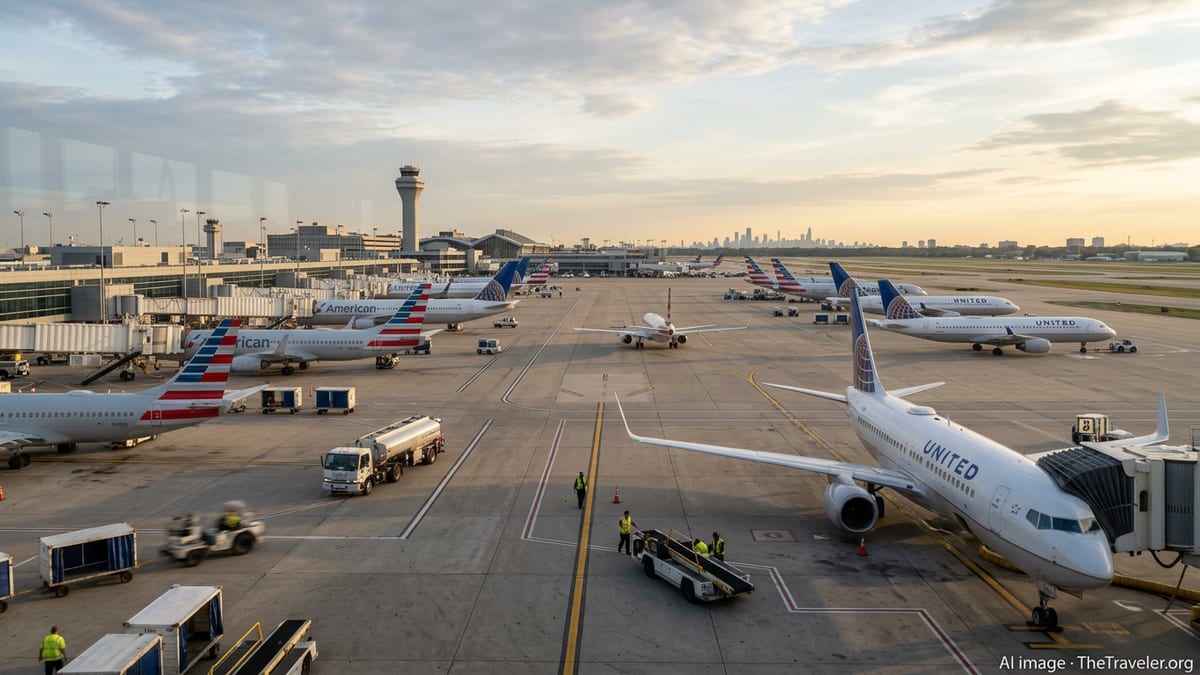
Flight caps at O’Hare upend regional growth strategy
According to published coverage in Chicago and national outlets, United had planned to roll out service in 2026 from O’Hare to ten regional destinations, many of them in the Midwest, as part of an effort to grow to roughly 750 daily departures at its hometown hub. The routes were promoted as a way to deepen connectivity between Chicago and smaller communities that rely heavily on air links to a global network.
That strategy has been interrupted by a Federal Aviation Administration decision to cap the number of operations at O’Hare through at least October 2027, following concerns about congestion, delays and the strain of rapid schedule growth. Publicly available information shows the limits are designed to stabilize performance at one of the nation’s busiest airports, but they leave limited room for additional flights in the near term.
Industry reports indicate that in response, United is postponing the start of several of these regional routes rather than cutting back long haul or higher-yield services. The move effectively slows a Midwest-focused expansion that had been marketed by the airline over the past year.
Schedule data summarized by aviation analysts points to a broader pattern of domestic adjustments for the peak 2026 summer season, with O’Hare capacity in particular under closer scrutiny after the flight cap decision.
Ten affected cities, many in the upper Midwest
Coverage from regional news outlets and airline schedule trackers indicates that the delayed routes include flights from Chicago O’Hare to Champaign and Bloomington in Illinois; Kalamazoo, Lansing and Marquette in Michigan; La Crosse and Wausau in Wisconsin; Rochester in Minnesota; Erie in Pennsylvania; and the Tri-Cities area in Tennessee.
Several of these communities had already begun promoting the new links to Chicago as a boost for local travelers and businesses. Airport announcements earlier this year highlighted multiple daily frequencies in some cases, reflecting expectations that O’Hare would serve as a key connecting point to more than 200 destinations across the United network.
Instead, the launch dates have been pushed back, with some aviation schedule services now listing late October 2026 as the revised start for a number of these routes, rather than the originally planned summer season. In other cases, local reporting describes the service as postponed indefinitely while the airline reassesses how to allocate limited slots at O’Hare.
The affected cities span college towns, regional business centers and smaller leisure markets, underscoring how closely linked local air service can be to capacity and regulatory decisions at a distant hub.
Balancing growth, reliability and fleet constraints
United’s decision comes as the carrier is in the midst of a large-scale fleet refresh and network expansion. Recent corporate announcements describe plans to add more than 250 new aircraft by 2028, replace many older regional jets with larger mainline planes and increase the number of premium seats on key routes.
Publicly available investor and press materials suggest that, while the airline wants to grow, it is also under pressure to maintain operational reliability after several years of weather disruptions and industry-wide staffing challenges. Capping flights at a congested hub such as O’Hare aligns with a broader shift toward emphasizing completion rates and on time performance.
Analysts note that regional routes to smaller markets can be more vulnerable when airlines are forced to make hard choices about where to deploy limited aircraft and takeoff slots. Larger aircraft used to connect hubs with major cities typically carry more passengers and higher revenue per movement, making them more likely to be protected when flight numbers must be trimmed.
At the same time, some aviation experts point out that smaller communities often have fewer alternative options if planned service does not materialize, heightening the local impact of decisions taken in response to capacity caps and network priorities.
Local airports adjust expectations and messaging
Airports in Champaign and Bloomington had already begun positioning the new United flights to Chicago as a way to restore or enhance connectivity lost during previous rounds of airline consolidation and schedule cuts. Announcements earlier in 2026 from local authorities described the O’Hare service as a step toward better access to coast to coast and international destinations.
Reports from college town media in Illinois indicate that some travelers had targeted the original spring and summer start dates to plan trips for graduations and fall semester travel. Subsequent updates from airport communications shifted that messaging toward later in the year, reflecting the revised October timetable and, more recently, a more cautious description of the routes as “postponed.”
In Michigan and Wisconsin, coverage in regional business and local news outlets has highlighted concerns from travelers about longer drives to larger airports and less convenient connections for corporate and university travel. Some airport leaders have emphasized that the planned Chicago links remain part of their long term air service goals, even if immediate implementation is not possible under current constraints at O’Hare.
Across the affected markets, travel industry observers say the episode illustrates the limits of local recruitment efforts when key operational decisions are ultimately governed by hub capacity, federal regulation and systemwide airline economics.
What travelers can expect in the months ahead
For passengers in the impacted cities who had hoped to use new nonstop flights to Chicago this summer, itinerary searches now show continued reliance on existing carriers, connections through other hubs or longer surface journeys to reach larger airports. Airline schedule listings and online booking tools indicate that United’s O’Hare departures will instead focus on already established domestic and international routes.
Travel analysts recommend that passengers in these markets monitor schedule updates closely in the coming months, especially as airlines publish winter and early 2027 timetables. Changes in federal policy or incremental adjustments to the cap could open up limited additional flexibility, although there is no public indication of an imminent shift.
More broadly, the delayed routes highlight how quickly expansion plans can change in a tightly constrained aviation system. Even as United and its competitors promote new long haul destinations and upgraded onboard products, smaller communities remain particularly exposed to shocks arising from hub congestion, weather disruptions and regulatory interventions.
For now, publicly available information suggests that United’s ambitions to deepen its Midwest footprint through O’Hare will be paced by the flight limits in place at the airport, leaving travelers in several regional cities waiting longer than expected for a nonstop link to Chicago.